
Ultimate Thick and Chewy Oatmeal Raisin Cookies

Big Bakery-Style Cookies With Crispy Edges, Chewy Centers, and Plump Vanilla-Soaked Raisins
These Ultimate Thick and Chewy Oatmeal Raisin Cookies are big, bakery-style cookies made with old-fashioned rolled oats, jumbo Flame raisins, dark brown sugar, molasses, and warm spices.
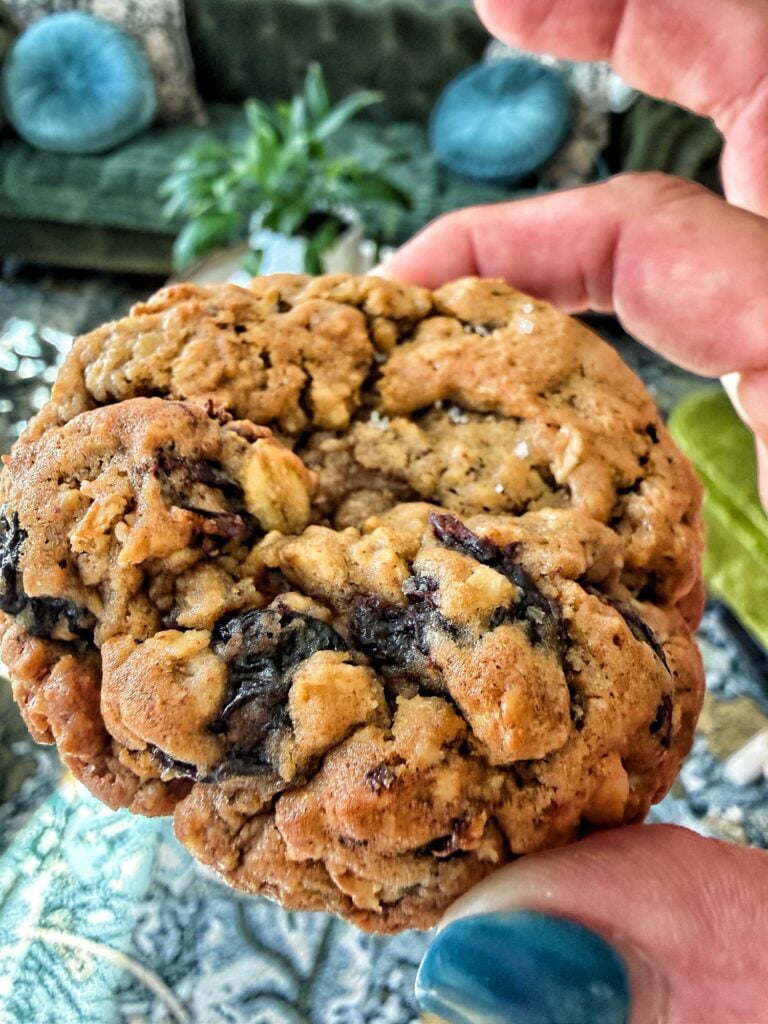
The raisins get soaked in hot water and vanilla before baking, while some of the oats are lightly pulsed and the rest are left whole. The result is a thick oatmeal cookie with crispy, buttery edges, a soft and chewy center, and plump raisins in every bite.
Ever since I made my now-famous chocolate chip cookies, I have been doing a lot of cookie research.
There really is a science to making a great cookie, and I have become slightly obsessed with all the little things that make a difference. I wanted to take some of what I learned and apply it to another classic cookie.
Oatmeal raisin seemed like the perfect next experiment.
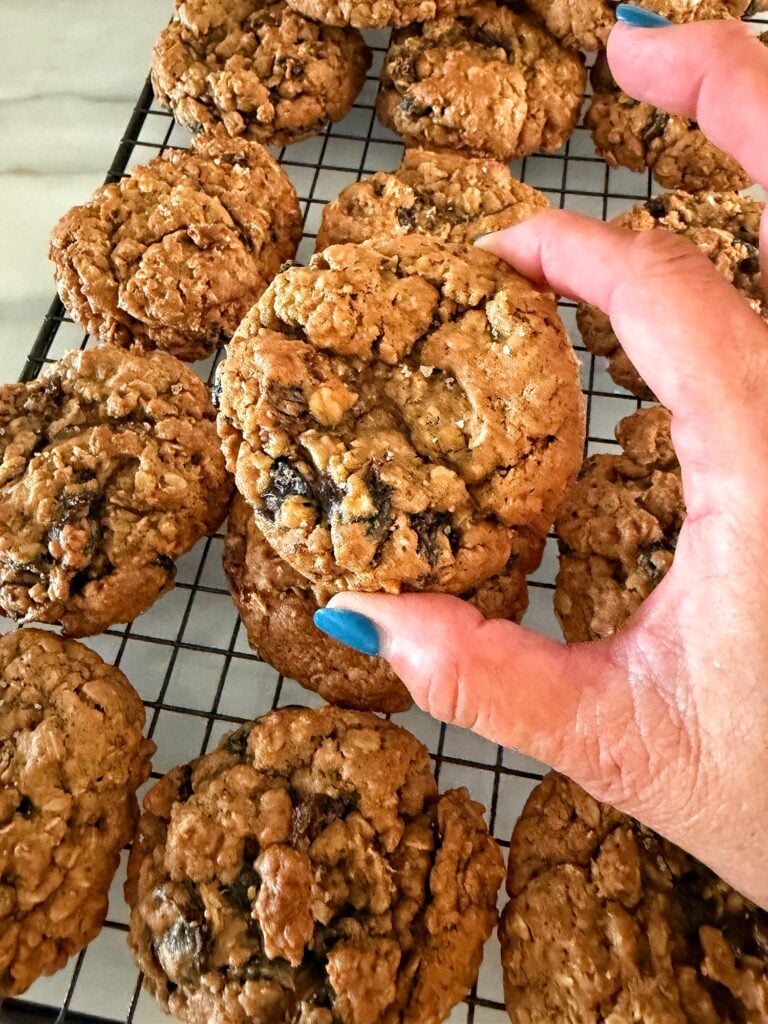
I wanted these to be BIG cookies. I also wanted the outside to have those buttery, caramelized, slightly crispy edges while the inside stayed thick and chewy.
I didn’t want dry oatmeal cookies filled with hard little raisins. I am a soft cookie girlie.
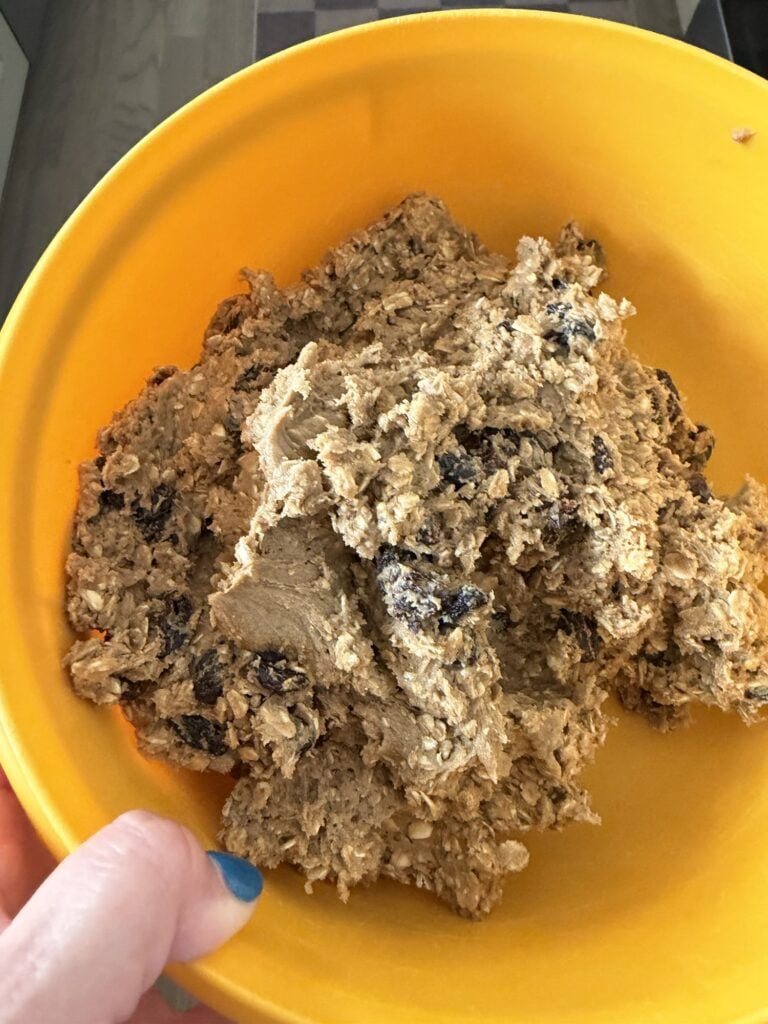
Between soaking the raisins, using the oats two different ways, adding an extra egg yolk, chilling the dough, slightly underbaking the cookies, and reshaping them while they’re warm, these turned out exactly how I wanted them.
Before You Jump to the Recipe
There are a few unusual little steps in this recipe, and I really do think they make a difference. They may seem unconventional, but they made the most perfect cookies.
The Raisins: I used jumbo Flame raisins and soaked them in hot water and vanilla before adding them to the dough. Just be sure to drain and dry them well. You do not want excess liquid in your batter.
The Oats: I used Bob’s Red Mill Old Fashioned Rolled Oats. One cup gets lightly pulsed in the food processor while the remaining two cups stay whole. There are lots of good quality oats out there.
The Butter and Eggs: Room-temperature ingredients help everything combine properly and give you a better cookie dough.
The Molasses and Spices: Molasses, cinnamon, nutmeg, and just a tiny bit of clove give these cookies their deep, old-fashioned flavor.
The Overnight Rest: Chilling the dough gives the oats time to hydrate and helps these giant cookies stay thick. This is key.
The Bake: Take them out when the edges are brown and set but the centers still look slightly underdone.
The Finish: Shape the warm cookies with a large round cookie cutter and add just a few flakes of sea salt.
Jumbo Flame Raisins
I ordered jumbo Flame raisins from Amazon specifically for these cookies. I will link the exact raising I purchased below.
Flame raisins are made from Flame Seedless grapes. They’re generally larger and darker than the traditional raisins you probably grew up eating.
That larger size is what I especially liked for these cookies. You actually get a substantial, plump piece of raisin throughout the cookie rather than having little raisins disappear among all those oats.
You certainly don’t have to order specialty raisins to make these. Regular raisins will work just fine.
But if you are an oatmeal raisin cookie lover, I think the jumbo Flame raisins are worth trying at least once.
Affiliate Disclosure: As an Amazon Associate, I earn from qualifying purchases. If you make a purchase through this link, I may earn a small commission at no additional cost to you.
You can find the exact jumbo Flame raisins I used here:
Soak Your Raisins in Hot Water and Vanilla
This is one of my favorite tricks in the recipe.
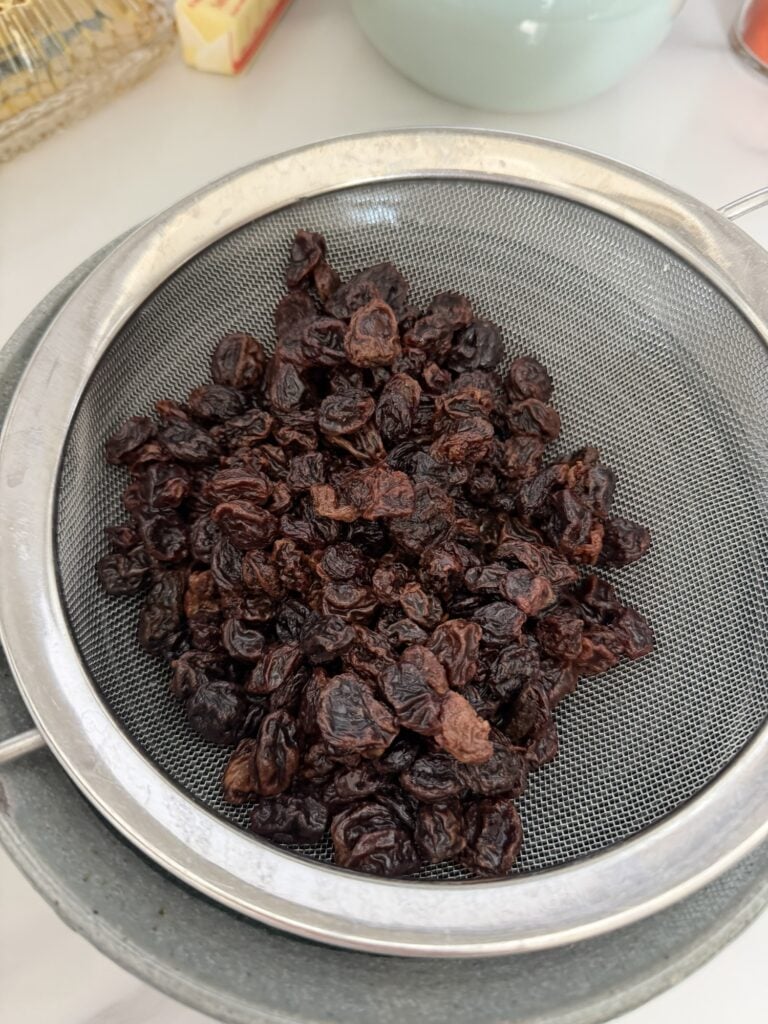
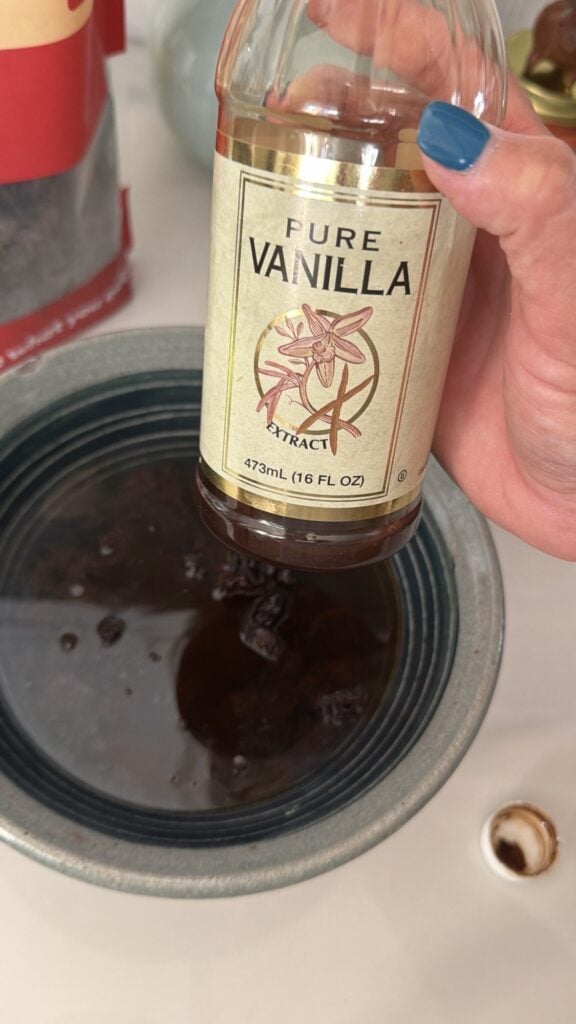
Before I make the cookie dough, I put the raisins in a bowl, cover them with very hot water and add a teaspoon of vanilla.
Let them sit for about 15 minutes.
The raisins absorb some of that moisture and plump up before they ever go into the oven. That helps prevent those hard, dried-out raisins you sometimes find in oatmeal cookies.
After soaking, drain them very well and spread them on paper towels or a clean kitchen towel.
Pat them really dry.
We want the moisture to be inside the raisins. We don’t want a bunch of extra water going into our cookie dough.
Splurge on Good Old-Fashioned Rolled Oats
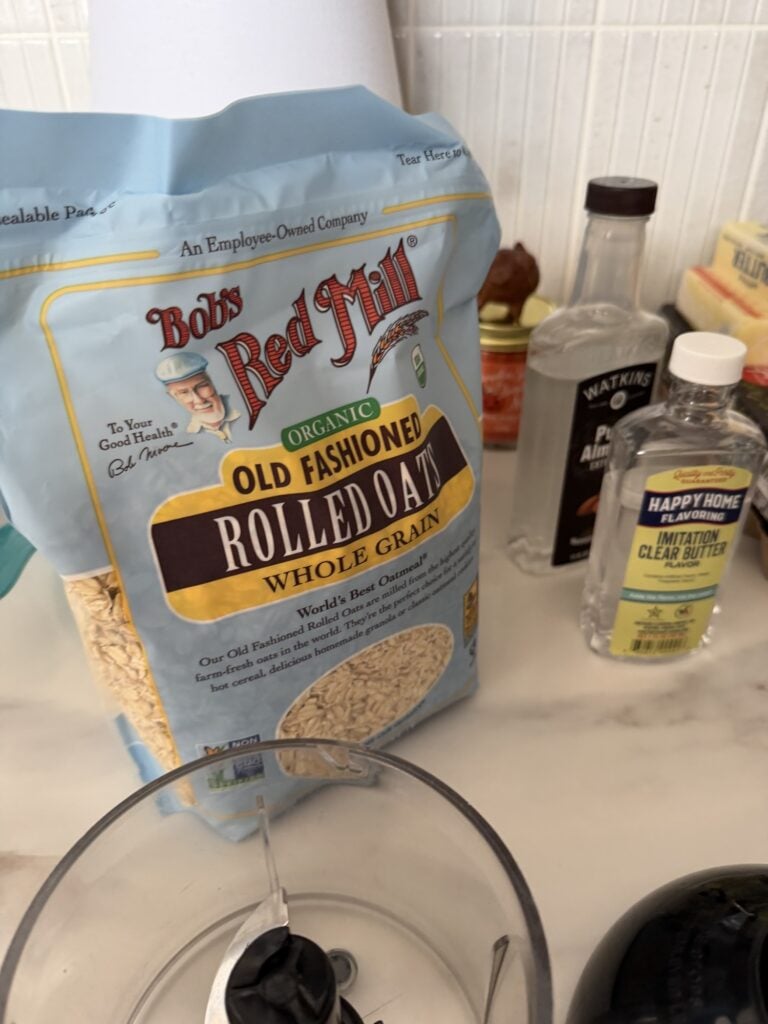
I splurged on Bob’s Red Mill Old Fashioned Rolled Oats when I made these.
Do you absolutely have to use Bob’s Red Mill? No.
But I do recommend using a good-quality old-fashioned rolled oat rather than quick or instant oats.
The bigger trick was what I did with them.
The recipe uses three cups of oats. I took one cup of the oats and pulsed them a few times in my food processor.
You are not making oat flour.
You just want to break those oats into smaller pieces.
I left the remaining two cups completely whole.
I really liked the texture this created. You still see and taste plenty of whole oats, but those smaller pieces become more incorporated into the cookie dough and help create that substantial, chewy interior.
Why Your Butter and Eggs Should Be Room Temperature
I used regular softened butter for these cookies.
I did not brown the butter in the batch you see pictured here.
Room-temperature butter should be soft enough that your finger leaves an indentation when you press it, but it should not be melted or greasy.
Softened butter creams together with the sugars much better than cold butter. That process also incorporates air into the mixture.
I also like the eggs and extra egg yolk to be at room temperature. Ingredients that are closer to the same temperature combine more easily and create a smoother, more uniform cookie dough.
If you forgot to take your eggs out, put the whole eggs in a bowl of warm water for about 5 to 10 minutes.
Can You Brown the Butter?
You sure can, but I did not. Baking is already newer and overwhelming to me so I did not want to add another step.
Browned butter would give these a nuttier, more toasted flavor. I may try it next time since these cookies were fairly easy.
If you want to experiment with it, you can brown part of the butter and let it cool before making the dough.
But I want to be clear that the cookies pictured here were made with regular softened butter, and they were excellent.
Why I Add Molasses
I add a little regular baking molasses to these oatmeal raisin cookies because it gives them extra depth and that rich, old-fashioned flavor I was looking for.
It works especially well with the dark brown sugar, oats, raisins, cinnamon, nutmeg, and clove.
You do not need much, and the goal is not to make these taste like molasses cookies. The molasses simply adds another layer of caramel-like flavor and helps make the cookies taste a little deeper and more special.
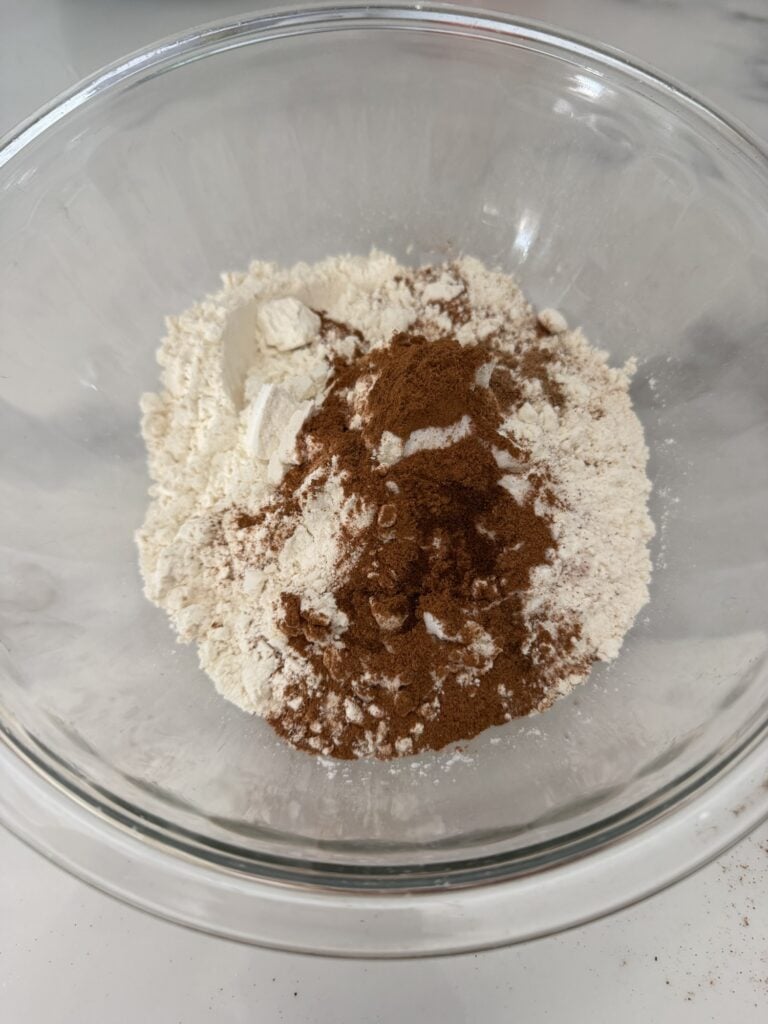
Cinnamon, Nutmeg, and Clove
I didn’t want these cookies to taste like a Christmas spice cookie, but oatmeal and raisins can handle more than cinnamon alone.
Cinnamon
Cinnamon is the main spice here.
I use two teaspoons, which gives the cookies plenty of warmth without overpowering the oats and raisins.
Nutmeg
Nutmeg is stronger, so I use just 1/4 teaspoon.
It’s one of those background flavors that you may not immediately identify, but it rounds everything out and works really well with brown sugar and molasses.
Clove
The clove was one of my favorite additions.
There is only 1/8 teaspoon, and that is plenty.
Clove is strong, so this is definitely a situation where more is not better. Make sure are familiar with this spice before adding it. Start small!
That tiny amount adds something really special to the raisins, molasses, and cinnamon without making the cookies taste overwhelmingly like cloves.
Chill the Cookie Dough Overnight
I know nobody wants to hear that they have to wait for cookies.
But I recommend letting this dough rest in the refrigerator for 12 to 24 hours. This step is definitely worth it.
Oats absorb moisture. Giving the dough time to rest allows those oats to hydrate before baking.
Chilling also firms up the butter, which is particularly helpful when you’re making these giant 4-ounce cookies.
You end up with a thicker cookie rather than one that immediately spreads all over your baking sheet.
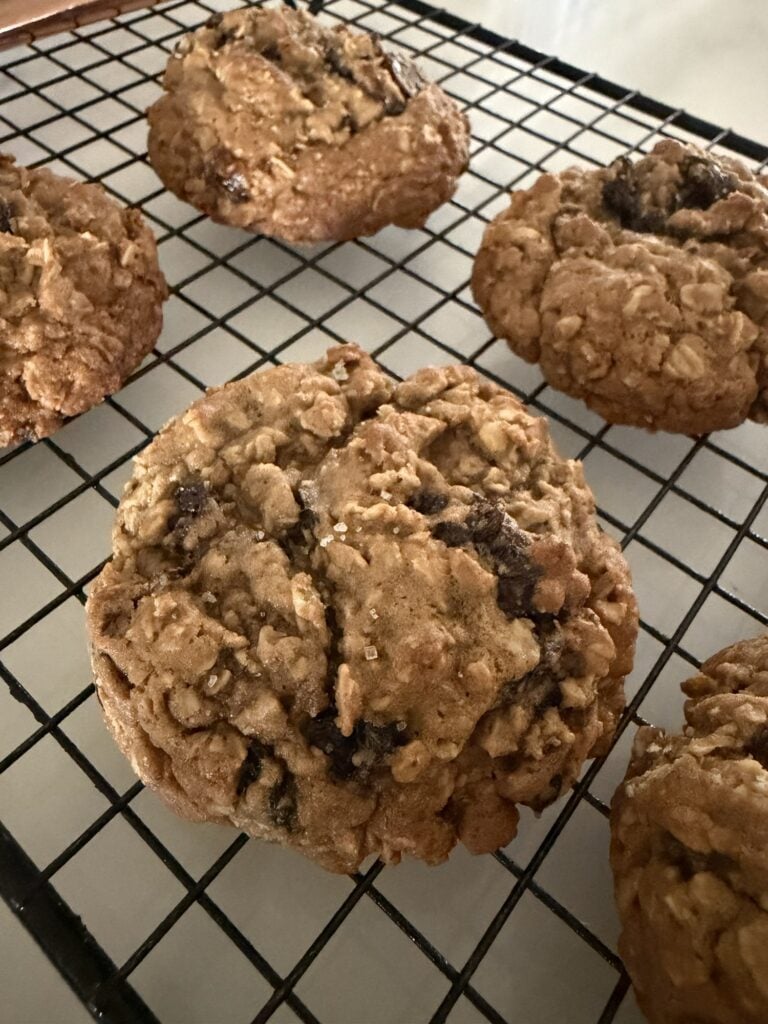
The Trick to Crispy Edges and Chewy Centers
The biggest mistake you can make with these is waiting until the entire cookie looks completely baked.
I bake these at 350°F until the edges are set and nicely browned but the centers still look a little soft and slightly underdone.
Start checking them around 14 minutes.
Mine take approximately 14 to 17 minutes, but your oven, baking sheet and exact cookie size can all affect that.
Look at the cookie more than you look at the timer.
The cookies continue baking on the hot sheet after you take them out of the oven.
That’s how you get those crispier golden edges without sacrificing the soft, chewy center.
The Cookie Cutter Trick
I used the same trick on these that I used with my chocolate chip cookies.
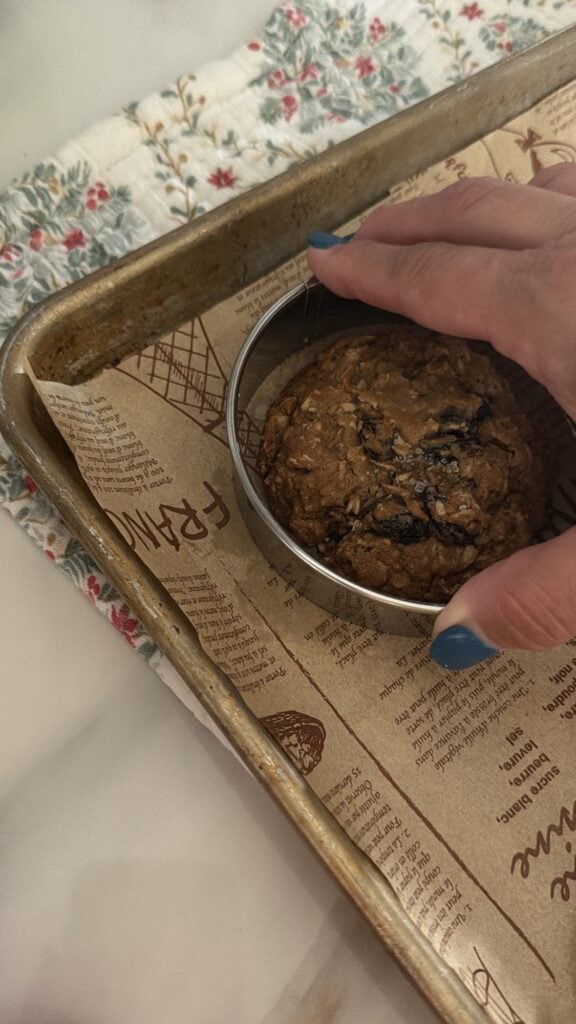
As soon as the cookies come out of the oven, grab a large round cookie cutter that’s slightly larger than the cookie.
Place it around the warm cookie and gently move it in a circular motion.
You’re basically scooting the outside edges of the cookie back toward the center.
It gives you a beautifully round, thick bakery-style cookie.
You have to do this right when they come out of the oven while they’re still soft enough to reshape.
Then leave the cookies on the hot baking sheet for about 10 minutes. They will finish cooking here.
Don’t Forget the Flaky Sea Salt
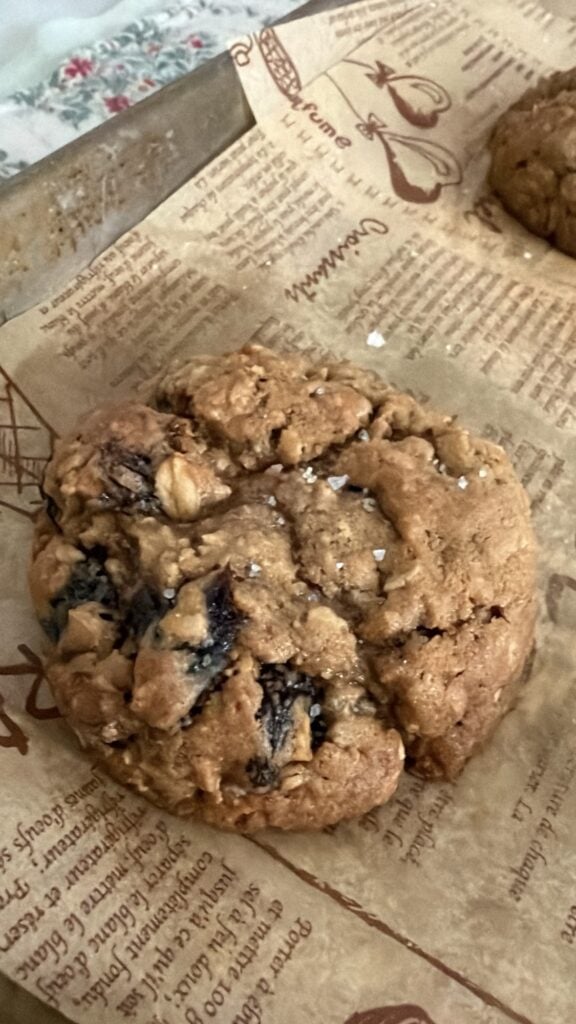
I finish the warm cookies with just a few flakes of sea salt.
You don’t want a salty oatmeal cookie.
You just want those occasional little salty bites against the sweet raisins, brown sugar and molasses.
When I shared my chocolate chip cookies, I had a lot of people ask me where to buy flaky sea salt.
I ordered mine on Amazon, but check HomeGoods or TJ Maxx. Their food sections are actually great places to find specialty salts. Many regular grocery stores also carry flaky finishing salt.
If you don’t have it, simply leave it off. I would rather you skip it than cover these beautiful cookies with regular table salt. Plus the salt police from my Facebook page won’t get you.
Frequently Asked Questions
Can I use regular raisins?
Yes. Regular raisins work perfectly well. Jumbo Flame raisins are simply larger and give you more substantial pieces of raisin throughout the cookies.
Do I have to soak the raisins?
You don’t have to, but I highly recommend it. It only takes about 15 minutes and gives the raisins a much softer, plumper texture.
Can I use quick oats?
I recommend old-fashioned rolled oats. Quick oats will absorb moisture differently and won’t give you the same hearty oatmeal texture.
Why are some of the oats pulsed?
Breaking one cup of the oats into smaller pieces allows those oats to become more incorporated into the dough while the remaining whole oats provide the traditional oatmeal chew.
Can I skip the overnight chill?
I recommend giving the dough at least several hours in the refrigerator and preferably 12 to 24 hours. The rest allows the oats to hydrate and the butter to firm back up.
Can I make smaller cookies?
Yes. Just reduce the baking time and watch the cookies rather than relying on the 14-to-17-minute timing written for the large cookies.
How do I know when oatmeal raisin cookies are done?
Look for set, golden-brown edges and a center that still appears slightly soft. Don’t wait for the entire center to look completely baked.
Can I freeze the cookie dough?
Yes. Portion the chilled dough into cookie-size mounds, freeze them on a baking sheet and transfer the frozen portions to a freezer-safe bag. You can then bake a few cookies whenever you want them.
Do I need flaky sea salt?
No. It is completely optional. It adds a nice contrast to the sweet cookie, but the recipe works perfectly well without it.
Try My Famous Chocolate Chip Cookies Too
If oatmeal raisin isn’t your thing, or you simply believe there is always room for another cookie, you have to try my Famous Chocolate Chip Cookies.
That recipe is actually what sent me down this whole cookie-research rabbit hole in the first place.
I wanted to figure out all the little tricks that take a homemade cookie from good to bakery-level great, with crispy, buttery edges, a thick and chewy center and plenty of chocolate in every bite.
After making those cookies and seeing how much everyone loved them, I knew I wanted to take what I learned and give the classic oatmeal raisin cookie the same treatment.
Ultimate Thick and Chewy Oatmeal Raisin Cookies
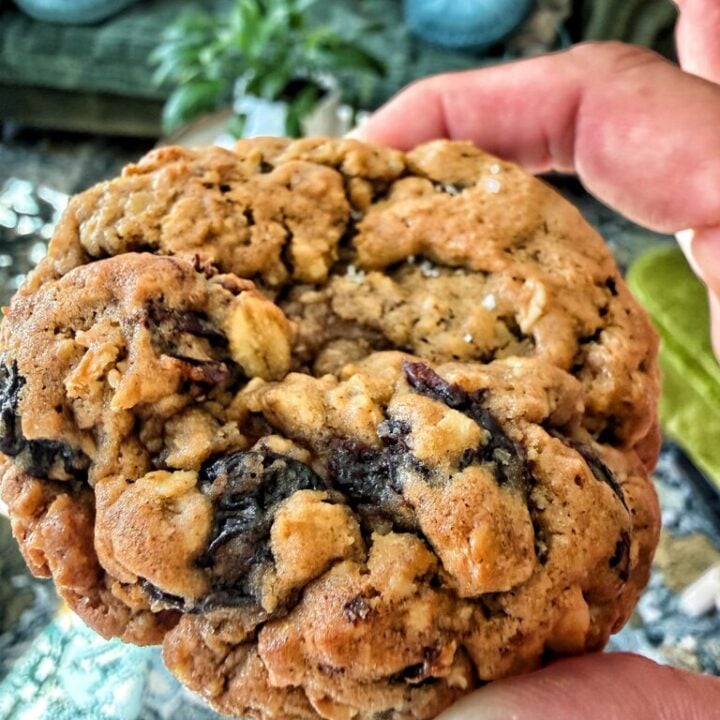
Big bakery-style oatmeal raisin cookies with crispy golden edges and soft, chewy centers. Jumbo Flame raisins are soaked in hot water and vanilla before being folded into a buttery oatmeal cookie dough made with dark brown sugar, blackstrap molasses, cinnamon, nutmeg and cloves. Using both whole and lightly pulsed oats creates the perfect oatmeal cookie texture.
Ingredients
For the Raisins
- 1 3/4 cups jumbo Flame raisins
- Very hot water, enough to cover the raisins
- 1 teaspoon vanilla extract
For the Cookie Dough
- 1 cup unsalted butter, softened to room temperature
- 1 cup packed dark brown sugar
- 1/2 cup granulated sugar
- 2 large eggs, room temperature
- 1 large egg yolk, room temperature
- 1 tablespoon vanilla extract
- 1 tablespoon dark molasses
- 2 cups all-purpose flour
- 1 teaspoon baking soda
- 1 teaspoon kosher salt
- 2 teaspoons ground cinnamon
- 1/4 teaspoon ground nutmeg
- 1/8 teaspoon ground cloves
- 3 cups old-fashioned rolled oats, divided
- Flaky sea salt, optional
Instructions
- Add the jumbo Flame raisins to a bowl. Cover them completely with very hot water and stir in 1 teaspoon vanilla. Let the raisins soak for 15 minutes.
- Drain the raisins thoroughly. Spread them onto paper towels or a clean kitchen towel and pat them very dry. Set aside.
- Measure the 3 cups of old-fashioned oats. Add 1 cup of oats to a food processor and pulse several times until the oats are broken into smaller pieces but are not ground into flour. Leave the remaining 2 cups whole.
- Add the softened butter, dark brown sugar and granulated sugar to a large mixing bowl. Beat for approximately 3 minutes, until creamy and well combined.
- Add the whole eggs one at a time, mixing well after each addition.
- Add the extra egg yolk, 1 tablespoon vanilla and dark molasses. Mix until combined.
- In a separate bowl, whisk together the flour, baking soda, kosher salt, cinnamon, nutmeg and cloves.
- Gradually add the dry ingredients to the butter mixture and mix just until combined.
- Add both the whole oats and lightly pulsed oats and mix until evenly distributed.
- Gently fold in the thoroughly dried raisins.
- Cover the cookie dough and refrigerate for 12 to 24 hours.
- When ready to bake, remove the dough from the refrigerator. If necessary, let it sit at room temperature for 15 to 20 minutes so it is easier to portion.
- Heat the oven to 350°F. Line baking sheets with parchment paper.
- Portion approximately 4 ounces of dough for each cookie. Loosely form the dough into tall mounds rather than tightly rolling it into smooth balls.
- Arrange the cookies several inches apart on the prepared baking sheets.
- Bake for approximately 14 to 17 minutes. The cookies are ready when the edges are set and golden brown but the centers still look slightly soft and underdone.
- Immediately after removing the baking sheet from the oven, place a large round cookie cutter around each warm cookie and gently swirl the cutter in a circular motion to reshape the cookie into a thick, even circle.
- Sprinkle the warm cookies with a few flakes of sea salt, if using.
- Leave the cookies on the baking sheet for approximately 10 minutes. The centers will continue to cook and set from the residual heat.
- Transfer to a cooling rack.
Notes
- Dry the raisins really well. The hot water soak is meant to put moisture back into the raisins, not add water to the cookie dough.
- Do not turn the pulsed oats into flour. A few pulses are all you need. You still want visible pieces of oatmeal.
- Room-temperature butter matters. It should be soft but not melted or greasy.
Don't overbake these cookies. The slightly underdone-looking center is intentional. They'll continue cooking on the hot baking sheet. - Watch the cookie rather than the clock. Depending on your oven and baking sheets, your cookies may be ready a little earlier or later.
- For perfectly round cookies: Use the cookie cutter immediately after the cookies come out of the oven.
- For browned butter cookies: You can experiment with replacing part of the softened butter with browned butter that has been cooled. The original recipe pictured here was tested with regular softened butter.
- For regular raisins: Substitute the same amount for the jumbo Flame raisins.
- For smaller cookies: Use less dough and begin checking them earlier.
- To freeze the dough: Portion the chilled dough onto a parchment-lined baking sheet and freeze until solid. Transfer to a freezer-safe bag or container. Bake as needed, allowing a little additional baking time when baking from frozen.
- To store baked cookies: Cool completely and store in an airtight container at room temperature.
4 Comments
Anonymous
September 13, 2026 at 8:32 pm
These look amazing! I’m currently testing cookie recipes for Christmas and, these will be tested this week. I’m going to make one change, though….hope you approve! Instead of hot water, I’m going to soak the raisins in rum….Rum Raisin Oatmeal Cookies….ta da! Thank you for all the marvelous inspiration you so generously share. ?
thetipsyhousewife
September 14, 2026 at 10:57 am
Well why didn’t i think of that!?
Anonymous
September 19, 2026 at 4:06 am
Great recipe! Made yesterday and used mini chocolate chips instead of raisins, didn’t have on hand. Delicious! Will make again, with raisins and rum, as suggested.
April Lee Wiencek
September 19, 2026 at 8:53 pm
Nice substitute!