
Skillet Round Steak and Gravy

Old-Fashioned Round Steak and Gravy Made in a Skillet
This is one of those old-fashioned dinners that doesn’t require anything fancy, but it does require a little bit of time. The Skillet Round Steak is seasoned, lightly floured, and browned in butter before being slowly simmered with onions in a rich brown gravy. I add anchovy paste for incredible savory flavor and a little Kitchen Bouquet for that deep, old-fashioned brown gravy color.
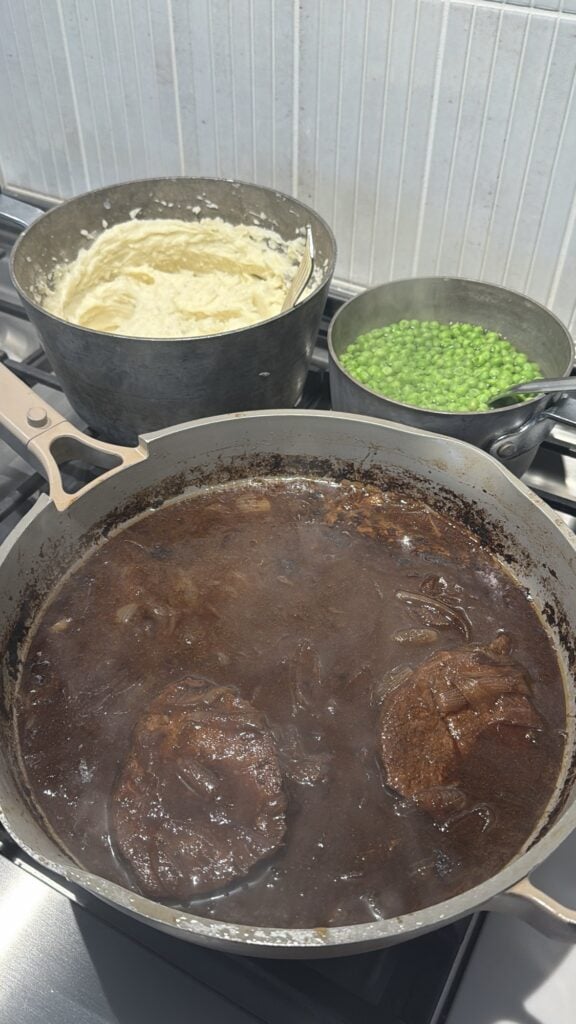
I have had a recipe for Round Steak and Gravy made in the Instant Pot on my website for a long time, and I still love that recipe when I need the convenience of the pressure cooker. But when I was growing up, my grandma wasn’t making round steak in an Instant Pot. She made it in a big, heavy skillet on the stove.
There is something about a big skillet of round steak and gravy simmering away on the stove that feels like the beginning of fall to me. So I decided it was time to bust out the old-school version.
This is the kind of meal I love to make on a fall Sunday when I’m home anyway. Put it on the stove, turn the heat way down, and let it do its thing while you putter around the house. By dinnertime, you’ve got tender beef and lots of savory onion gravy that absolutely begs for a giant pile of mashed potatoes.
What Is Round Steak?
Round steak is a lean cut of beef that comes from the rear leg, or round, of the cow. Because those muscles get a lot of use, round steak doesn’t naturally have the tenderness or marbling you would find in a more expensive steak.
That doesn’t mean it isn’t a great cut of beef. You just have to know how to cook it.
Round steak is particularly good for slow, moist cooking. Giving it plenty of time in a covered skillet with gravy allows those tougher fibers to soften, which is why you’ll often find round steak used for Swiss steak, smothered steak, and other old-fashioned braised beef recipes.
This isn’t a steak you want to quickly sear for a few minutes and call it dinner. Round steak needs time. Give it some gravy and a couple of hours on the stove and you’ve got an entirely different piece of meat.
Where Do You Find Round Steak?
I already know this is going to be one of the most common questions I get about this recipe.
I usually buy my round steak at Aldi. Mine sells it already sliced into steaks and packaged, which makes this recipe incredibly easy. One of my other local grocery stores also sells round steak this way.
Depending on where you shop, you may see it labeled as round steak, top round steak, or bottom round steak.
What If I Can Only Find a Round Roast?
That’s completely fine.
Look for a top round or bottom round roast and slice it yourself. Cut the roast across the grain into steaks approximately 1/2 to 3/4 inch thick.
You can also ask the butcher or someone working in the meat department to slice a round roast into steaks for you. Tell them you’re going to braise the meat slowly in gravy and they’ll know exactly what you’re looking for.
One of the things I love about recipes like this is that we’re taking a relatively economical cut of beef and cooking it in a way that makes it taste like Sunday dinner.
How To Make Skillet Round Steak and Gravy
The complete measurements and detailed instructions are in the printable recipe card at the end of this post, but I wanted to walk you through the process because there are a few steps that make a big difference.
Start By Seasoning and Flour Dredging the Beef
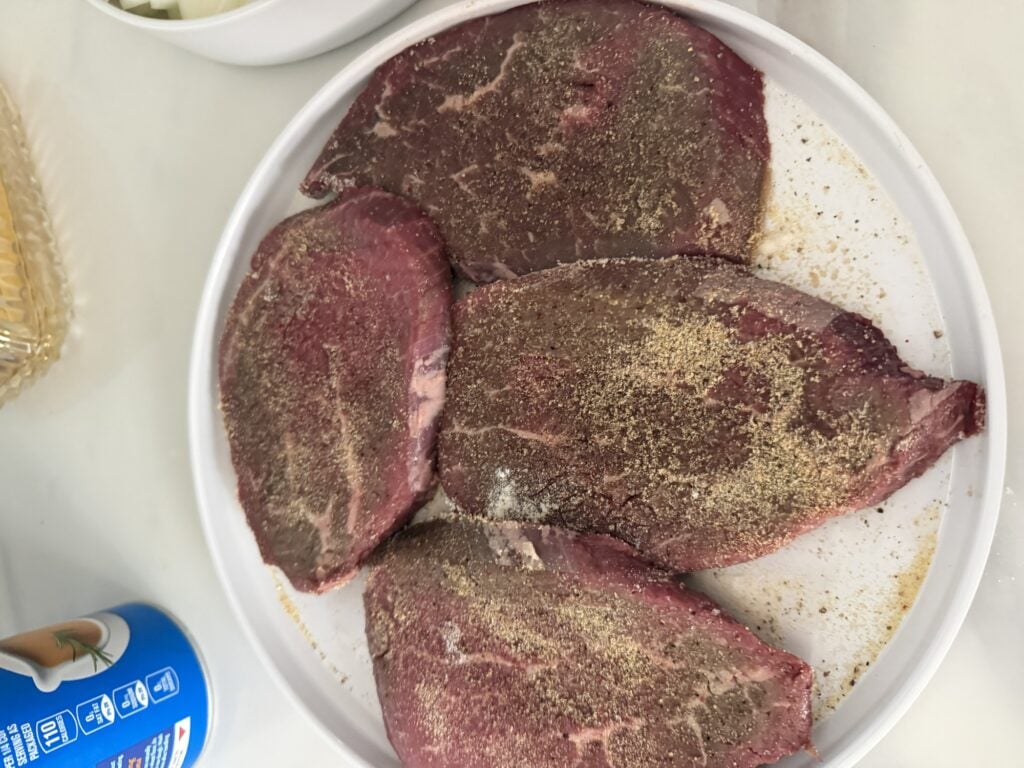
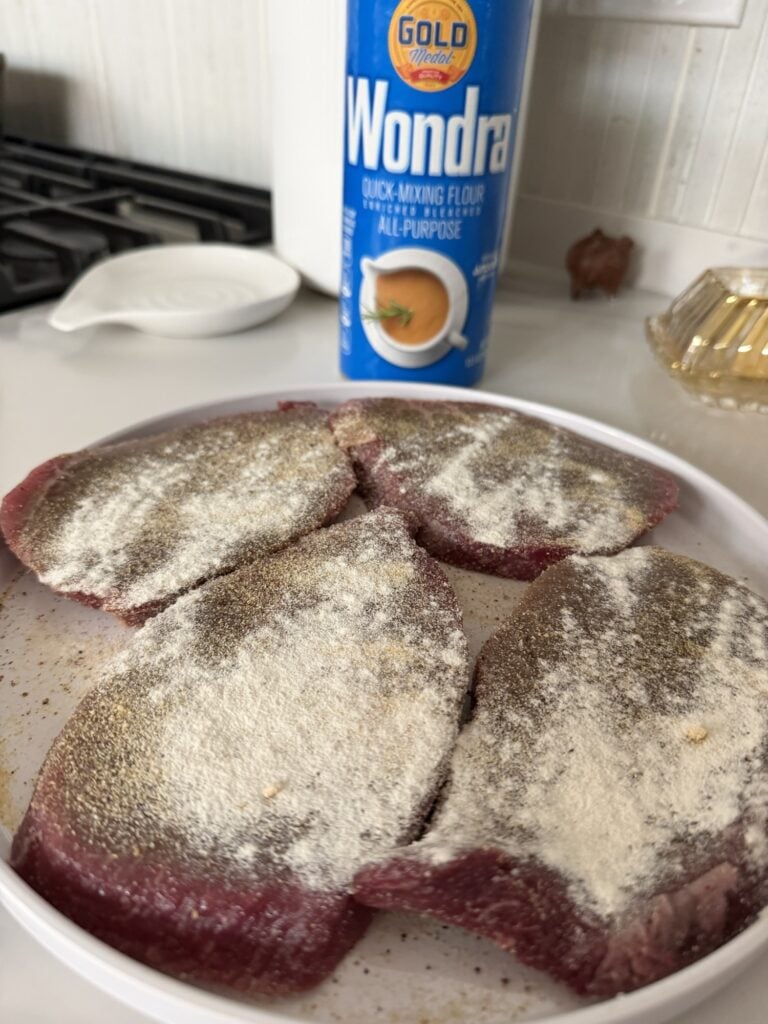
I season the round steaks well with salt, black pepper, garlic powder, and onion powder. Then they get a light coating of flour.
You don’t want a heavy breading here. The flour helps create a beautiful brown crust on the outside of the beef and eventually helps thicken our gravy.
If your steaks are especially thick, you can also give them a few gentle whacks with a meat mallet. You’re not trying to turn them into paper-thin cube steaks. You’re just helping that tougher cut of beef along a little.
Get a Good Brown Crust
This is one of the most important parts of the recipe.
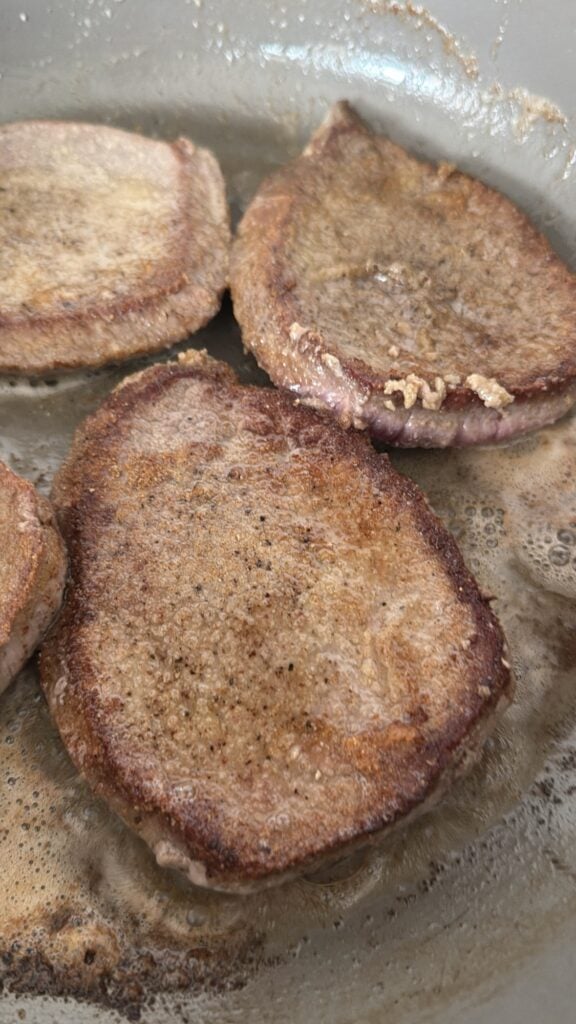
I heat butter with a little oil in my big heavy skillet and brown the round steaks in batches. Don’t try to squeeze every piece into the pan at once.
You want the beef touching the hot skillet so it actually browns instead of steams.
And don’t panic about all those brown bits sticking to the bottom of the skillet. We want those. They’re going to become part of our gravy.
Build the Onion Gravy Right in the Same Skillet
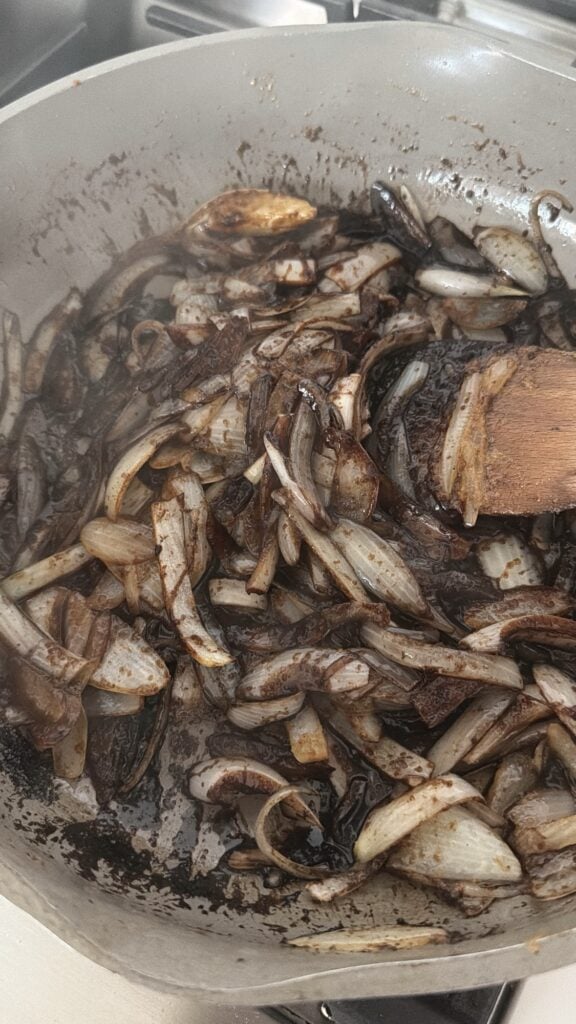
Once the steaks are browned, I remove them and add my sliced onions right to the same skillet.
As the onions cook, they start picking up all that flavor left behind by the beef. Then I add some of the flour and let it cook briefly before slowly adding the beef broth.
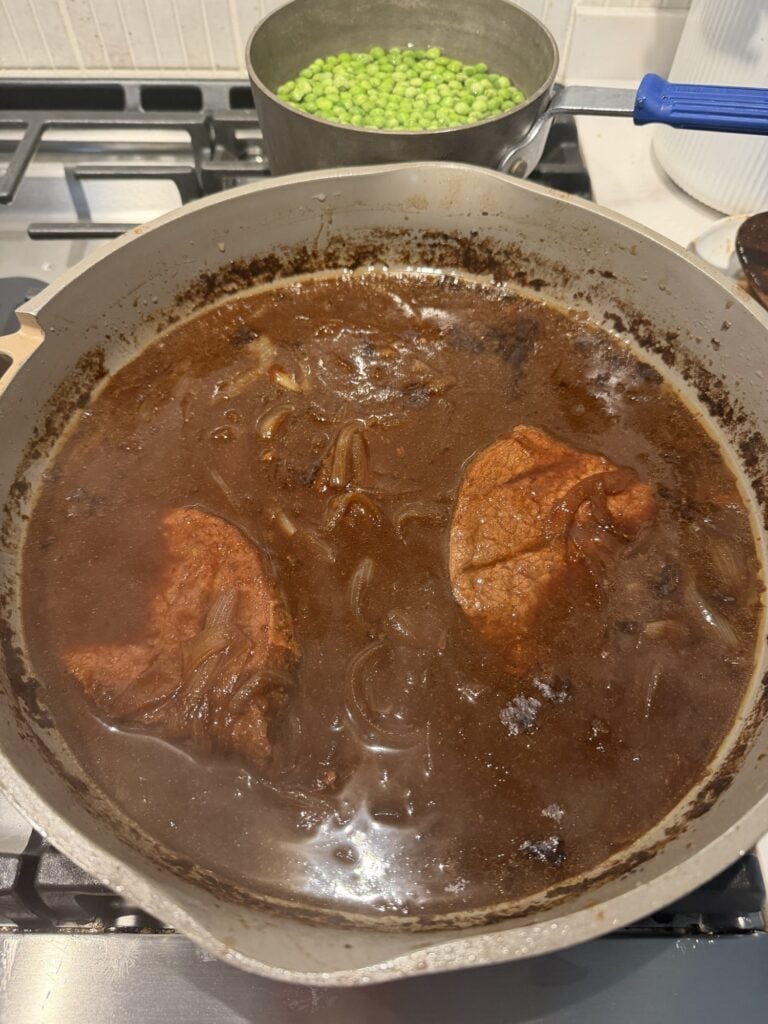
This is when the whole thing starts turning into that gorgeous brown gravy.
Make sure you scrape the bottom of your skillet as you add the liquid. Those browned bits are flavor, and we want every last one of them.
Why I Add Anchovy Paste
Before anyone gets nervous, your gravy is not going to taste like fish.
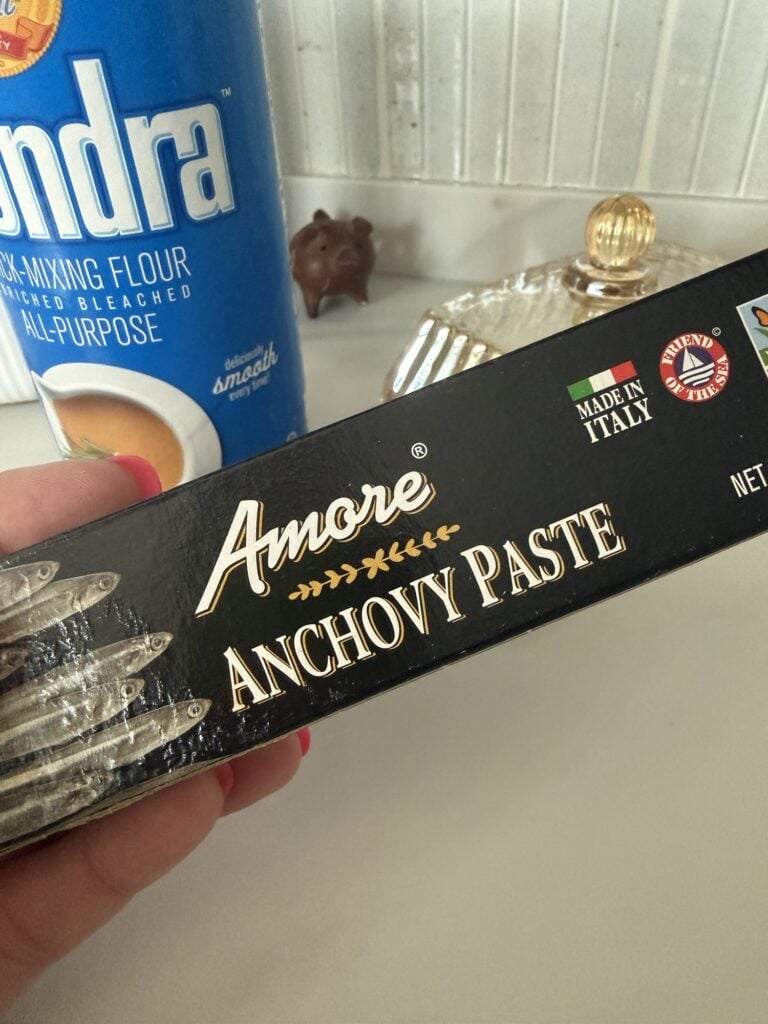
Anchovy paste is one of my favorite little tricks for adding deep savory flavor to beef dishes. A small amount melts right into the gravy and gives it that extra layer of richness where you can’t necessarily identify what’s in there, but you know something tastes really good.
It’s that savory, umami quality we’re after.
You can usually find anchovy paste in the Italian specialty section of larger grocery stores or at Italian markets. I also order mine from Amazon, and I will link the one I use here.
*Amazon Affiliate Disclosure: As an Amazon Associate, I earn from qualifying purchases. This means I may earn a small commission if you purchase through my link, at no additional cost to you.*
Get Anchovy Paste Here
Can I Use Worcestershire Instead?
Absolutely. If you don’t have anchovy paste or simply don’t want to use it, Worcestershire sauce is a great substitute.
Worcestershire gives beef dishes a similar savory depth along with a little tanginess. Many traditional Worcestershire sauces even contain anchovies, which is part of the reason the flavors work so well with beef.
The Old-School Secret: Kitchen Bouquet
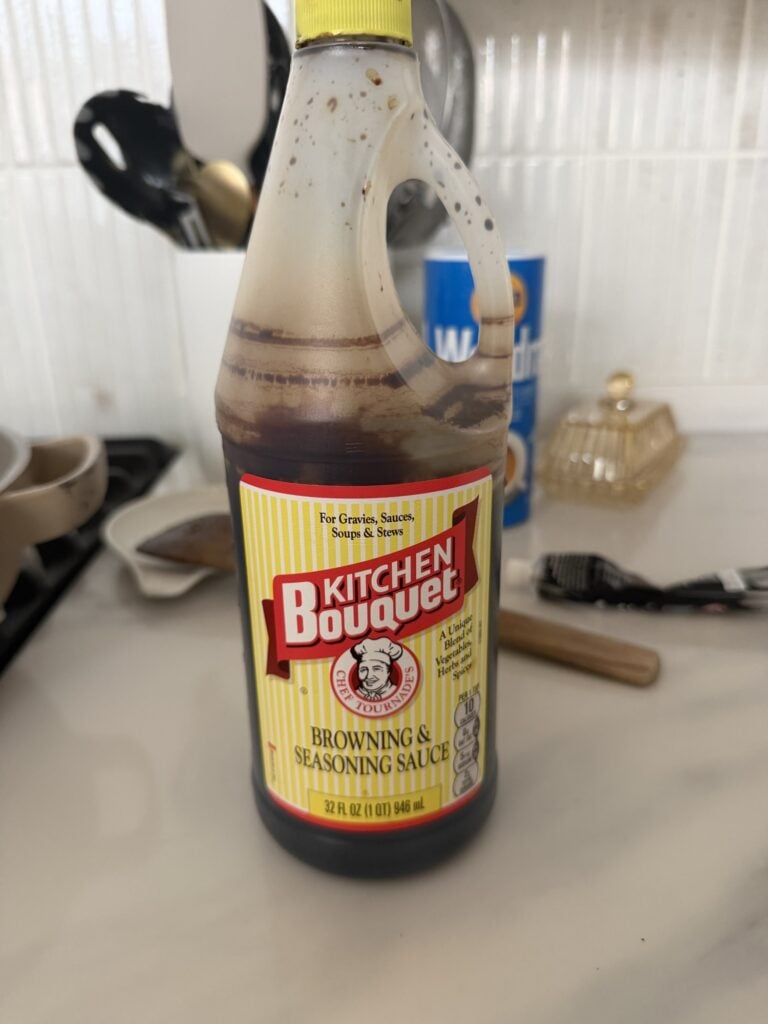
Kitchen Bouquet is one of those ingredients that makes me think of old-school kitchens and grandmas who somehow always made the best gravy.
It’s a concentrated browning and seasoning sauce that’s been around for generations. You only need a little bit, but it gives gravy that gorgeous, deep brown color that can be hard to achieve with beef broth alone.
Kitchen Bouquet gets much of its dark color from caramelized ingredients and also contains vegetable-based seasonings. It isn’t supposed to become the main flavor of your gravy. Think of it as a little finishing trick for color with some additional savory flavor.
What Can I Use Instead of Kitchen Bouquet?
You can simply leave it out. Your gravy might not be quite as dark, but the recipe will still be delicious.
You can also allow the flour and pan drippings to brown a little longer before adding your broth. In a pinch, a very small amount of dark soy sauce can deepen the color, but be careful because it will also add salt and its own flavor.
Worcestershire Powder Is Another Option
A lot of you have bought Worcestershire powder because I’ve recommended it in other recipes, so if you already have it in your cabinet, you can absolutely use some here.
I love Worcestershire powder because it gives you that concentrated savory Worcestershire flavor without adding additional liquid. It’s particularly good in beef dishes, burgers, gravies, potatoes, and seasoning blends.
If you’re using it here, you only need a little. Remember that it can also add saltiness, so taste your gravy before adding additional salt.
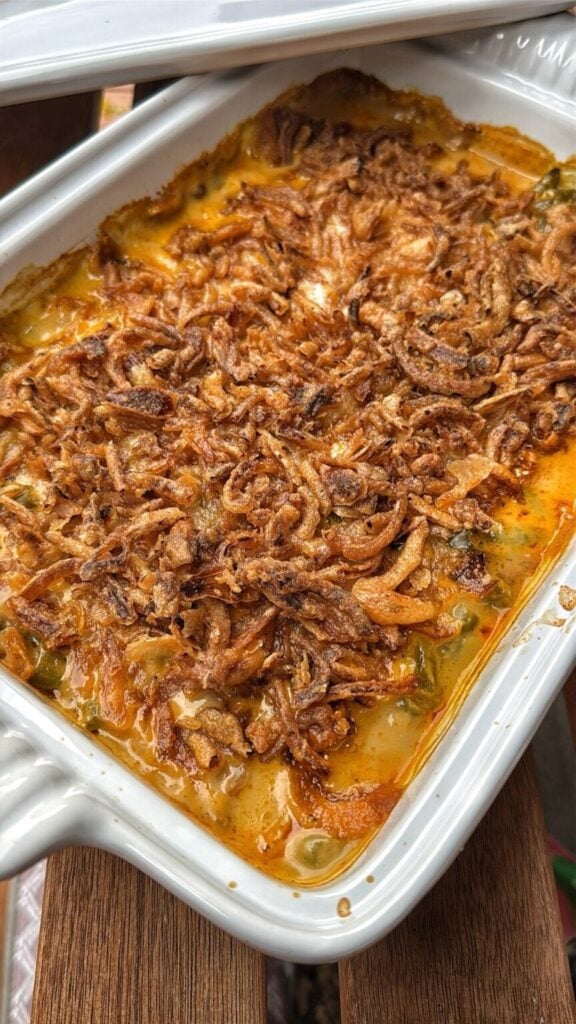
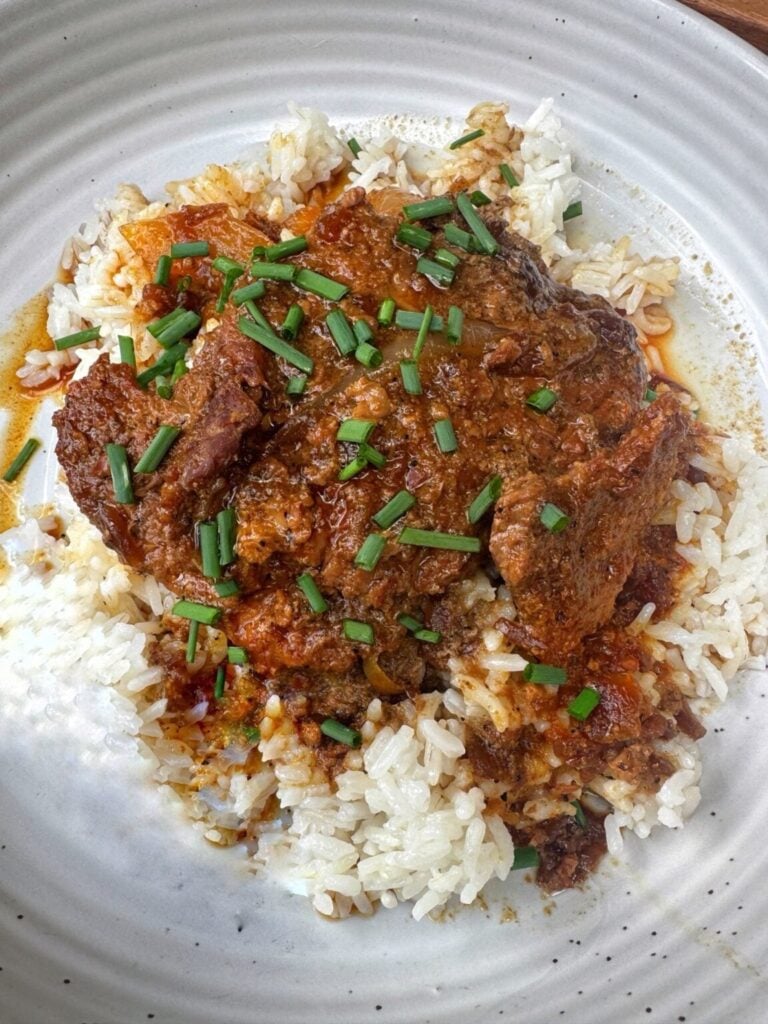
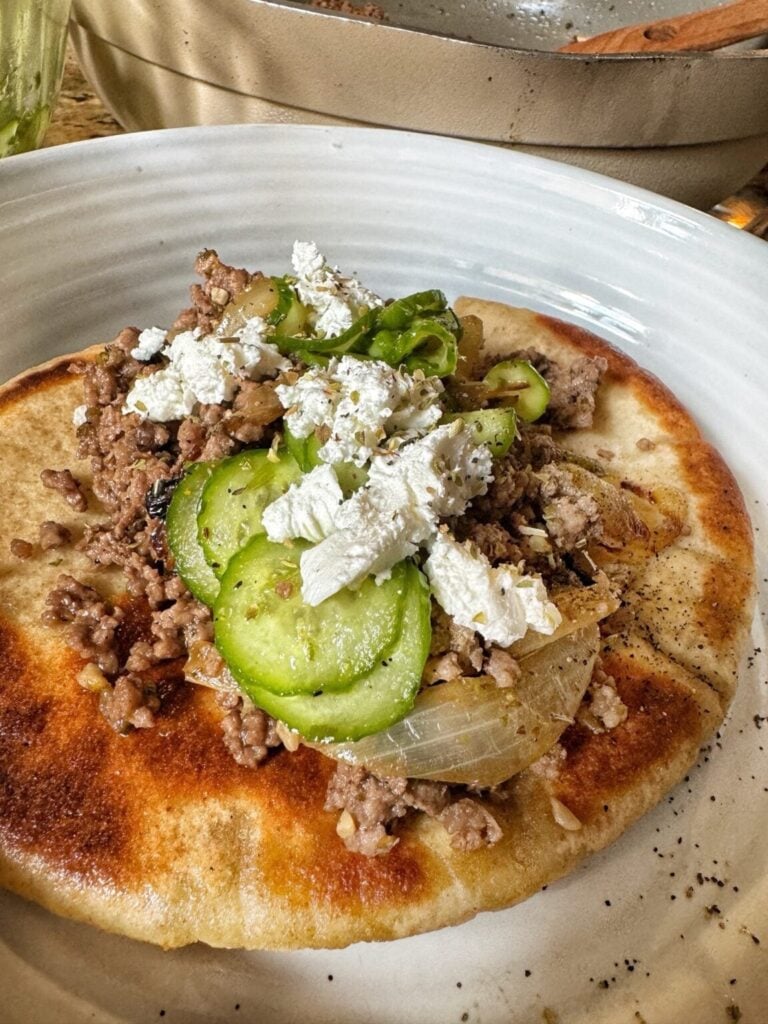
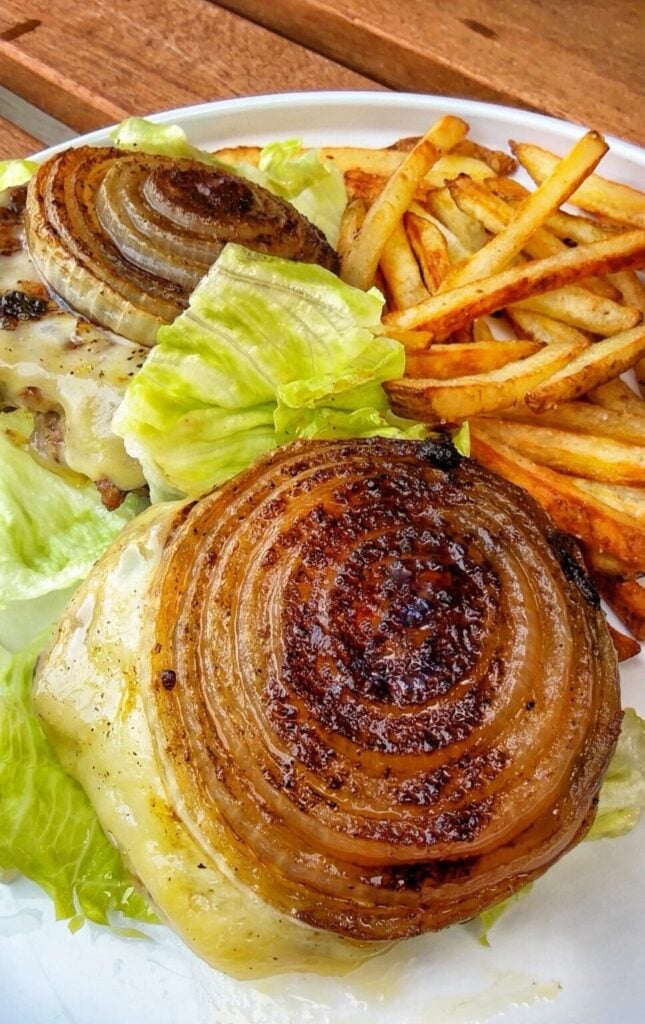
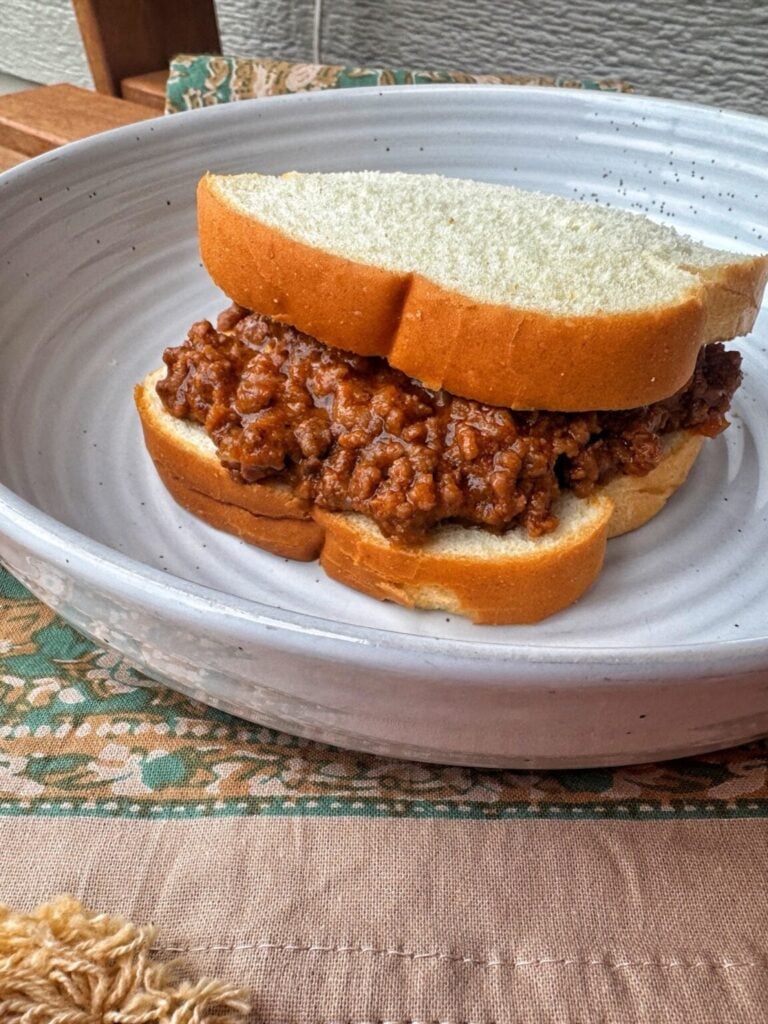
More Recipes Using Worcestershire Powder
Click each image to see the recipe.



Now Let Everything Simmer
Once the gravy is seasoned, the browned steaks go back into the skillet along with any juices that collected on the plate.
Cover the skillet, turn the burner down very low, and let everything gently simmer.
The key word here is gently.
You don’t want your gravy furiously bubbling for two hours. Round steak needs slow, moist heat to soften. A low simmer gives the meat time to become tender while it absorbs all that flavor from the gravy.
I’ll turn the steaks once or twice while they’re cooking and check the skillet occasionally to make sure there is still plenty of gravy. If things are getting too thick, you can always add another splash of beef broth.
Don’t Skip This Final Rest
This is something I really want to point out because I know someone is going to turn off their burner, poke the steak immediately and think they did something wrong.
Give the meat a minute.
When you first turn off the heat, the round steak can still feel a little firm or almost puffed up from cooking.
Leave the steaks nestled in that hot gravy, put the lid back on, and let the whole skillet rest for about 15 to 20 minutes.
During that time the meat settles down, the juices redistribute, and those fibers relax. I find that there can be a noticeable difference between the texture of the steak immediately after cooking and the texture after it has rested in the gravy.
So don’t rush this last part. Your mashed potatoes aren’t going anywhere.
What To Serve With Round Steak and Gravy
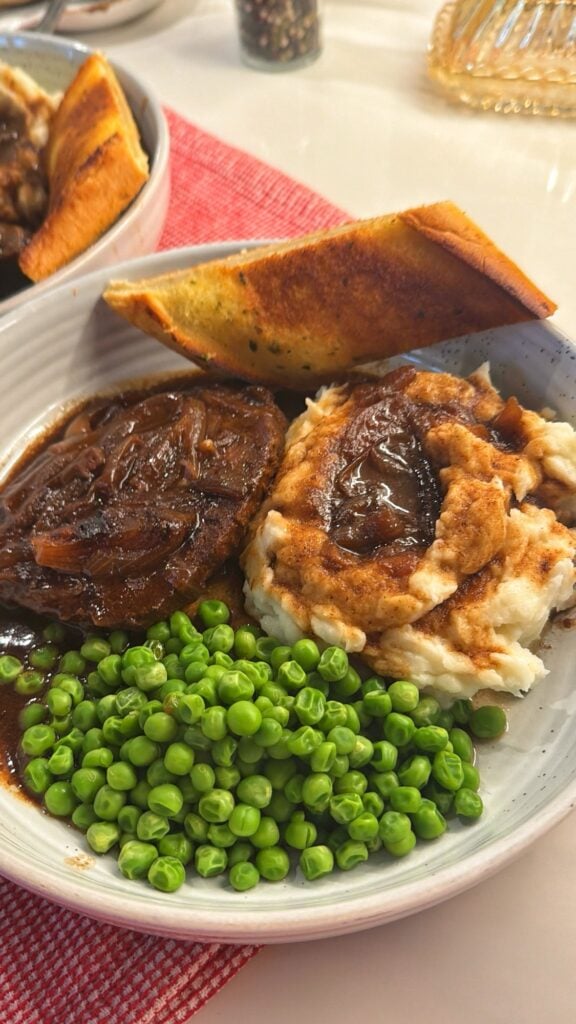
For me, this is a mashed potato dinner.
That rich brown onion gravy poured over creamy mashed potatoes is pretty much the entire reason we’re here.
You could also serve the round steak with buttered egg noodles, rice, or roasted potatoes. For vegetables, I’d keep things simple and old-fashioned with green beans, buttered peas, corn, glazed carrots, or a basic salad.
And I highly recommend some bread for cleaning up whatever gravy is left on your plate.
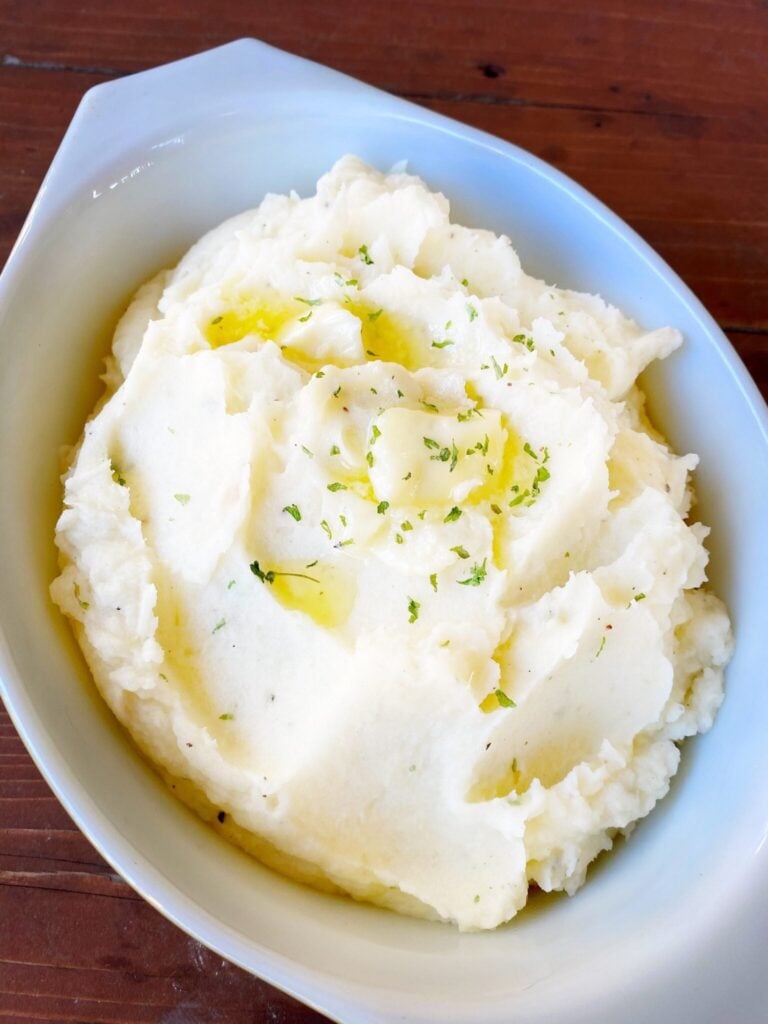
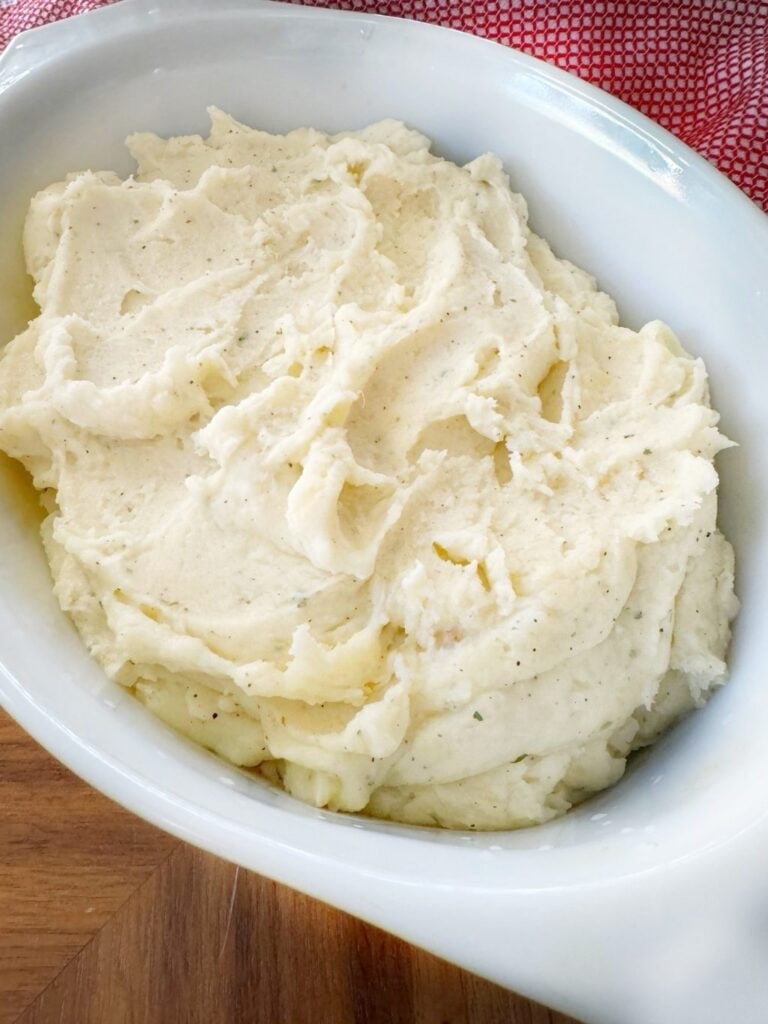
Three Kinds Of Potatoes To Choose From
And you can click each spud to get the recipe.

Frequently Asked Questions
Why Is My Round Steak Still Tough?
It probably needs more time. Round steak becomes tender through long, slow cooking, and the exact cooking time can vary depending on the thickness and specific cut of beef.
Keep it covered at a very gentle simmer and check it again later. Also remember that I let mine rest in the hot gravy for 15 to 20 minutes after turning off the heat.
Can I Make This in the Oven?
Yes. If you’re using an oven-safe skillet or Dutch oven, you can cover it and braise the round steak in a low oven instead of leaving it on the stovetop. I would use about 300°F and begin checking the meat for tenderness around the 1 1/2-hour mark.
Can I Make Round Steak and Gravy Ahead of Time?
Yes, and it’s a wonderful recipe for reheating. Refrigerate the steak right in its gravy and reheat everything slowly over low heat. Add a little beef broth if the gravy becomes too thick.
Can I Freeze It?
Yes. Let everything cool and freeze the steak with plenty of gravy around it. Thaw it overnight in the refrigerator and reheat it gently.
Can I Use Cube Steak?
You can, but cube steak is usually thinner and has already been mechanically tenderized, so it won’t necessarily need the same long cooking time. Start checking it much sooner.
Does Anchovy Paste Make This Taste Fishy?
No. We’re using a small amount for savory depth. Once it’s incorporated into the gravy, you shouldn’t taste “anchovy.”
Do I Have to Use Kitchen Bouquet?
No. It gives the gravy that beautiful old-fashioned dark brown color and a little extra depth, but the recipe will work without it.
What If My Gravy Gets Too Thick?
Add a splash of beef broth until it reaches the consistency you like.
What If My Gravy Is Too Thin?
Once the steak is tender, you can remove the lid and gently simmer the gravy until it reduces. Remember that gravy also thickens as it cools.
An Old-Fashioned Sunday Dinner
There are faster ways to make round steak and gravy. That’s exactly why I have an Instant Pot version on my website.
But sometimes I don’t want faster.
Especially once we start getting those first fall Sundays when we’re home for the day, there is something comforting about putting a heavy skillet on the stove and letting dinner slowly simmer.
The smell of onions, beef, and gravy starts working its way through the house, you make a pot of mashed potatoes when you’re ready to eat, and dinner feels like something your grandma would have made.
Those are the recipes I never want us to forget.
Skillet Round Steak and Gravy Recipe
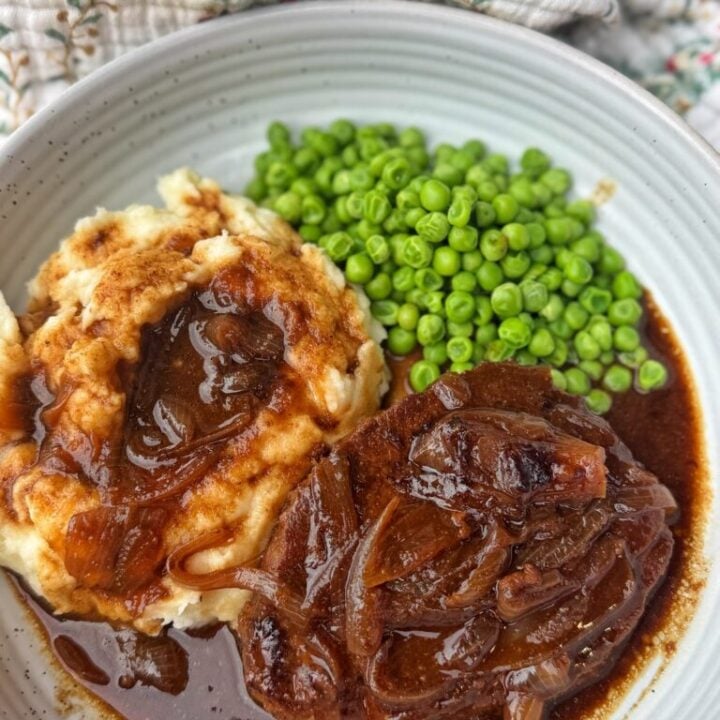
Old-fashioned round steak and gravy made in a heavy skillet with tender beef and onions slowly simmered in a rich, savory brown gravy. Anchovy paste adds deep umami flavor while Kitchen Bouquet gives the gravy its classic dark brown color. This comforting stovetop dinner is perfect served over mashed potatoes.
Ingredients
- 2 to 2 1/2 pounds round steak, cut into serving-sized pieces
- Kosher salt, to taste
- Black pepper, to taste
- 1 teaspoon garlic powder
- 1 teaspoon onion powder
- 1/2 cup all-purpose flour, divided
- 3 tablespoons butter
- 1 tablespoon neutral cooking oil
- 1 large yellow onion, sliced
- 2 1/2 to 3 cups beef broth
- 1 tablespoon Better Than Bouillon Beef Base
- 1 to 2 teaspoons anchovy paste
- 1/2 teaspoon dried thyme
- 1/2 teaspoon black pepper
- 1 teaspoon onion powder
- 1/2 teaspoon garlic powder
- 1 teaspoon Worcestershire powder, optional
- 1 to 2 teaspoons Kitchen Bouquet
- 1 tablespoon butter, for finishing
Instructions
- If necessary, cut the round steak into serving-sized pieces. For especially thick pieces, lightly tenderize the steaks with a meat mallet without pounding them thin.
- Season both sides of the steaks with kosher salt, black pepper, garlic powder, and onion powder.
- Place the flour in a shallow dish. Lightly dredge the steaks in the flour, shaking off the excess. Reserve the remaining flour.
- Heat a large, heavy, deep-sided skillet over medium-high heat. Add 3 tablespoons of butter and the cooking oil.
- Working in batches to avoid overcrowding the skillet, add the round steak and brown well on the first side before turning. Brown the second side, then transfer the steaks to a plate. Repeat with the remaining beef.
- Reduce the heat to medium. Add the sliced onion to the same skillet and cook for approximately 5 minutes, stirring and scraping the browned bits from the bottom of the pan.
- Sprinkle approximately 3 tablespoons of the reserved flour over the onions and pan drippings. Stir well and cook for 1 to 2 minutes.
- Slowly add 2 1/2 cups of the beef broth while stirring or whisking. Scrape the bottom of the skillet to incorporate the browned bits into the gravy.
- Stir in the Better Than Bouillon Beef Base, anchovy paste, thyme, black pepper, onion powder, garlic powder, Worcestershire powder if using, and Kitchen Bouquet. Bring the gravy to a gentle simmer.
- Return the browned round steak and any accumulated juices to the skillet. The gravy should come at least halfway up the meat. Add additional beef broth as needed.
- Cover the skillet and reduce the heat to very low. Maintain a gentle simmer for approximately 1 1/2 to 2 hours, turning the steaks once or twice during cooking. Add a little additional broth if the gravy becomes too thick.
- Once the round steak is fork tender, turn off the heat. Stir the remaining tablespoon of butter into the gravy.
- Cover the skillet again and let the round steak rest in the hot gravy for 15 to 20 minutes before serving.
- Taste the gravy and adjust the salt and pepper as needed. Serve the round steak with plenty of onions and brown gravy spooned over the top.
Notes
- Round Steak: If you cannot find pre-sliced round steak, buy a top or bottom round roast and slice it across the grain into approximately 1/2 to 3/4-inch-thick steaks.
- Anchovy Paste: Worcestershire sauce can be substituted for the anchovy paste. Start with approximately 1 tablespoon.
- Kitchen Bouquet: This is primarily used to deepen the color and flavor of the gravy. It can be omitted if you don't have it.
- Worcestershire Powder: This is optional but adds another layer of savory flavor. Because it can contain a fair amount of salt, taste before adding additional salt.
- Cooking Time: Round steak varies in thickness and tenderness. Use the cooking time as a guide and cook until the beef is fork tender rather than relying solely on the clock.
- Resting: Don't skip the final rest. Leaving the meat covered in the hot gravy for 15 to 20 minutes allows it to relax after its long cooking time.
- Storage: Refrigerate leftovers with the meat submerged in the gravy. Gently reheat on the stovetop, adding a splash of beef broth if needed.