
Mini Mac and Cheese
Creamy Homemade Mac and Cheese Made With Tiny Ditalini Pasta
This Mini Mac and Cheese is one of those recipes that is just plain fun to eat.

Instead of traditional elbow macaroni, I make it with ditalini pasta, those tiny little pasta tubes you often see floating around in soup.
They also happen to be PERFECT for macaroni and cheese.
Every little piece gets coated in a creamy homemade cheese sauce made with butter, flour, whole milk, mustard, seasonings, and plenty of shredded cheese.
It is creamy, cheesy, comforting, and very kid friendly, but I can assure you the adults will happily eat it too.
This is also a quick stovetop recipe.
No casserole dish, no caked on baked on cheese to scrub off a casserole.
No waiting for macaroni and cheese to bake.
You can have this on the table in about 25 minutes.
Before You Skip To The Recipe
There are three sections worth reading if you want that cheese sauce nice and creamy.
Why Ditalini Is Perfect For Mac And Cheese
How To Make A Smooth Cheese Sauce
Inspired By A Disney Meal
This recipe actually started because I was watching one of my favorite YouTube vloggers, The Tim Tracker.
Tim and Jenn make videos about Orlando and Disney, and years ago I watched them eat a meal at a Star Wars attraction that included this adorable little macaroni and cheese served alongside fried chicken.
I immediately thought, I need to make something like that.
That is where the idea for using tiny pasta came from.
This isn’t meant to be an exact Disney copycat recipe.
I saw something that looked delicious, went into my own kitchen, and created my own version.
And now the tiny noodles are probably my favorite part.
Why Ditalini Is Perfect For Mac And Cheese
Ditalini is traditionally the kind of pasta you might associate with soups.
They are very short, tiny tubes.
For this recipe, that size is exactly why I love them.
Instead of a giant noodle covered with a little cheese sauce, you get hundreds of these tiny pieces coated in cheese.
The sauce gets all around the pasta and into those little openings.
It also makes this really easy to eat.
There aren’t long noodles sliding off the fork and it isn’t quite as heavy as some baked macaroni and cheese recipes.
It is just little spoonfuls of creamy, cheesy pasta.
Kids especially seem to love the tiny noodles.
Although I am an adult and clearly I do too.

Where Do I Find Ditalini Pasta?
Look in the regular dried pasta aisle.
Ditalini is usually sold in the same type of box as elbows, shells, penne, and other dried pasta.
Depending on the store, there may only be one brand available.
Don’t panic if you can’t find it.
You can substitute another very small pasta shape.
Small elbows, small shells, tubetti, or another short little pasta will work.
The texture will be slightly different, but you will still have delicious macaroni and cheese.
I would not substitute a long pasta like spaghetti or fettuccine for this particular recipe.
Part of the charm here is the tiny pasta.
Don’t Overcook The Tiny Pasta
Ditalini is small, so keep an eye on it.
Cook according to the package directions and check it toward the end.
You want it cooked but not falling apart.
Remember that it is going to be stirred into a hot cheese sauce after it is drained.
If the pasta is already extremely soft before it hits the cheese sauce, it can get mushy.
And before you drain it:
SAVE SOME PASTA WATER.
I reserve about one cup.
You may not need any of it, but if your cheese sauce ends up thicker than you want, that pasta water is sitting there ready to save the sauce.
Making The Cheese Sauce
Do not be intimidated by making homemade cheese sauce.
We are basically starting with butter and flour.
That combination is called a roux.
You melt the butter over low heat and whisk in the flour.
The mixture may look a little clumpy at first.
That’s okay.
Cook and whisk it for about a minute or two.
This helps cook out the raw flour taste.
Then you slowly begin adding your milk.

Add The Milk Slowly
This is the step where patience pays off.
Do not dump all two cups of milk into the pan at once.
I add approximately 1/4 cup at a time, whisking as I go.
The mixture will gradually become smoother.
Keep the heat fairly low.
You want a gentle simmer that allows the sauce to thicken.
You do NOT want to aggressively boil this.
Whisk.
Add milk.
Whisk some more.
Eventually you will have a smooth sauce that lightly coats the back of a spoon.

How Do I Know When The Sauce Is Thick Enough?
Dip a spoon into the sauce.
When you lift it out, there should be a thin coating of sauce on the back of the spoon instead of all the liquid immediately running off.
Remember that you’re still going to add cheese.
The sauce will become thicker once all that cheese melts into it.
So don’t cook the milk mixture until it resembles wallpaper paste and THEN add three cups of cheese.
We want creamy macaroni and cheese.
Not spackle. Unless you need some to repair your apartment to get your security deposit back.

The Seasonings Make A Difference
Before the cheese goes in, I season the sauce with:
- Nutmeg
- Garlic powder
- Onion powder
- Brown or spicy mustard
- Salt
- Chili powder
- Dried parsley
- Black pepper
None of these seasonings are supposed to scream at you individually.
You shouldn’t take a bite and think, “WOW, NUTMEG.”
They work together in the background to make the cheese taste richer and more interesting.
Why Put Mustard In Mac And Cheese?
The mustard is one of those ingredients you might question until you try it.
I use brown or spicy mustard.
You aren’t adding enough to make the macaroni and cheese taste like mustard.
It adds a little tang and helps balance all the richness from the butter, whole milk, and cheese.
If you have ever eaten a cheese sauce and thought it tasted sort of flat despite having a ton of cheese in it, it probably needed something to wake it up.
That’s what the mustard is doing here.
What Is The Nutmeg Doing?
Nutmeg is another classic addition to creamy sauces.
Again, I use only 1/4 teaspoon.
This isn’t pumpkin pie macaroni and cheese.
That tiny amount gives the creamy milk and cheese sauce a little warmth and depth without making it taste sweet.
If you aren’t sure about nutmeg, start with slightly less.
You can always adjust the seasonings to your taste.
The Best Cheese To Use
The original time I made this recipe, I used sharp cheddar and Unexpected Cheddar from Trader Joe’s.
That combination was delicious.
But one of the reasons I like this recipe is that you can use cheeses your family likes.
Sharp cheddar is always a great starting point.
You can also combine cheddar with:
- Monterey Jack
- Colby Jack
- Gruyère
- Gouda
- Fontina
- American cheese
- A mild white cheddar
I like using at least one cheese with a stronger flavor so the sauce doesn’t end up tasting bland.
If you’re making this for little kids who prefer a mild mac and cheese, use a milder cheddar or Colby Jack.
Two Cups Or Three Cups Of Cheese?
The recipe calls for 2 to 3 cups of shredded cheese.
Why the range?
Because cheese isn’t an exact science in my kitchen.
Start with two cups.
Taste the sauce.
If you want it cheesier and the sauce can handle more, add more.
I generally like mine toward the cheesy end of the spectrum.
Obviously.
But remember that the sauce continues to thicken as it cools.
You don’t necessarily need to add every last shred of cheese simply because it is sitting on the cutting board.
Shred Your Own Cheese If You Can
For the smoothest cheese sauce, I prefer cheese that I shred myself.
Pre-shredded cheese is convenient and I absolutely use it for plenty of recipes, but freshly shredded cheese tends to melt very nicely into a sauce.
This is especially easy if you’re using a regular block of cheddar.
You can grate the cheese before you even start boiling the pasta.
Then everything is ready when your sauce needs it.
Add The Cheese A Little At A Time
Just like the milk, don’t dump all the cheese in at once.
Turn the heat very low and add the cheese one handful at a time.
Stir until that cheese is melted before adding the next handful.
This gives you much more control over the consistency.
It also keeps you from suddenly having one enormous blob of partially melted cheese sitting in your saucepan.
Why Did My Cheese Sauce Turn Grainy?
If you’ve struggled with homemade macaroni and cheese before, this is usually the problem people are talking about.
The sauce can become grainy or oily when it gets too hot.
Once you begin adding cheese, keep the heat very low.
You can even move the pan off the direct heat briefly while incorporating the cheese if your stove runs hot.
Add it gradually and stir gently.
Do not boil the cheese sauce after the cheese is added.
Your goal is simply to melt this.
What If My Cheese Sauce Is Too Thick?
This is why I told you to save that pasta water.
If your finished cheese sauce seems too thick after adding the pasta, add a small splash of reserved pasta water and stir.
Then look at it again.
If it still needs loosening, add another small splash.
Do not dump the whole cup in.
You can always add more.
You cannot make it disappear like a magician, unless you are a magician ?
You can also use a splash of milk if you’ve already forgotten and poured all your pasta water down the drain.
Not that any of us have ever done that.
What If My Cheese Sauce Is Too Thin?
First, give it a minute.
Cheese sauce thickens as it sits.
Once the ditalini is added, the pasta will also pick up some of the sauce.
If it is truly very thin, keep it over low heat briefly and stir.
Do not try to fix a slightly thin sauce by dumping a huge amount of extra cheese into it all at once.
Give everything a chance to come together first.
This Is A Stovetop Mac And Cheese
This particular Mini Mac and Cheese is meant to be creamy and served right from the pot.
I do NOT bake it after making it.
There are plenty of wonderful baked macaroni and cheese recipes, including some on my site.
This is a different style.
The beauty of this one is the silky sauce and the little ditalini noodles.
Make it.
Stir it together.
Put it in a bowl.
Eat it. Right from the skillet if you prefer!
The Ultimate School Lunch Dinner
The meal that originally inspired me paired little macaroni and cheese with fried chicken, and I loved the whole school-lunch feeling of it.
Except considerably better than most of the lunches I remember from school.
I served mine with crispy chicken tenders.
It makes such an easy dinner because the macaroni and cheese is homemade, but you can absolutely take help from the freezer aisle with the chicken.
I originally used Bell & Evans chicken tenders and cooked them in my air fryer.
Then add some fruit or a vegetable on the side and dinner is done.

What Else Can I Serve With Mini Mac And Cheese?
This goes with almost anything that needs a cheesy side dish.
A few of my favorites:
- Crispy chicken
- Chicken tenders
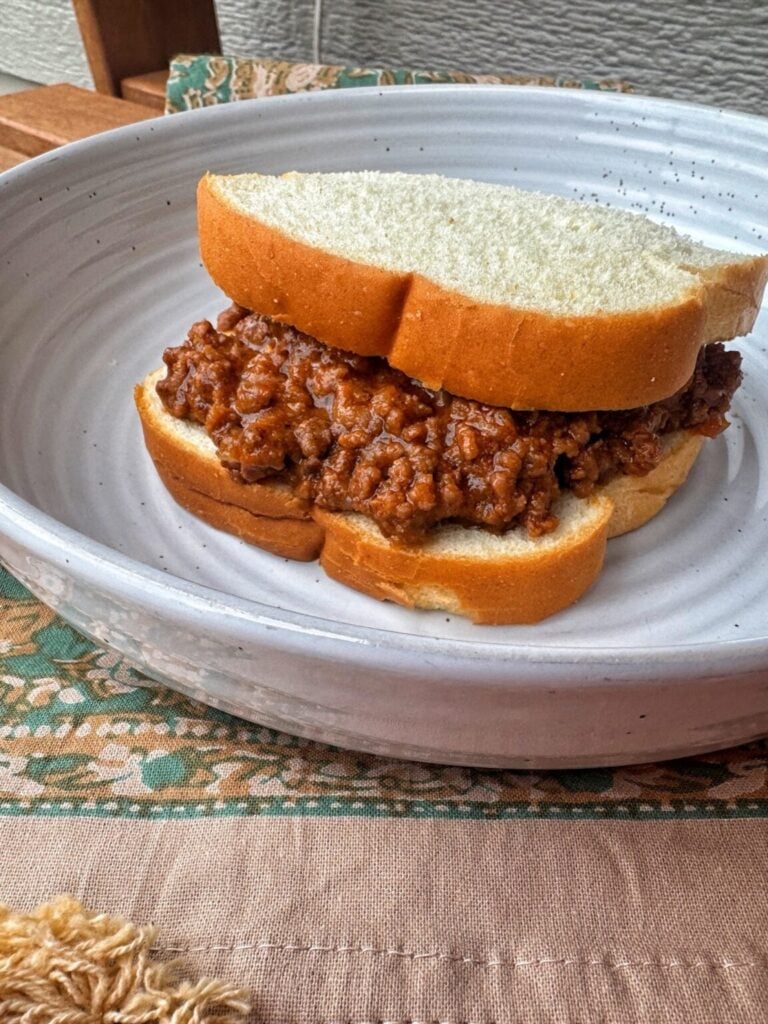
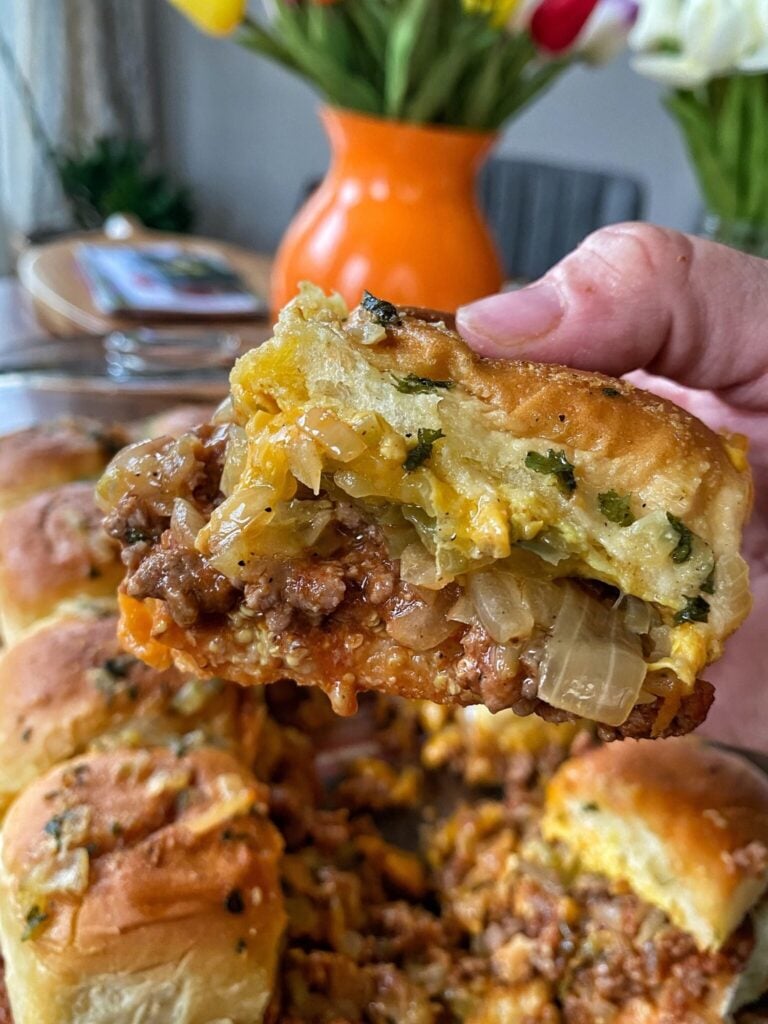
- Sloppy Joe sliders
- Burgers
- Hot dogs
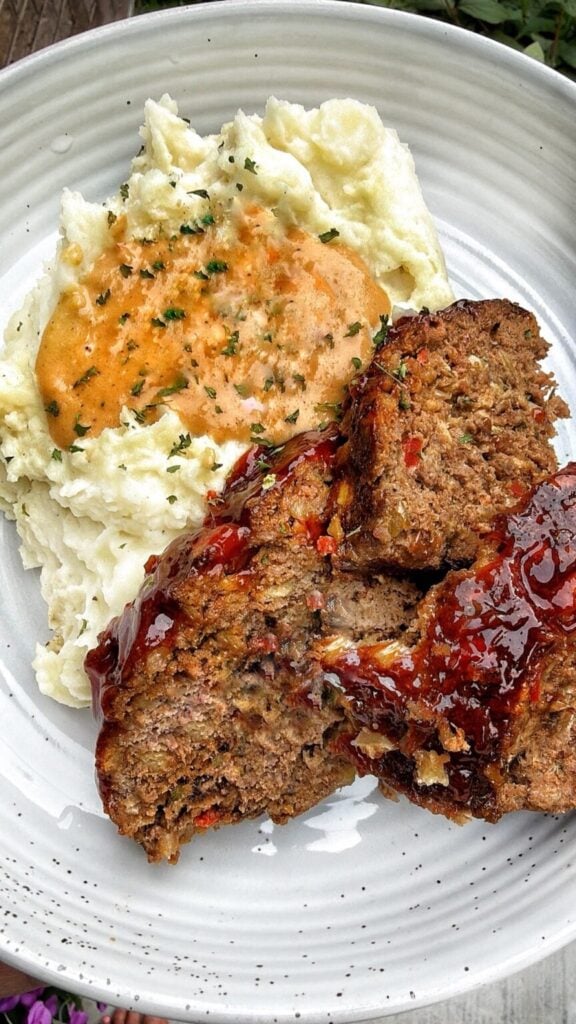
- Meatloaf
- Pork chops
- Barbecue chicken
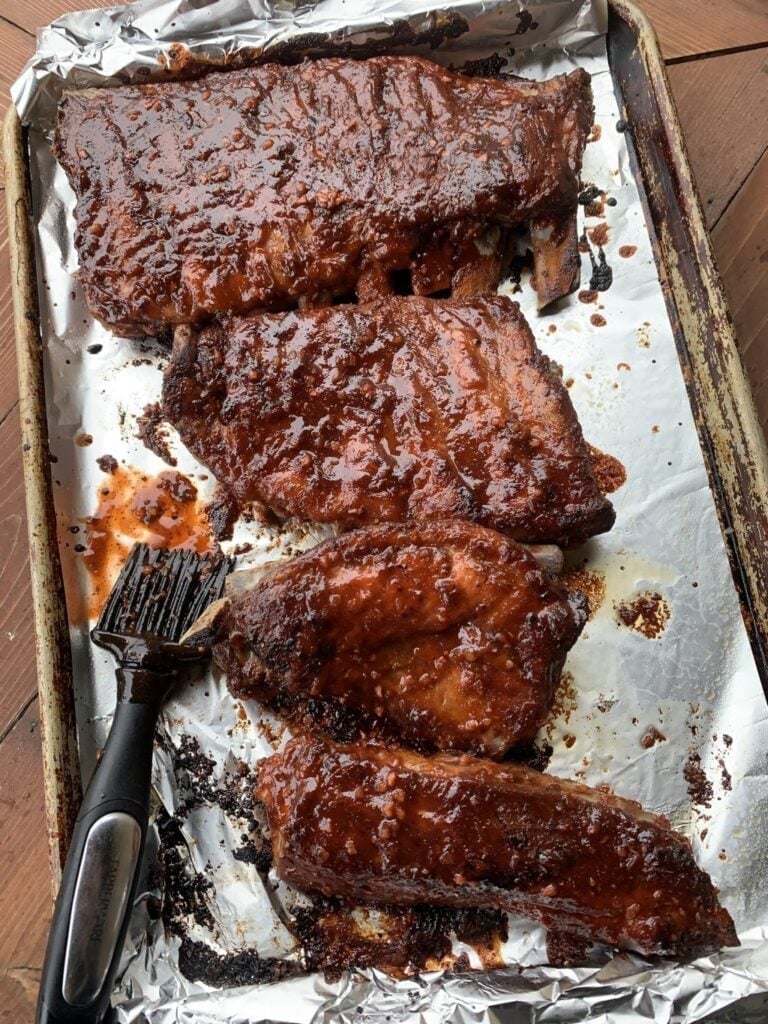
- Ribs
- Pulled pork
I especially love the Sloppy Joe Sliders with this because the combination has that nostalgic cafeteria-food feeling.
Except now we’re adults and nobody can tell us we can’t have seconds. I rounded up some of my favorite recipes that would be perfect to pair with this Mini Mac and Cheese. Just click each image to go to the recipe.
More Mac And Cheese Recipes
Apparently I have never met a macaroni and cheese I didn’t want to experiment with.
If you’re a fellow mac and cheese person, I have several completely different versions on my site and you can click each image to give it a try.


Can I Make Mini Mac And Cheese Ahead?
You can, but I prefer this recipe fresh from the stove.
That is when the cheese sauce is at its smoothest and creamiest.
As macaroni and cheese sits in the refrigerator, the pasta continues absorbing moisture from the sauce.
That means yesterday’s macaroni and cheese will naturally be thicker than the pot you just made.
It is still delicious.
You just need to wake the sauce back up a little when reheating it.
How To Reheat Mini Mac And Cheese
One of my readers left a great tip on the original recipe that is exactly how I would handle leftovers.
Add a little milk while reheating.
Warm the macaroni and cheese gently on the stove or in the microwave and add milk a small amount at a time.
Stir as it heats.
The sauce should gradually loosen and become creamy again.
Don’t add a half cup of milk before you’ve even turned on the stove.
Start with a splash.
You can always add another.
A Reader’s Crispy Bread Topping Idea
I also had a reader leave an old-fashioned macaroni and cheese idea in the comments that sounded so good I wanted to save it here.
She suggested adding a little cheddar to the top, buttering white bread, removing the crusts, cutting the bread into little cubes, and scattering them over the cheese.
Then bake it at 350°F until the cheese melts and those little buttered bread pieces get toasted.
She says once you try those buttery toasted bread cubes, you may never go back to breadcrumbs.
I haven’t made this original stovetop recipe that way, so consider this a reader variation rather than part of my recipe.
But I certainly wasn’t going to keep that information from you.
Can I Add Things To Mini Mac And Cheese?
Absolutely.
If you want to turn this side dish into more of a meal, you could add:
- Diced ham
- Cooked bacon
- Shredded chicken
- Peas
- Broccoli
- Green chiles
- Cooked sausage
I would make the original recipe at least once before adding a bunch of things.
Then once you know what the sauce is supposed to look and taste like, go rogue.
Frequently Asked Questions
What Is Ditalini Pasta?
Ditalini is a very small tube-shaped pasta commonly used in soups. I use it here because all those tiny pieces get coated beautifully in the cheese sauce.
What Can I Substitute For Ditalini?
Small elbows, tiny shells, tubetti, or another small short pasta can work.
What Cheese Do You Use?
I originally used sharp cheddar and Unexpected Cheddar. You can use your favorite good melting cheeses.
Can I Use Only Cheddar?
Absolutely. Sharp cheddar makes a delicious mac and cheese on its own.
Why Do You Add Mustard?
A small amount of brown or spicy mustard adds tang and helps balance the richness of the cheese sauce. It shouldn’t taste strongly of mustard.
Can I Leave Out The Nutmeg?
Yes. The small amount adds warmth to the sauce, but if you dislike nutmeg you can omit it.
Why Do I Need To Reserve Pasta Water?
It gives you an easy way to loosen the cheese sauce if it becomes thicker than you like.
Why Is My Cheese Sauce Grainy?
The heat may have been too high when the cheese was added. Add cheese gradually over very low heat and don’t let the finished cheese sauce boil.
Can I Use Pre-Shredded Cheese?
You can. For the smoothest sauce, I prefer freshly shredded cheese when possible.
Can I Make This The Day Before?
You can, but the sauce is creamiest when freshly made. Reheat leftovers gently with a little milk.
Can I Bake This Mac And Cheese?
The original recipe is designed as a creamy stovetop macaroni and cheese. If you want to experiment with a baked topping, see the reader suggestion above.
Is This Kid Friendly?
Very. The tiny pasta makes it especially easy to eat, and you can use milder cheeses if that’s what your kids prefer.
Little Pasta, Lots Of Cheese
There isn’t anything complicated about why this recipe works.
Tiny pasta.
Creamy homemade cheese sauce.
Plenty of cheese.
A few seasonings that make the whole thing taste a little more interesting.
And it takes about 25 minutes.
Sometimes the best recipes aren’t the ones that require an entire afternoon in the kitchen.
Sometimes you see a tiny bowl of macaroni and cheese on a Disney vlog, become completely obsessed with the idea, and end up making a recipe you still love years later.
That works too.
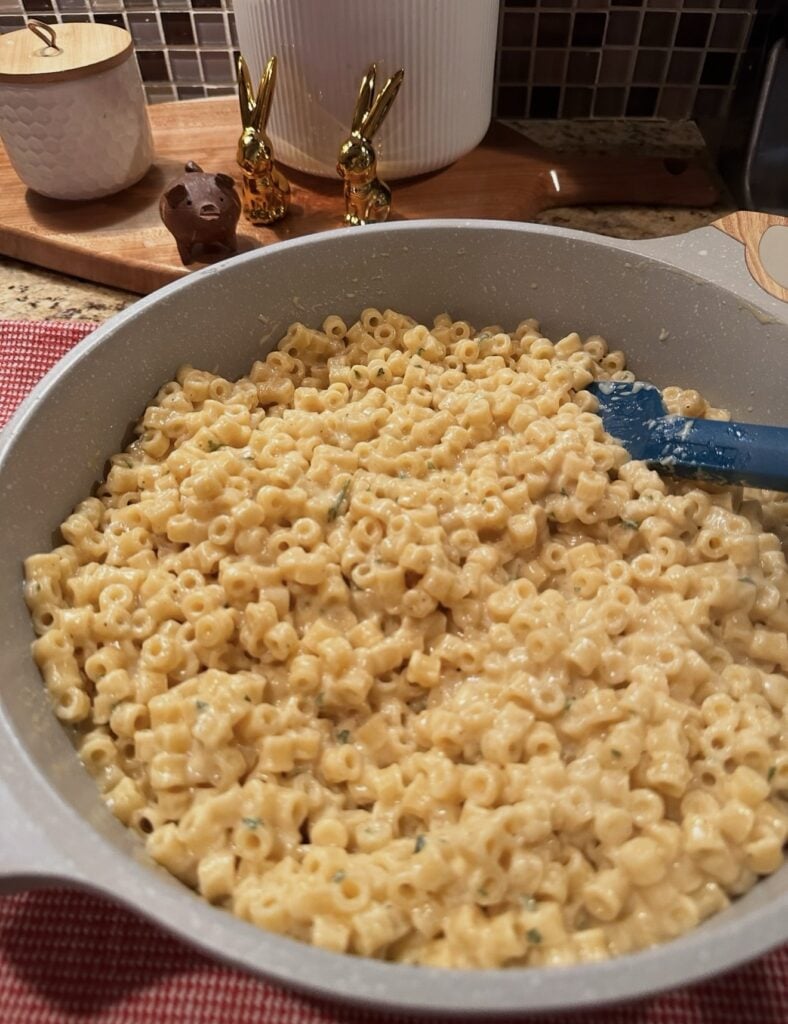
Mini Mac and Cheese Recipe

A mini version of mac and cheese that is fun and delicious for adults and kids. Made with ditalini pasta and easy cheese sauce and some simple seasonings, this Mini Mac and Cheese will be on your regular rotation.
Ingredients
- *see the post before the recipe card for detailed information on any ingredients you are not familiar with.
- 1 16-ounce box ditalini pasta
- 2 tablespoons flour
- 4 tablespoons butter
- 2 cups full-fat milk
- 2 to 3 cups shredded cheese of your choice
- 1/4 teaspoon nutmeg
- 1/2 teaspoon garlic powder
- 1/2 teaspoon onion powder
- 1/2 tablespoon brown or spicy mustard
- Pinch of salt
- Pinch of chili powder
- 1/2 tablespoon dried parsley
- Black pepper to taste
- Seasonings can be adjusted to personal preference.
Instructions
- Cook the ditalini pasta according to the package directions. Before draining, reserve 1 cup of the pasta water. Set the pasta aside.
- While the pasta cooks, melt the butter in a large saucepan over low heat.
- Sprinkle the flour evenly over the melted butter. Whisk the butter and flour together for about 1 to 2 minutes. It may clump slightly at first. This step cooks out the raw flour flavor.
- Begin adding the milk approximately 1/4 cup at a time, whisking constantly after each addition.
- Keep the heat low enough that the sauce is gently simmering but not boiling. Continue adding the milk and whisking until the mixture is smooth and has thickened enough to lightly coat the back of a spoon.
- Add the mustard, nutmeg, garlic powder, onion powder, salt, chili powder, dried parsley, and black pepper. Whisk well, taste, and adjust the seasonings if needed.
- Reduce the heat to its lowest setting. Add the shredded cheese one handful at a time, gently stirring until each addition has melted before adding more.
- When the cheese sauce is smooth, add the drained ditalini pasta and stir until every little piece is coated.
- If the sauce is thicker than you prefer, add a small amount of the reserved pasta water and stir. Continue adding only a little at a time until the sauce reaches the consistency you like.
- Serve immediately while the Mini Mac and Cheese is at its creamiest.
Notes
- Save the pasta water. Do this BEFORE draining the pasta. You may not need it, but it is very helpful if your finished sauce needs to be loosened.
- Don't overcook the ditalini. These tiny noodles cook fairly quickly and will continue sitting in the hot cheese sauce after they are drained.
- Add the milk gradually. I use approximately 1/4 cup at a time and whisk constantly. This helps create a smooth sauce.
- Don't boil the cheese. Once the cheese starts going into the sauce, keep the heat very low. High heat can contribute to a grainy or oily cheese sauce.
- Add cheese a handful at a time. Let each addition melt before adding the next.
- Cheese choices: I originally used sharp cheddar and Unexpected Cheddar. Sharp cheddar, Monterey Jack, Colby Jack, Gruyère, Gouda, fontina, American cheese, or combinations of these can work.
- Two or three cups? Start with 2 cups of cheese. Taste and add more if you want an even cheesier sauce.
- Freshly shredded cheese: When possible, I like to shred the cheese myself for a smooth, creamy sauce.
- Mustard: The brown or spicy mustard adds a little tang. The finished macaroni and cheese should not taste strongly of mustard.
- Nutmeg: The 1/4 teaspoon adds warmth and depth to the creamy sauce. You can reduce or omit it if you strongly dislike nutmeg.
- If the sauce is too thick: Add reserved pasta water a small splash at a time. Milk can also be used if you've already discarded the pasta water.
- If the sauce seems a little thin: Give it a minute before changing anything. The sauce thickens as it cools and the pasta absorbs some of it.
- Best served fresh: This macaroni and cheese is creamiest right after it is made.
- Reheating leftovers: Add a small splash of milk and warm gently on the stove or in the microwave, stirring as it heats. Add more milk only as needed.
- Optional reader variation: A reader suggested topping leftover mac and cheese with cheddar and small cubes of buttered white bread, then baking at 350°F until the cheese melts and the bread is toasted. This is a variation and not part of my original stovetop method.
2 Comments
Anonymous
August 25, 2026 at 9:35 pm
To reheat, if you add a little milk while you warm it up, on stove or microwave. Once you mix while warming the cheese will smooth back out, just add small amounts until it what you like. Great recipe, same as what I grew up with. Just add some cheddar to the top, butter a slice or two of white bread, no crust, and chop it up into small squares, place on top of cheese and toss in the oven at 350 until cheese melts and bread is toasted. Those buttered toasted chunks with all that gooey goodness. You will never do panko as crumbs again.
thetipsyhousewife
August 26, 2026 at 4:32 pm
Thanks for this tip