
Mom’s Pork Roast
A Simple Old-Fashioned Pork Roast Made Low And Slow
Mom’s Pork Roast is one of those recipes that proves you do not need a long list of ingredients to make really delicious food.

My mom has been making this pork roast for as long as I can remember. It is seasoned simply with salt, pepper, garlic powder, onion powder, caraway seeds, and just a little bit of sugar. Then it goes into a covered roasting pan and cooks low and slow until the pork is incredibly tender.
There is no fancy marinade. There is no complicated sauce.
The pork creates its own steam and juices as it slowly cooks inside the covered roaster.
The caraway seeds give the pork that distinctive old-fashioned flavor that I associate with the Czech and Eastern European meals I grew up eating around Chicago. This meal was and is a Sunday staple for us.
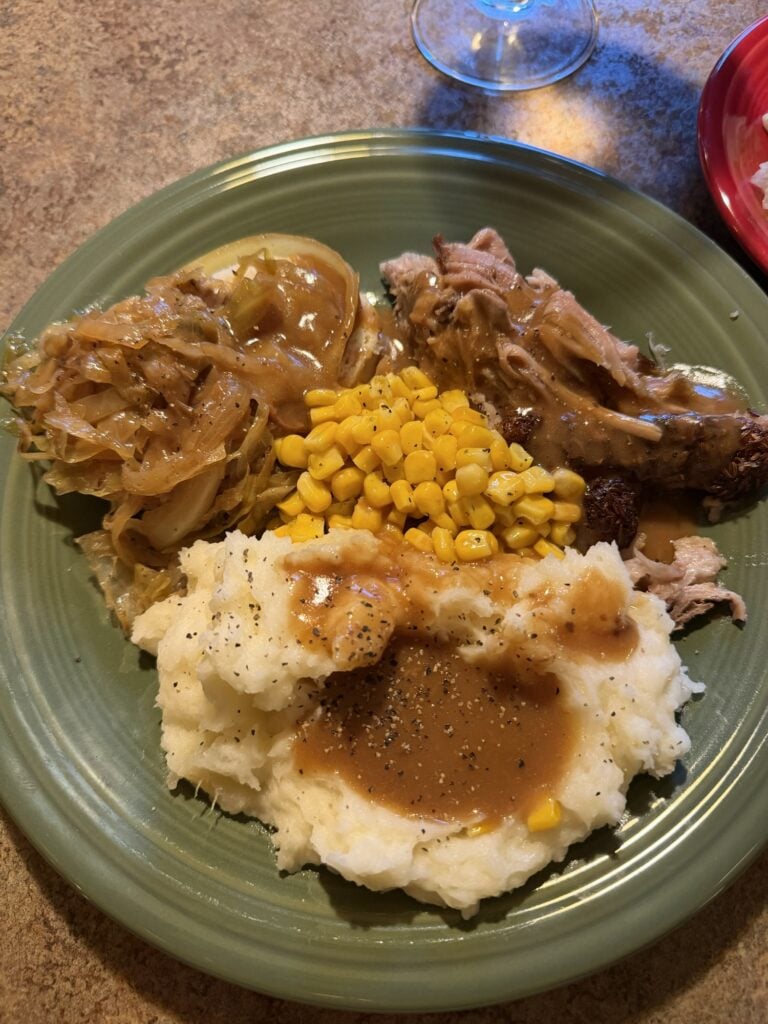
We traditionally serve this with bread dumplings, brown gravy made even better with the pork drippings, and sautéed cabbage.
It is simple, inexpensive comfort food, and it tastes like home to me.
Before You Skip To The Recipe
This is an easy recipe, but there are a few sections worth reading before you head straight to the recipe card.
The Right Cut Of Pork Makes All The Difference
For this recipe, you want a pork shoulder, approximately 4 to 5 pounds.
You may see pork shoulder labeled several different ways at the grocery store, including pork shoulder roast or pork butt/Boston butt.
Don’t substitute pork tenderloin.
Don’t substitute one of those very lean little pork loin roasts and expect the same result.
This recipe works because pork shoulder contains fat and connective tissue that slowly break down during the long cooking time.
That is what eventually gives you the tender meat and flavorful juices in the bottom of the pan.
You can use a bone-in or boneless pork shoulder.
My favorite way to know a bone-in pork shoulder is done is when that bone practically slides right out of the meat.
That’s a pretty good indication that patience has done its job.
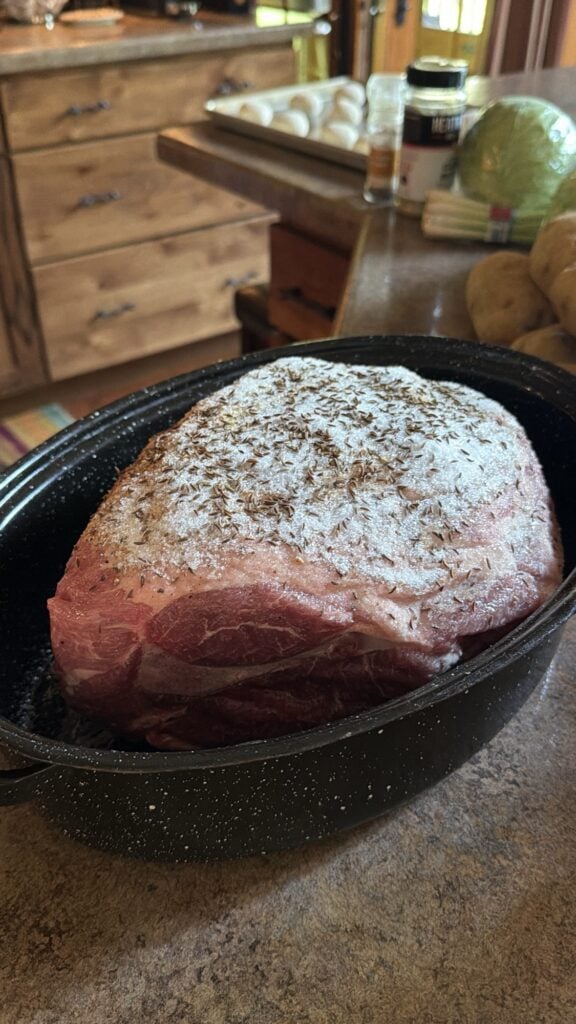
What Is The Fat Cap?
When you look at your pork shoulder, you’ll notice that one side has a more noticeable layer of fat.
That is the fat cap.
Place the pork in your roasting pan with the fat cap facing UP.
As the pork slowly cooks, that fat renders and contributes flavor and moisture to the roast and the drippings below.
This is one of those recipes where fat is doing a job.
You don’t need to trim every bit of it away before cooking.
After cooking, you can remove excess pieces of fat you don’t want to eat. Trust me, you will want to eat them though. They get all caramelized and crisp.
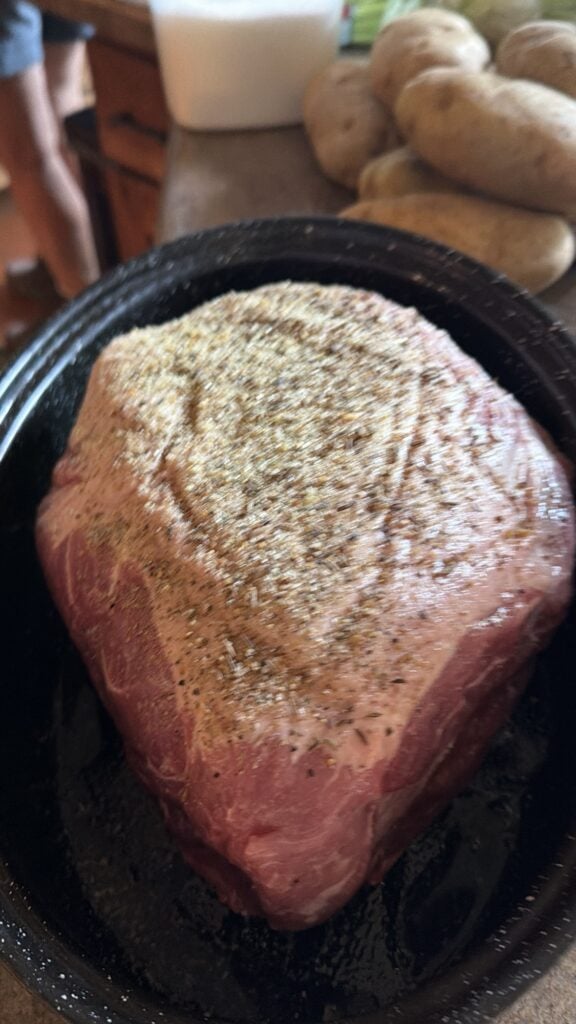
Don’t Be Afraid Of The Caraway Seeds
Caraway is a major part of what makes this pork roast taste like my mom’s pork roast.
I use 2 to 3 tablespoons of caraway seeds, which may look like a lot when you’re sprinkling them over the meat.
Trust the process.
Caraway has a warm, earthy, slightly nutty flavor that is commonly associated with Central and Eastern European cooking.
It works especially well with pork and cabbage.
If you’ve eaten rye bread, you probably already recognize the flavor of caraway even if you didn’t know what you were tasting.
I would not leave it out of this recipe.
Without it, you’ll still have roasted pork.
You just won’t have Mom’s Pork Roast.
What If You Can’t Have Seeds?
If you cannot eat whole seeds but can still have caraway as a spice, you can use ground caraway instead. Because ground caraway is more concentrated throughout the dish, start with about 2 to 3 teaspoons of ground caraway in place of the 2 to 3 tablespoons of whole caraway seeds.
If you need to avoid caraway completely, you can simply leave it out. The pork will still be delicious with the garlic, onion, salt, pepper, and touch of sugar, but it will not have quite the same traditional flavor as my mom’s original recipe.
You can also put whole caraway seeds into a small piece of cheesecloth or a spice bag, tie it securely, and tuck it into the roasting pan while the pork cooks. You’ll get some of that traditional caraway flavor without having the actual seeds throughout the finished pork. Just remember to remove the bag before serving.
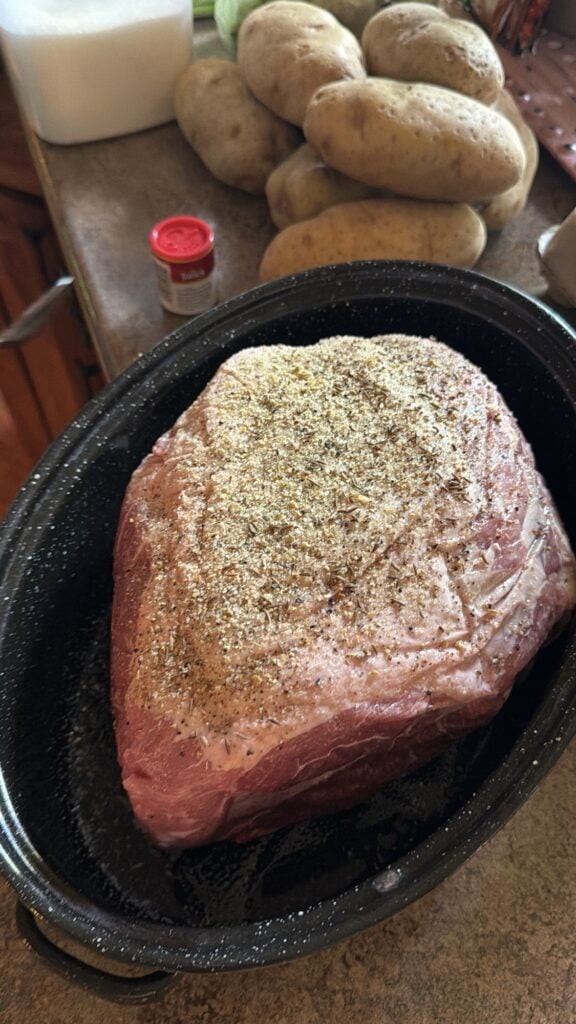
Why Is There Sugar On The Pork?
There is only one tablespoon of white sugar in this entire roast.
It doesn’t make the pork sweet.
The small amount of sugar works with the savory seasonings and caraway and helps balance everything.
It’s one of those tiny old-fashioned recipe details that might tempt you to say, “Do I really need this?”
I make Mom’s recipe the way Mom makes it.
Use the sugar.
Why You Don’t Add Liquid
This is probably the part of the recipe that makes people nervous.
You put the seasoned pork shoulder into the roaster, cover it, and you do not add broth or water at the beginning.
That’s intentional.
Pork shoulder contains plenty of fat and moisture. As it slowly cooks in the covered pan, the pork begins releasing its own juices.
The tightly covered roasting pan also traps steam.
You’re essentially creating a wonderful little environment where the pork slowly cooks in its own moisture.
If you pour a bunch of liquid into the pan at the beginning, you’re changing the cooking environment unnecessarily.
Let the pork do its thing.
About halfway through cooking, you CAN check it.
If for some reason your pan is extremely dry, add approximately 1/2 cup of water and reduce the oven temperature to 300°F.
But most of the time, the pork should create plenty of liquid on its own.
And we are saving those drippings.
*If you are really worried you can add a 1/2 cup of water to the bottom.
The Speckled Roaster
If you grew up in the Midwest, especially around Chicago, there is a decent chance somebody in your family owned one of those black-and-white speckled roasting pans.
My mom specifically uses one for this recipe.
Everyone in my family seems to have one.
I think part of the reason it works so well is that the pan isn’t enormously larger than the roast.
The smaller surface area means the liquid doesn’t evaporate as quickly, and the fitted lid helps hold in steam and moisture.
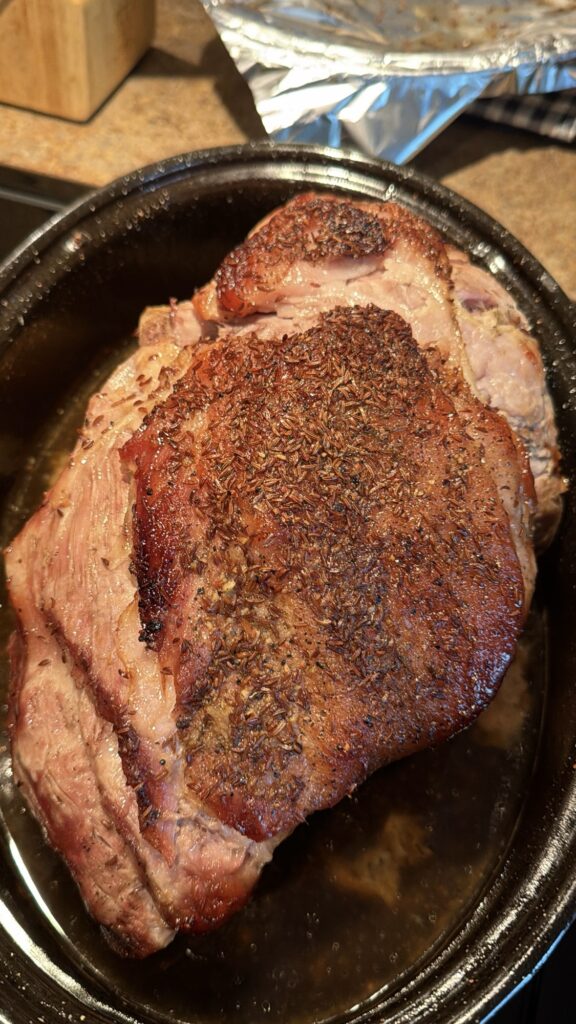
The pork still develops beautiful color even though the roasting pan is covered.
More Info On The Speckled Roaster
If you grew up in the Midwest, there is a good chance somebody in your family owned one of these black-and-white speckled roasting pans. My mom always used one for this pork roast, and it is still the type of covered roaster I use today.
I have other roasting pans, but there is something about these old-fashioned speckled enamel roasters that I absolutely love. It is the only covered roaster I use where the meat gets beautifully browned while it is still cooking with the lid on. I know that sounds like it shouldn’t happen, but it does.
There is actually a reason for it. These roasters are made from steel covered in dark porcelain enamel. The dark surface absorbs the heat from the oven while the steel core helps distribute that heat throughout the pan. This helps the meat cook evenly and encourages that beautiful browning I always get with this pork roast.
At the same time, the lid is holding moisture inside the pan. As the pork cooks, the moisture rises, collects on the lid, and falls back over the food. That is part of why this pork can cook for hours without adding a bunch of liquid and still come out so tender and juicy.
For this particular recipe, I also like using a roaster that isn’t enormously bigger than the pork shoulder. It keeps all those wonderful pork juices and drippings concentrated around the roast instead of spread across a giant pan.
What Size Speckled Roaster Should I Buy?
One of the nice things about these roasters is that they come in several sizes. You don’t have to buy an enormous turkey roaster if you’re usually cooking smaller cuts of meat.
You’ll commonly find covered oval speckled roasters around 13, 15, 18, and 19 inches, with larger rectangular versions available as well.
For reference:
13-inch: Holds approximately a 7-pound roast.
15-inch: Holds approximately a 10-pound roast.
18-inch: Holds approximately a 15-pound roast.
19-inch: Holds approximately a 20-pound roast.
For this recipe’s 4 to 5-pound pork shoulder, you don’t need the largest one. I actually prefer having a roaster that fits fairly closely around the meat.
If you cook a lot of turkeys, hams, or large holiday roasts, however, having one of the larger sizes is useful. I have more than one size because I use these pans for so many different things.
Where Can I Buy A Speckled Roaster?
The classic ones are made by Granite Ware, and they’re still being made today. You can find them online and at major retailers, and they are usually listed as a Granite Ware Covered Oval Roaster or speckled enamel roaster.
I would choose your size based on what you cook most often rather than automatically buying the biggest one. A smaller roaster is perfect for recipes like this pork shoulder, while the larger sizes are great for holiday turkeys and big roasts.
And if you happen to have an old speckled roaster that belonged to your mom or grandma tucked away in a cabinet somewhere, get that thing out.
There’s a reason people have been cooking with them for generations.
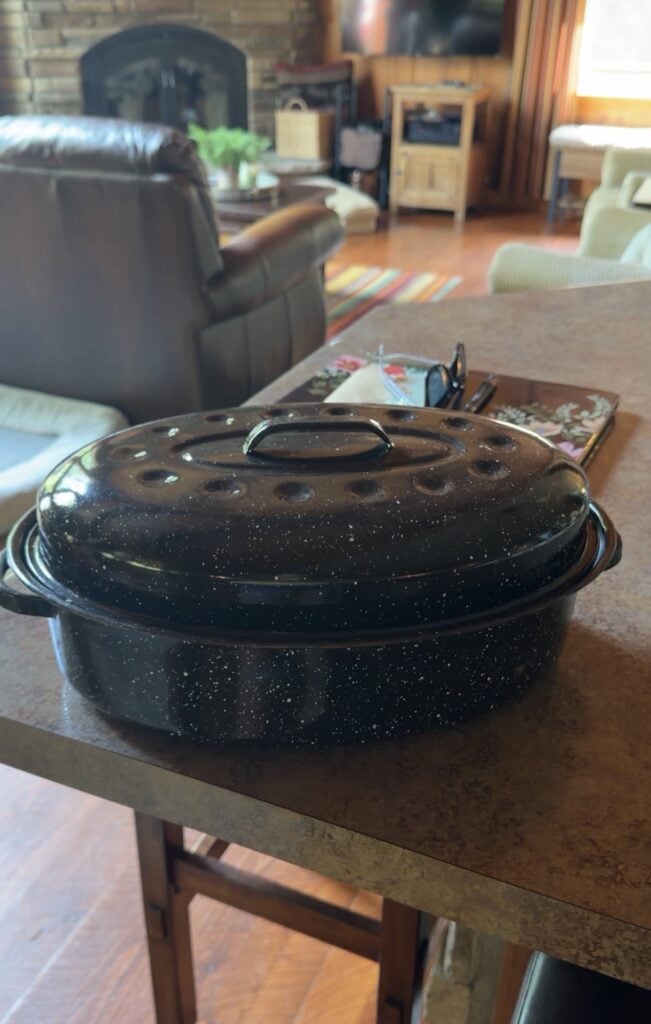
What If I Don’t Have A Speckled Roaster?
Please don’t decide you can’t make the recipe.
Use a covered roasting pan or a heavy oven-safe pot with a lid that comfortably holds your pork shoulder.
A Dutch oven can also work.
The most important thing is having a vessel that:
- Is oven safe
- Has a lid
- Isn’t enormously larger than the pork
- Holds in the moisture and steam
If your lid doesn’t fit tightly, you may lose moisture more quickly, so keep an eye on the roast later in the cooking process.
No, I Don’t Make This In The Slow Cooker
I know somebody is going to ask.
Can I make Mom’s Pork Roast in a Crock-Pot?
You certainly CAN put a pork shoulder into a slow cooker and cook it until tender.
But it won’t be this recipe.
I have tried it.
It does not come out the same.
The texture, browning, drippings, and overall flavor are different.
Mom’s Pork Roast goes into a covered roasting pan in the oven.
Sometimes the old-fashioned way is the right way.
Using A Slow Cooker To Keep It Warm
I do not cook Mom’s Pork Roast in the slow cooker, but I will use my slow cooker to keep it warm for a party or family gathering. Cook the pork completely in the oven using the recipe below, then let it rest and break or slice the meat into large serving pieces. Transfer the hot pork to your slow cooker and spoon some of those delicious pan juices over the top. You don’t want the pork swimming in liquid, but you do want enough to help keep it moist. Cover the slow cooker and use the WARM setting for serving. Keep the lid on as much as possible so you aren’t constantly letting the heat and moisture escape. I like to keep the gravy separate and serve it alongside the pork so everyone can add as much as they like.
Low And Slow Is The Secret
Once the pork is seasoned and covered, roast it at 325°F for approximately 4 to 5 hours.
This is not a recipe you rush.
Pork shoulder needs time for its connective tissue to break down and become tender.
About halfway through, you can take a look.
If there is plenty of moisture and everything looks good, cover it back up and leave it alone.
If the pan looks unusually dry, add approximately 1/2 cup of water and turn the oven down to 300°F.
Then continue cooking.
The roast will develop color even though it is covered.
That is one of the things I love about this method.
How Do I Know When The Pork Is Done?
My mom’s traditional method is very simple:
If it’s bone-in and you can easily pull the bone out, it’s ready.
The meat should also pull apart very easily.
There should not be a fight happening between you and the pork.
For food safety, whole cuts of pork should reach at least 145°F followed by a three-minute rest, but pork shoulder cooked only to that temperature will not have the fall-apart texture we’re looking for with this particular recipe.
For a slow-roasted shoulder, you’re cooking beyond basic safe doneness so that the tough connective tissue has time to break down.
A meat thermometer is helpful, but texture is also important with pork shoulder.
When a fork goes in easily and the meat practically falls apart, you’ve reached the result we’re after.
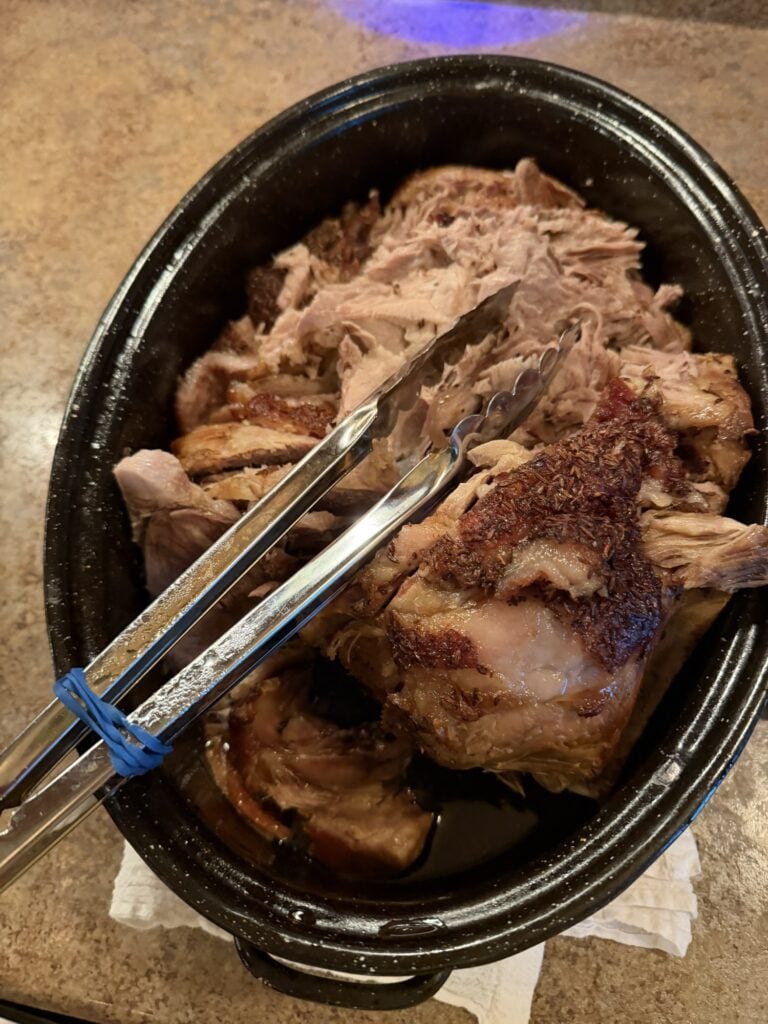
Save Those Pork Drippings
Do NOT pour the liquid from the roasting pan down the drain.
Those drippings are gold.
They contain pork flavor, caraway, seasonings, rendered fat, and all the goodness that developed during several hours in the oven.
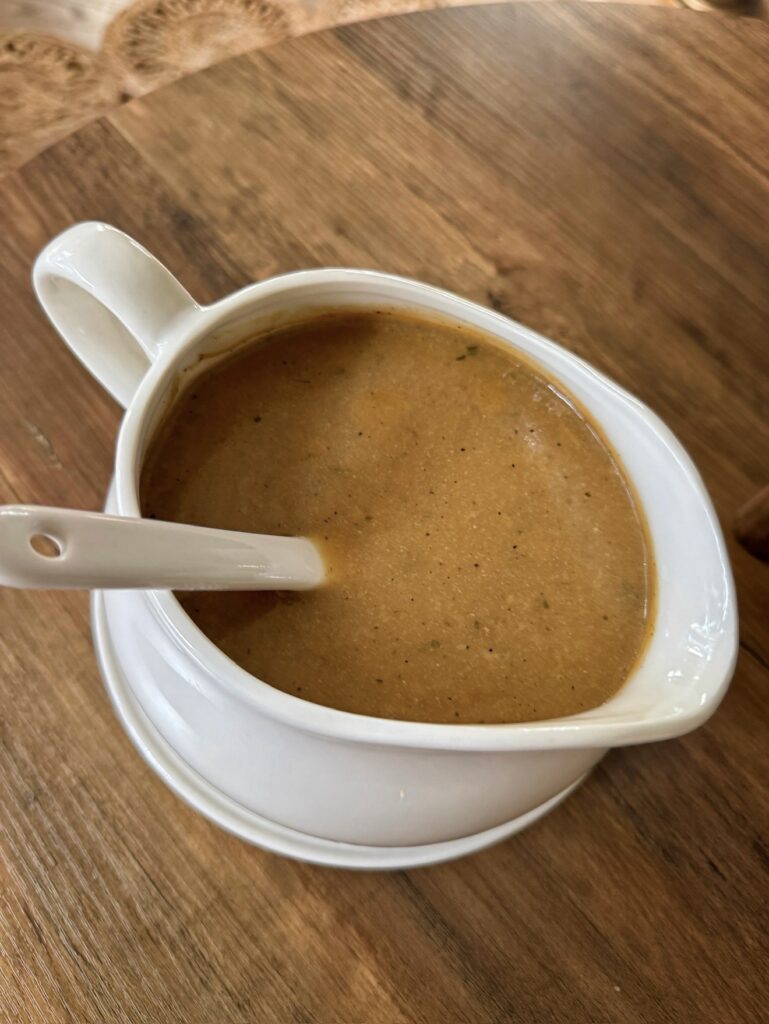
My mom serves this with brown gravy made from a packet, and that is exactly how I like it.
Make the brown gravy according to the package directions and add some of the pork drippings.
Suddenly that little packet of gravy tastes like it has been cooking alongside your pork all afternoon.
You can skim excess fat from the drippings first if necessary.
Taste before adding additional salt because the drippings and gravy mix may already contain plenty.
What Are Bread Dumplings?
This is the side dish I associate most with this meal.
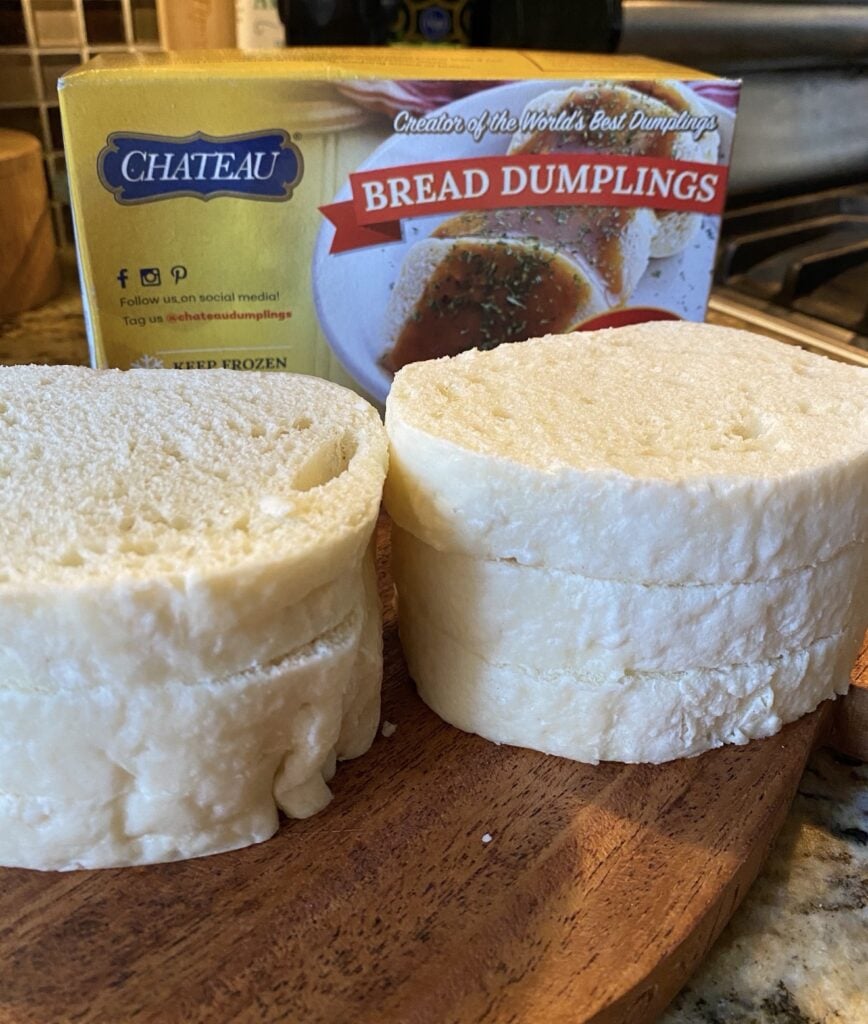
Growing up, we ate this pork with Czech bread dumplings.
Bread dumplings are soft and tender but denser than ordinary bread. They’re wonderful with gravy because they absorb all that delicious sauce without immediately falling apart.
My grandma ate them.
My mom made them.
I grew up eating them.
So pork roast, bread dumplings, cabbage, and gravy all belong together in my brain.
The Chateau brand bread dumplings we ate for years were a Chicago-area staple, but Chateau Foods has since closed.
If you can find Czech-style bread dumplings locally, they’re wonderful with this meal. You can also make homemade bread dumplings.
And if bread dumplings aren’t available where you live, don’t worry.
This pork is fantastic with mashed potatoes, fried potatoes, buttered noodles, or another starch that can soak up that gravy.
Don’t Forget The Cabbage
My mom also serves this with sautéed cabbage.
She cooks chopped cabbage with pork bacon and seasons it simply with salt and pepper.
That combination of savory pork, caraway, tender bread dumplings, cabbage, and gravy is exactly the kind of old-fashioned meal I grew up eating.
It isn’t fancy.
It’s just GOOD.
And sometimes those are the recipes you remember forever.
What Else Can I Serve With Mom’s Pork Roast?
If you’re not making the traditional meal, this pork works with all kinds of simple sides.
Try it with:
- Creamy mashed potatoes
- Buttered egg noodles
- Fried potatoes
- Roasted potatoes
- Green beans
- Glazed carrots
- Sauerkraut
- Braised cabbage
- A simple cucumber salad
- Dinner rolls
This is a very forgiving main dish when it comes to side dishes.
Give me something starchy to catch those pork drippings and gravy and I’m happy.
Make It A Complete Comfort Food Dinner
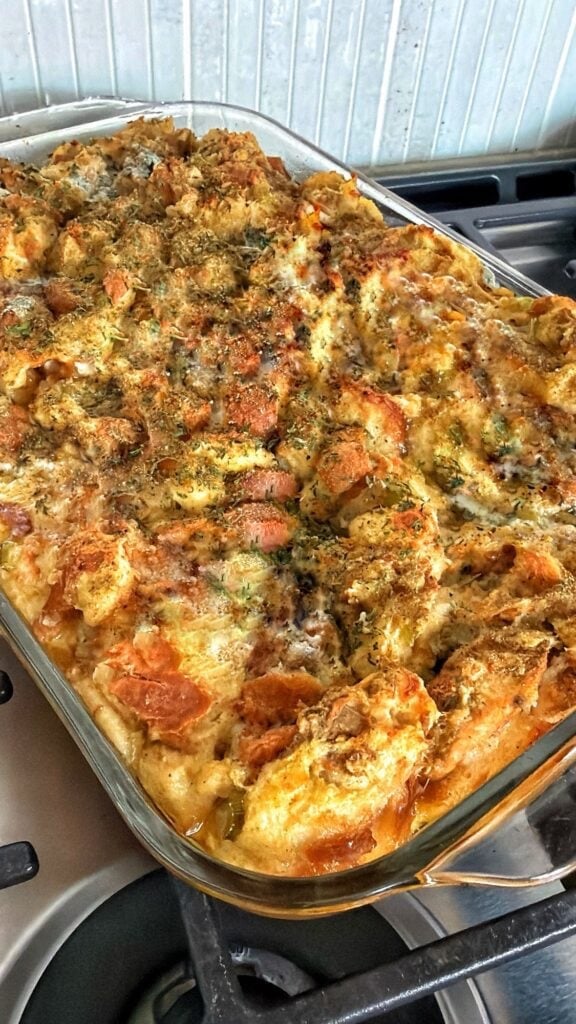
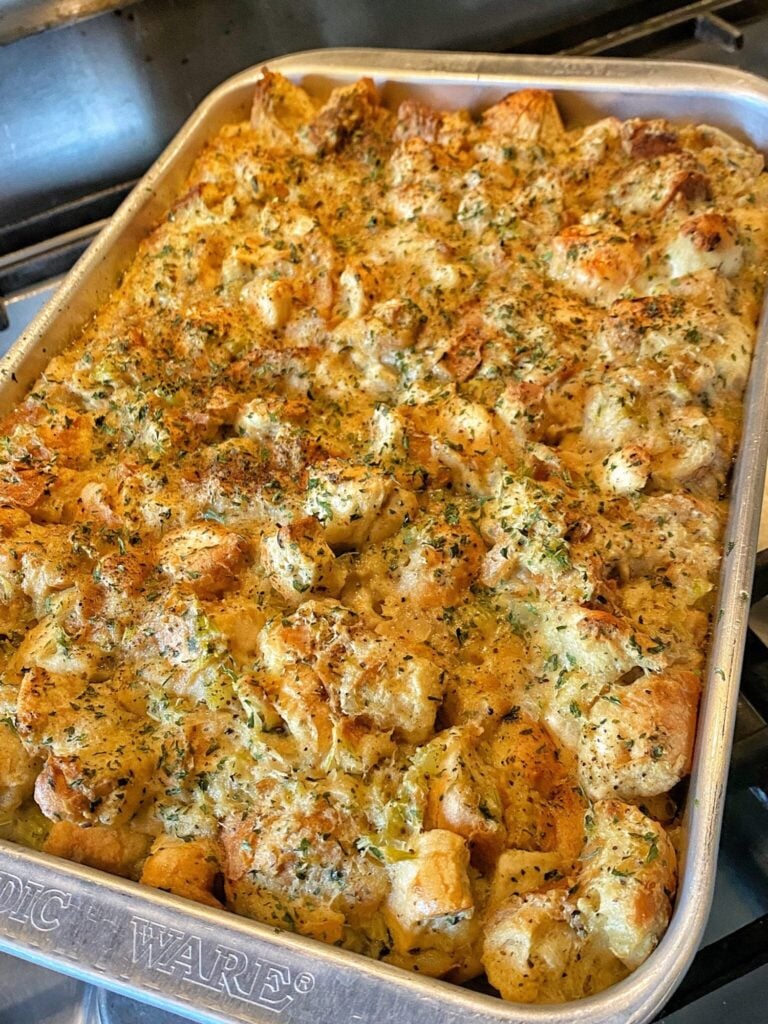
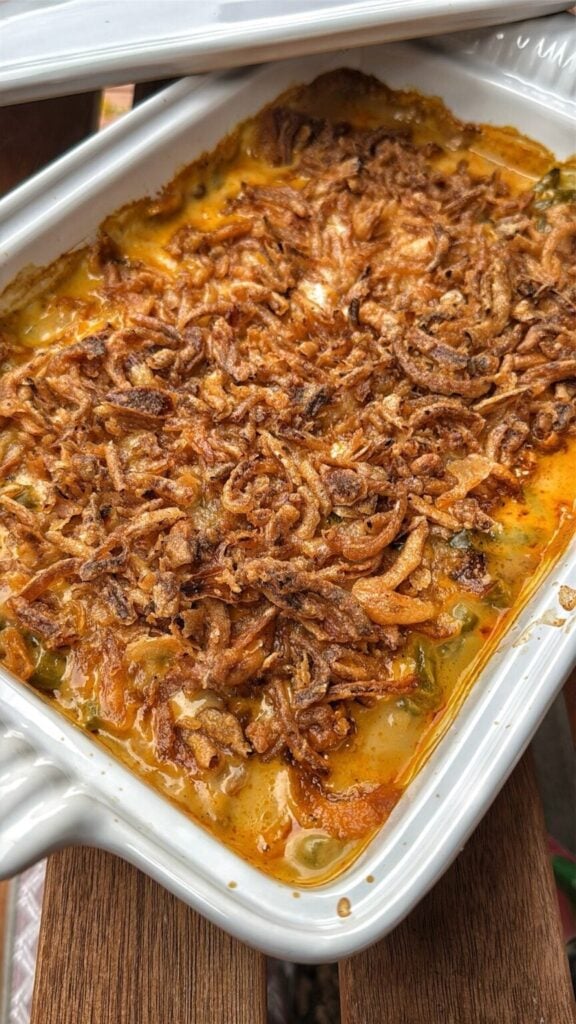
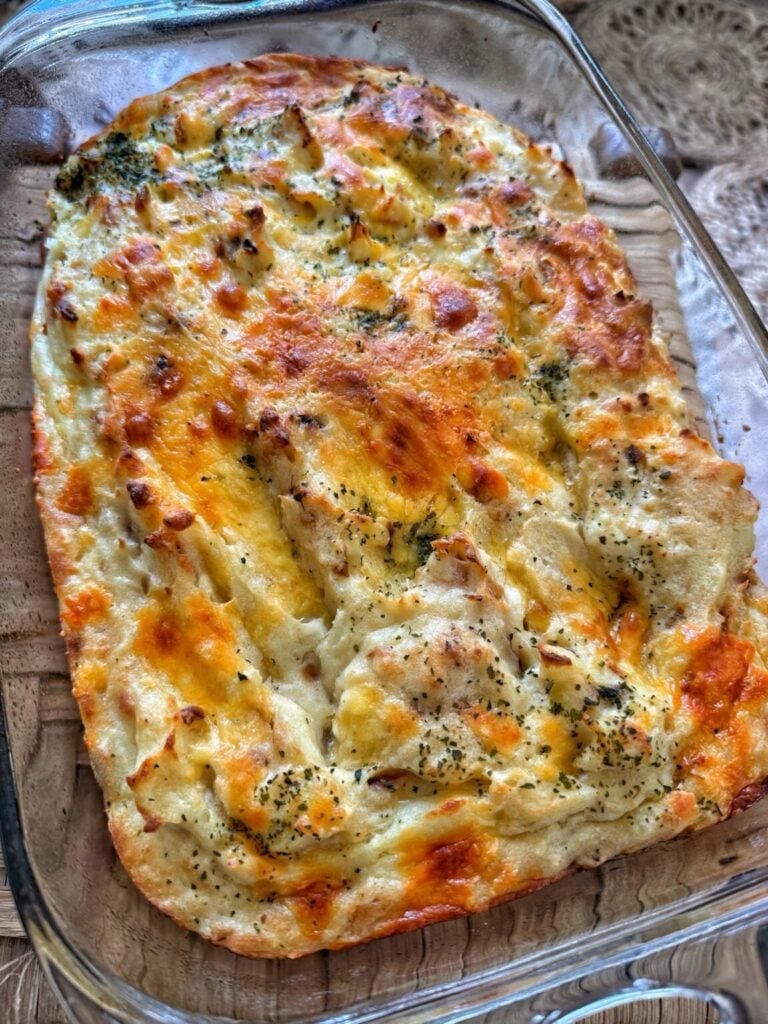
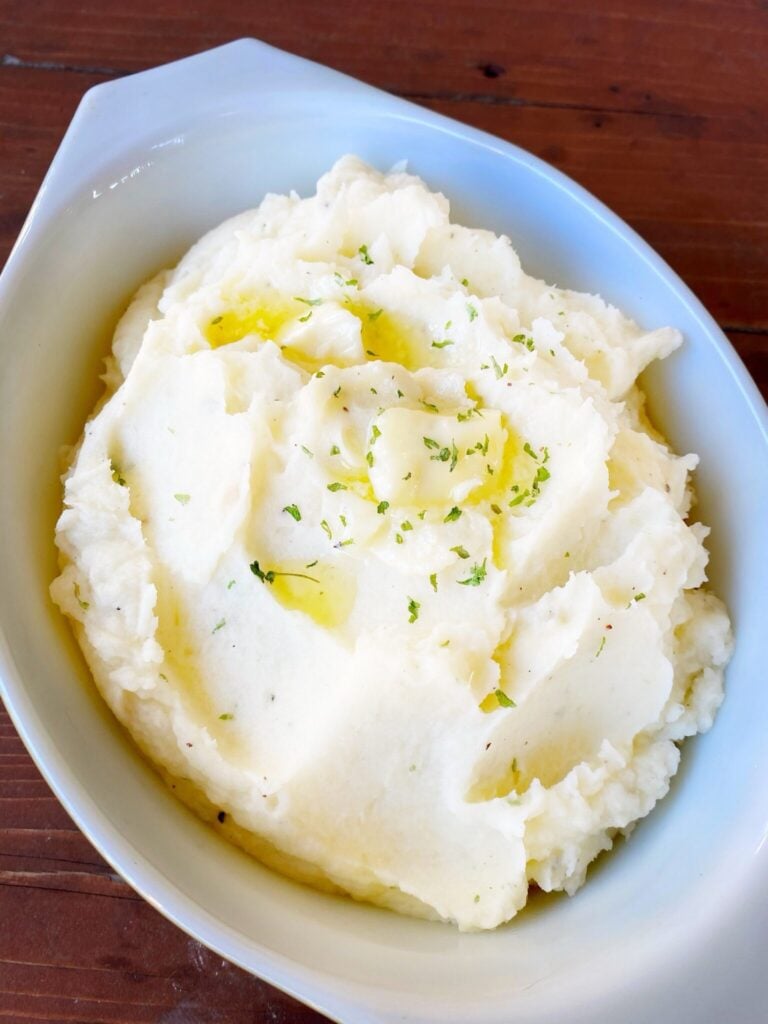
If you’re making this for Sunday dinner, Easter, or a family gathering, I’ve gathered some of my favorite side dishes that would work beautifully alongside Mom’s Pork Roast. Click each image to get the recipe.
Can I Make This Ahead?
Yes.
Pork shoulder is actually a very forgiving meat to make ahead because it contains enough fat to remain moist when reheated properly.
Cook the pork as directed and save the pan juices.
Once everything has cooled sufficiently, refrigerate the pork with some of those juices.
When you’re ready to serve it, put the pork back into a covered baking dish or roasting pan with some of the reserved juices and gently reheat it in the oven.
The liquid helps keep the meat moist.
Make your gravy when you’re ready to serve, incorporating some of the warmed pork drippings.
How To Reheat Leftover Pork Roast
The biggest mistake with leftover pork is reheating it until you’ve cooked all the moisture out of it.
Put the pork into a covered baking dish with a little of its reserved cooking liquid.
Heat it gently until warmed through.
You can also warm individual portions in a skillet with a spoonful or two of the drippings or gravy.
Don’t throw a beautiful piece of leftover pork into the microwave for ten minutes and then blame Mom when it’s dry.
What Can I Make With Leftover Pork?
This pork makes fantastic leftovers.
Use it for:
- Pork sandwiches with gravy
- Open-faced pork sandwiches
- Pork and dumplings
- Pork with buttered noodles
- Pork hash with potatoes
- Pork and cabbage
- Pork tacos
- Pork quesadillas
- Pork soup
- Pork and sauerkraut
Or do what I usually prefer and simply recreate the exact same dinner the next day.
Frequently Asked Questions
Can I Use Pork Loin Instead?
I would not. Pork loin is much leaner and behaves very differently during a long cooking time. This recipe is designed for pork shoulder.
Can I Use A Boneless Pork Shoulder?
Yes. Bone-in or boneless pork shoulder will work.
Do I Trim Off The Fat Cap?
No. I cook the pork with the fat cap facing up. You can remove unwanted pieces of fat after cooking.
Do I Need To Add Water Or Broth?
Not initially. The pork creates its own liquid as it cooks in the covered roaster. If you check halfway through and the pan is unusually dry, add about 1/2 cup water.
Can I Make This In A Slow Cooker?
You can cook pork shoulder in a slow cooker, but I don’t think this particular recipe comes out the same. I recommend the covered oven-roasting method.
Why So Much Caraway?
Caraway is one of the defining flavors of this recipe. Its earthy, slightly nutty flavor works beautifully with pork and cabbage.
Can I Leave Out The Sugar?
You could, but I wouldn’t. One tablespoon does not make the roast sweet. It balances the savory seasonings and is part of Mom’s original recipe.
What If I Don’t Own A Speckled Roaster?
Use another covered roasting pan, Dutch oven, or oven-safe pot with a well-fitting lid.
Why Is There So Much Liquid In My Pan?
That’s a good thing. Pork shoulder naturally releases fat and juices as it cooks. Save those drippings and use some in your gravy.
How Do I Know When Pork Shoulder Is Tender Enough?
The meat should pull apart very easily. With a bone-in shoulder, the bone should come out with very little resistance.
Can I Make The Pork A Day Ahead?
Yes. Save the cooking liquid and refrigerate it with the pork. Reheat the pork covered with some of those juices so it stays moist.
A Recipe That Tastes Like Home
I love developing new recipes, but there is something special about finally getting one of these old family recipes written down.
My mom has made this pork for as long as I can remember.
There weren’t measuring spoons involved when she first taught me how to make it.
There wasn’t a printed recipe card.
There was just pork shoulder, seasoning, caraway, that black-and-white speckled roasting pan, and the instruction every mother seems to give:
“You’ll know when it’s done.”
Thankfully, I’ve given you a few more details than that.
But the spirit of the recipe is still exactly the same.
Buy the right pork.
Put the fat side up.
Season it well.
Cover it.
And have the patience to let it cook low and slow.
That is Mom’s Pork Roast.
Mom's Pork Roast Recipe
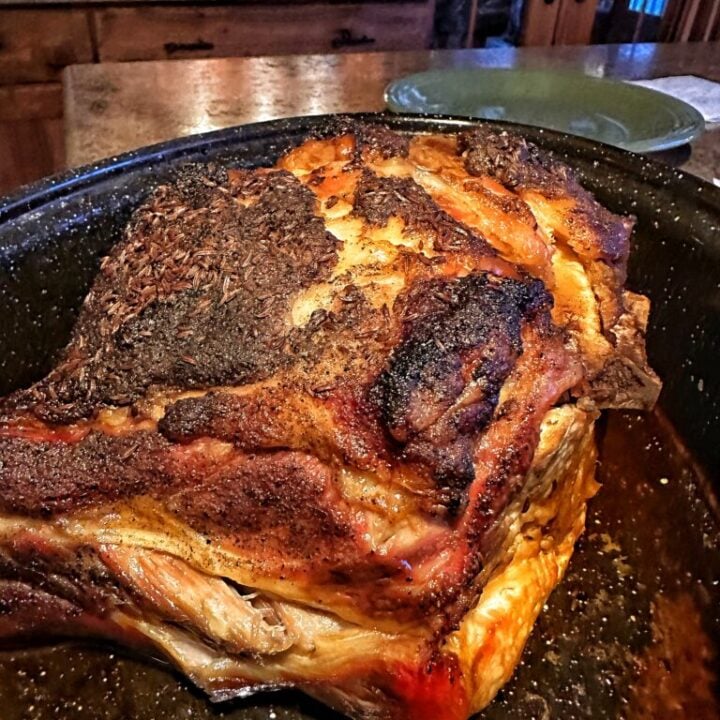
Mom's Pork Roast is an old-fashioned pork shoulder seasoned with caraway seeds, garlic, onion, salt, pepper, and a touch of sugar, then covered and roasted low and slow until incredibly tender. Serve it with brown gravy made with the pork drippings, Czech-style bread dumplings, and sautéed cabbage for a comforting family dinner.
Ingredients
- 1 pork shoulder, approximately 4 to 5 pounds, bone-in or boneless
- Salt, to taste
- Black pepper, to taste
- Garlic powder, to taste
- Onion powder, to taste
- 2 to 3 tablespoons caraway seeds
- 1 tablespoon white sugar
- 1/2 cup water, ONLY if needed during cooking
For Serving
- 1 packet Knorr Brown Gravy, prepared according to package directions
- Pork drippings from the roasting pan
- Czech-style bread dumplings, optional
- Sautéed cabbage, optional
Instructions
- Preheat the oven to 325°F.
- Place the pork shoulder into a covered roasting pan or speckled roaster with the fat cap facing up.
- Season the top of the pork generously with salt, black pepper, garlic powder, and onion powder.
- Sprinkle the caraway seeds and white sugar evenly over the roast.
- Do not add liquid. Cover the roasting pan with its lid and place it in the oven.
- Roast the pork at 325°F for approximately 4 to 5 hours.
- About halfway through cooking, check the pan. The pork should be releasing its own juices. If the pan is unusually dry, add approximately 1/2 cup water, cover again, and reduce the oven temperature to 300°F.
- Continue roasting until the pork is extremely tender and pulls apart easily. If using a bone-in shoulder, the bone should pull out with very little resistance.
- Remove the pork from the oven and allow it to rest briefly before serving.
- Save the pan drippings.
- Prepare the brown gravy according to the package directions and stir some of the pork drippings into the finished gravy to taste.
- Serve the pork with gravy, Czech-style bread dumplings, sautéed cabbage, mashed potatoes, buttered noodles, or your favorite comfort-food sides.
Notes
- Use pork shoulder. This recipe depends on the fat and connective tissue in pork shoulder to create its tender texture and flavorful cooking liquid. Pork loin and pork tenderloin are not good substitutes.
- Fat cap goes UP. Place the noticeable layer of fat on top while roasting. As the pork cooks, the fat renders and contributes moisture and flavor.
- Don't add liquid at the beginning. This surprises people, but the pork shoulder will release its own juices while cooking inside the covered pan.
- What if the pan looks dry? Check the pork about halfway through. If the pan is unusually dry, add about 1/2 cup water and reduce the oven temperature to 300°F.
- Don't skip the caraway. The caraway seeds are a defining flavor of Mom's Pork Roast. Two to three tablespoons may look like a lot, but this is a large piece of meat.
- The sugar does not make it sweet. There is only one tablespoon of sugar in the entire recipe. It helps balance the savory seasoning.
- A covered roasting pan matters. The lid traps moisture and steam as the pork cooks. A classic speckled roaster works beautifully, but another covered roasting pan or Dutch oven can be used.
- I don't recommend the slow cooker for this recipe. Pork shoulder can certainly be cooked in a slow cooker, but the finished texture, browning, drippings, and flavor are not the same as Mom's oven-roasted version.
- Save the drippings. Add some to your prepared brown gravy. This is one of the easiest ways to turn packaged gravy into something that tastes much more homemade.
- How do I know it's ready? The pork should pull apart easily. If you're using bone-in pork shoulder, the bone should release with very little resistance.
- Make-ahead tip: Cook the pork ahead and refrigerate it with some of its cooking juices. Reheat it covered with the reserved liquid to help keep the meat moist.
- Leftovers: Save both the pork and the drippings. Leftovers are wonderful with gravy, on sandwiches, with noodles or potatoes, or alongside cabbage and sauerkraut.
3 Comments
Nancy Renaud
December 3, 2023 at 4:28 pm
Love this recipe for Mom’s Pork Roast! We tried it out; my husband with some foreboding but I urged him to follow the recipe and not think about it. It turned out great! Wonderful flavour, super tender. We don’t have a speckled roaster, but did it in a Renaware pot with a cover, so it didn’t brown like your photo, but that didn’t matter as it was so good. And the gravy! We didn’t have Knorr brown gravy, so used Club House brown gravy, with the drippings. It was amazing! Thank you for such a great recipe. It will be made again often.
thetipsyhousewife
December 3, 2023 at 5:38 pm
So glad! Thanks for this nice message
Sabine Schwark
December 31, 2023 at 7:45 am
Thank you so much for the lead on Chateau Bread Dumplings. We travel to the Czech Republic often and love them. I have recipes, but these ready-to-go ones seem a dream. Lucky us, we live five miles to the nearest retail location. I’m going tomorrow! Happy New Year!