
Creamy Sun-Dried Tomato Pesto Meatballs With Ditalini

Comfort Food With Pizzazz
There are meatballs with pasta, and then there are Creamy Sun-Dried Tomato Pesto Meatballs With Ditalini. This is definitely the latter. Tender ground chicken and mild Italian sausage meatballs are slowly browned in butter and simmered in a tomato sauce with vodka, sun-dried tomato pesto, and marinated artichoke hearts. At the very end, I add more butter and heavy cream before tossing everything with little ditalini pasta.
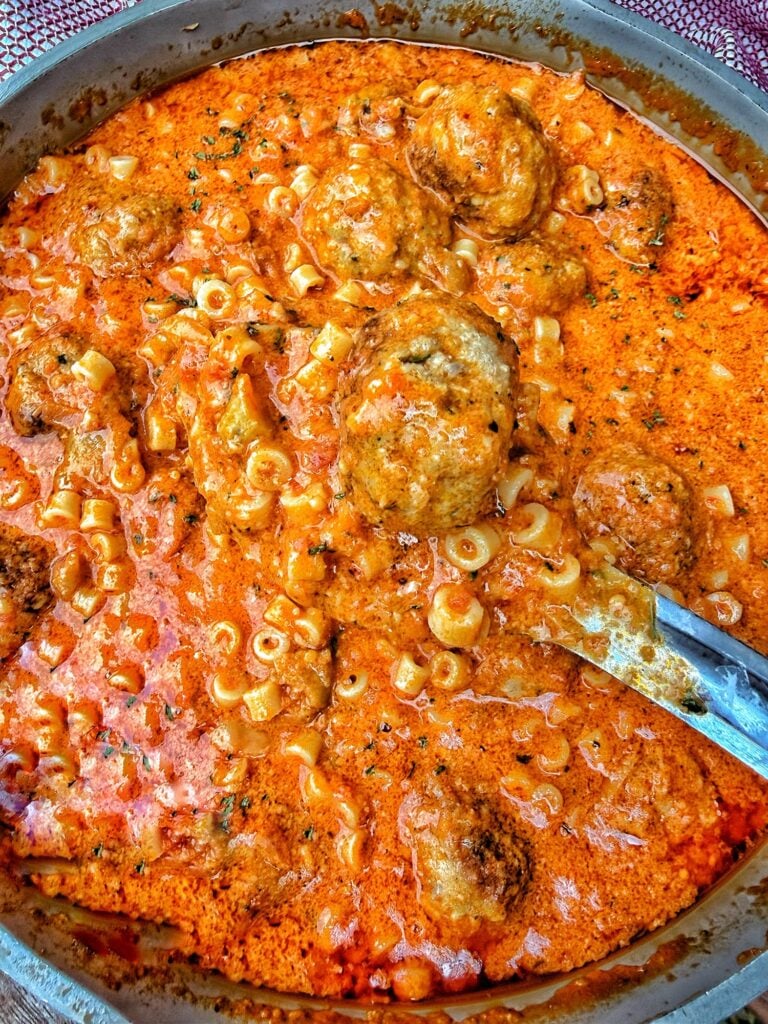
The result is this rich, creamy, slightly tangy tomato sauce that works its way into every little piece of pasta.
It looks and tastes like something you would order at a restaurant, but the ingredients themselves are actually very approachable. I also use a couple of jarred ingredients intentionally because they bring a lot of flavor to the sauce without requiring you to stand over the stove all afternoon.
Why I Use Chicken And Italian Sausage For The Meatballs
For these meatballs, I use equal parts ground chicken and mild Italian sausage.
Ground chicken keeps the meatballs tender and a little lighter. The Italian sausage brings the fat, seasoning, and flavor that ground chicken doesn’t necessarily have on its own.
It’s a really good combination for a meatball that is eventually going into a rich sauce.
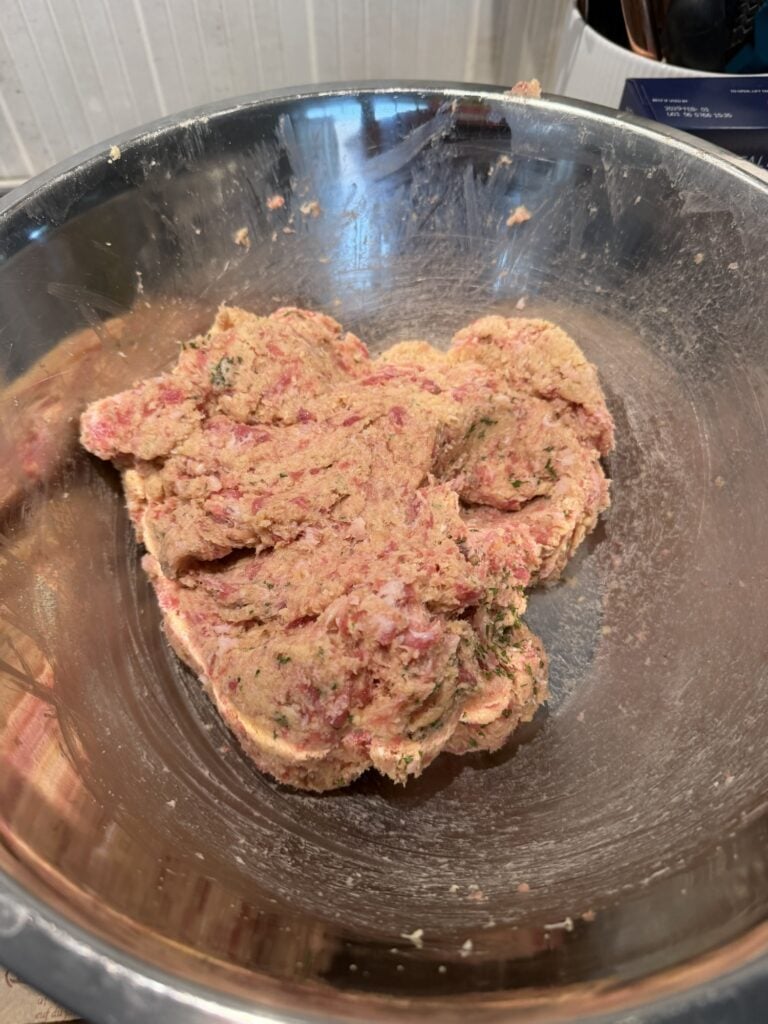
I also add Italian seasoned breadcrumbs, finely grated Parmesan, an egg and a little milk or heavy cream. The breadcrumbs and dairy help hold onto moisture so you end up with tender meatballs rather than little chicken golf balls.
There is plenty of garlic powder and onion powder in there, too. Because we’re using ground chicken, I want the meatball mixture itself to have plenty of flavor before it ever touches the sauce.
Why I Let The Meatballs Rest Before Cooking
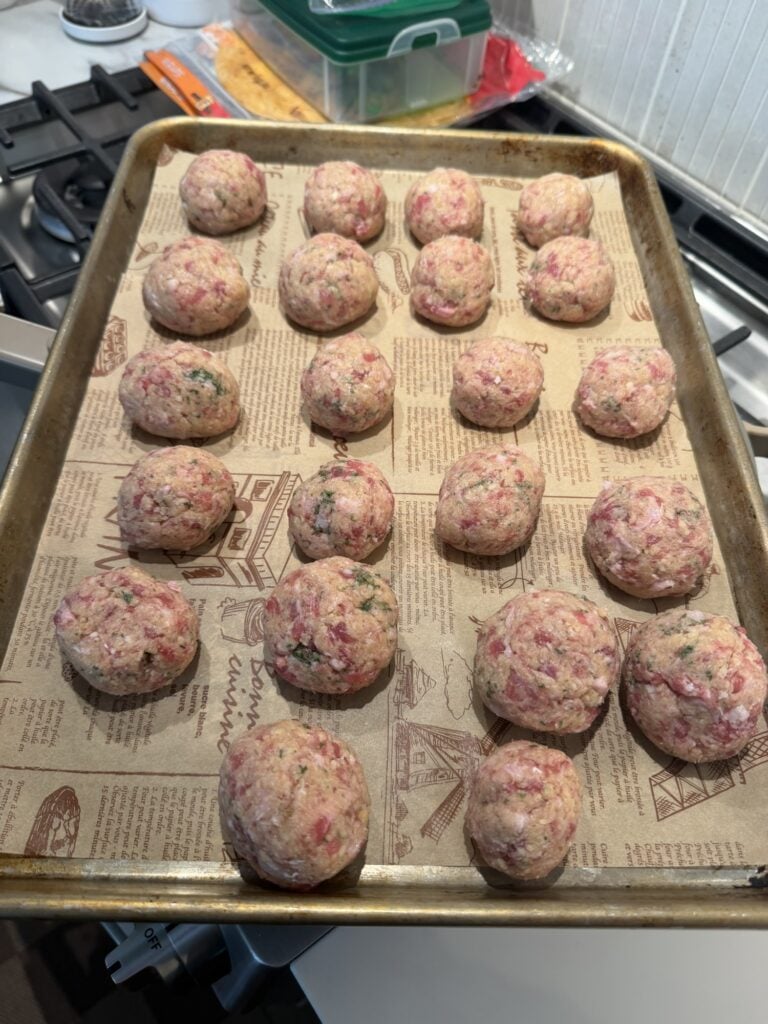
Once I form the meatballs, I let them sit for about 30 minutes before cooking them.
This gives the breadcrumbs a chance to absorb some of the moisture from the meat and dairy and helps everything hold together better when the meatballs hit the skillet.
You can use that half hour to chop the artichokes, get your other ingredients ready, and bring your pasta water to a boil.
Brown Your Meatballs In Butter
This recipe uses eight tablespoons of butter, but we’re not throwing an entire stick into the skillet all at once.
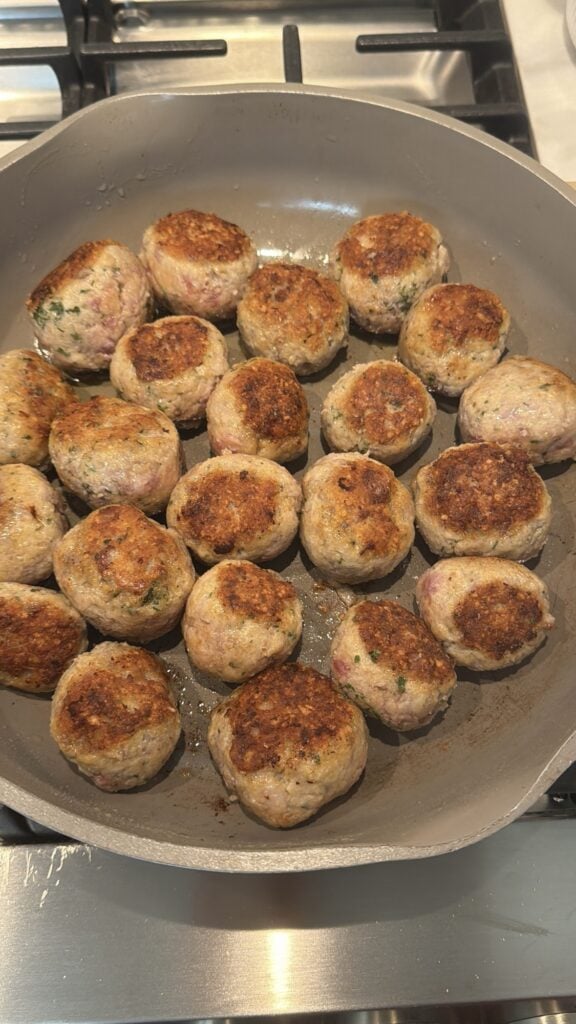
I use four tablespoons of butter to slowly brown the meatballs.
You don’t want screaming-high heat here. Let them brown over medium-low heat and develop a nice crust on several sides.
More importantly, don’t panic when you start seeing browned bits collecting on the bottom of your skillet.
We want those.
That is flavor that we’re going to pull right back into the sauce.
Why There Is Vodka In The Sauce
Once the meatballs are browned, I add a cup of vodka directly to the skillet.
The vodka helps deglaze the pan, meaning it loosens all those flavorful browned bits that developed while the meatballs were cooking.
Let it come to a simmer and use a wooden spoon or spatula to gently scrape the bottom of the skillet.
Vodka is also commonly used in creamy tomato sauces because alcohol can help carry and release certain flavors in tomatoes that aren’t as soluble in water alone. After simmering, you aren’t left with a sauce that tastes like a cocktail. It simply tastes like a really good tomato sauce.
If you don’t cook with alcohol, you can absolutely substitute chicken broth or stock. A small squeeze of lemon or tiny splash of white wine vinegar can add a little brightness as well.
The Sun-Dried Tomato Pesto Is The Secret
The ingredient that really makes this sauce different is sun-dried tomato pesto.
I use two 3.5-ounce jars.
Sun-dried tomatoes have a concentrated tomato flavor that is sweeter, deeper, and richer than regular tomatoes. Using them in pesto form means all of that concentrated flavor gets distributed throughout the sauce.
And when those little jars are empty, don’t throw them in the sink yet.
Fill each one about one-quarter of the way with water, put the lid back on, and give it a good shake.
Pour that water into the skillet.
There is a shocking amount of good stuff still clinging to the inside of those jars, and I paid for it, so it’s going in my dinner.
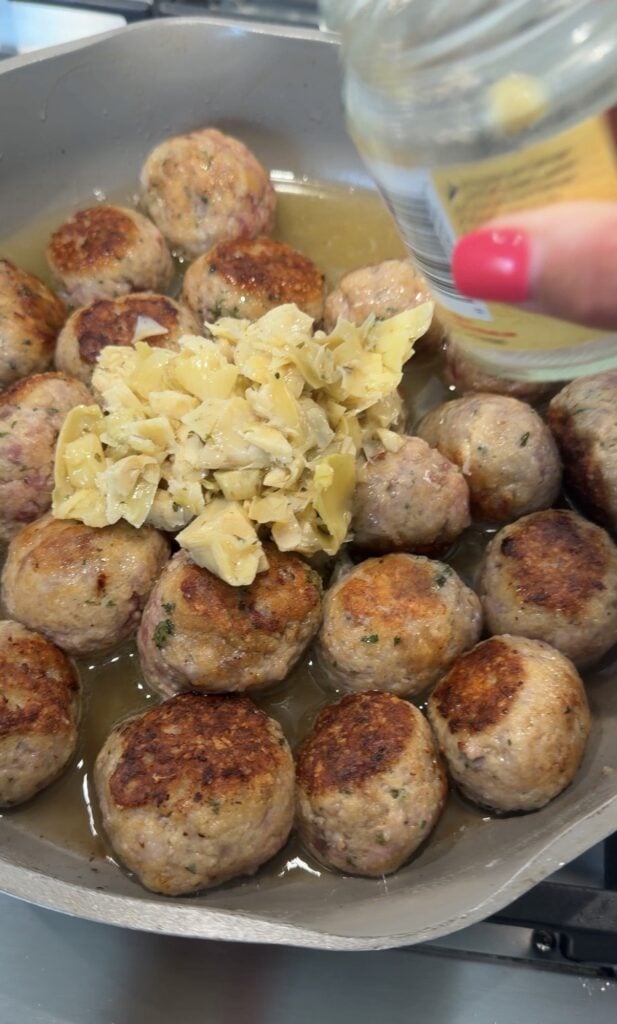
Don’t Skip The Marinated Artichoke Hearts
I also add a small jar of marinated artichoke hearts that I chop into little pieces.
The artichokes aren’t meant to dominate the dish. They almost melt into the background and add little bites of tanginess that cut through the richness of the tomato pesto, butter, and cream.
Make sure you’re buying marinated artichoke hearts, because I want some of that seasoned flavor in the sauce.
If you have people who claim they don’t like artichokes, chop them fairly small. They become much more of a background flavor than an obvious chunk of artichoke.
Use The Marinara Sauce You Actually Like
After the pesto and artichokes simmer for a few minutes, I add a 24-ounce jar of marinara. I like the black label one from Aldi.
This is not the time when I’m going to tell you that you have to make a tomato sauce from scratch.
Use a marinara you already know you like.
Once again, I don’t waste what’s left in the jar. Fill the empty marinara jar about halfway with water, put the lid back on, shake it, and add that to the skillet.
That extra liquid is intentional.
The sauce is going to simmer uncovered for about 30 minutes, and later we’re adding pasta directly to it. We need enough liquid for everything to come together without ending up dry.
Let The Meatballs Simmer In The Sauce
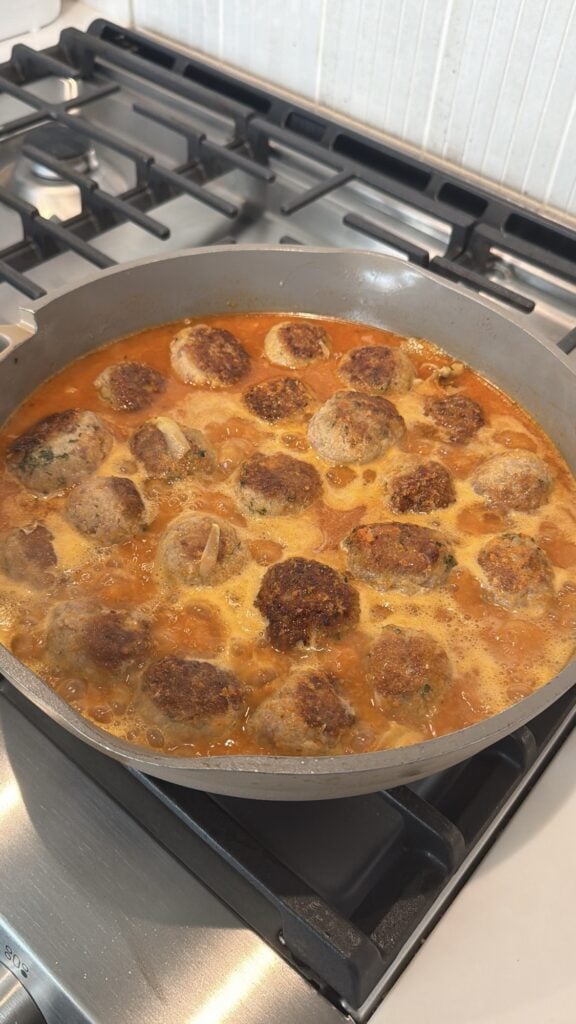
Once the marinara is added, bring everything to a low simmer and let it cook uncovered for approximately 30 minutes.
This finishes cooking the meatballs while allowing them to absorb some of the flavor from the sauce.
The meatballs should reach an internal temperature of 165°F.
This simmering time also lets the marinara, sun-dried tomato pesto, artichokes, vodka, and all those browned bits from the skillet become one cohesive sauce.
Don’t rush it.
Why I Add More Butter Before The Cream
Remember the other four tablespoons of butter?
They go in now.
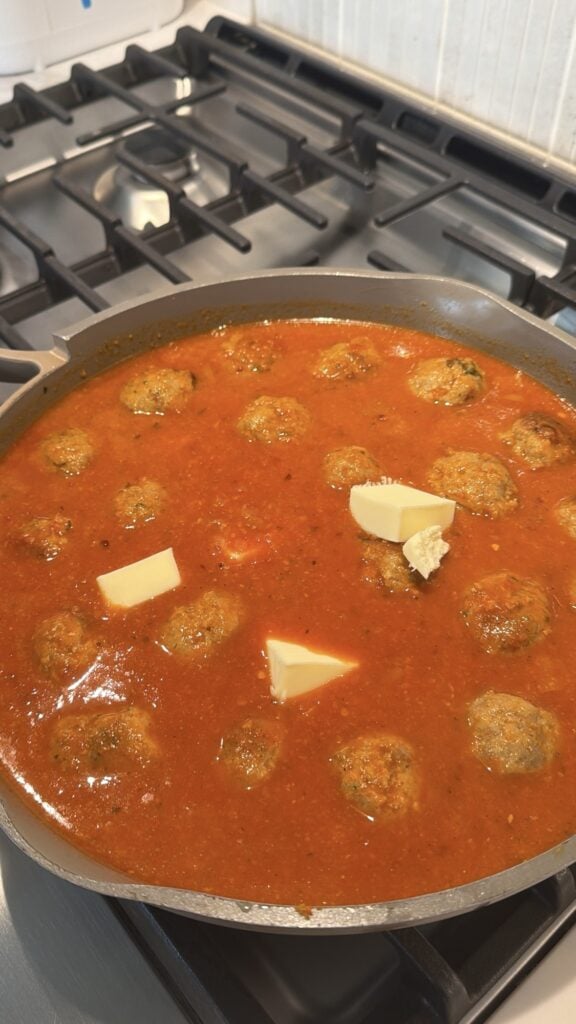
After the meatballs have simmered and the tomato sauce has developed, I add the remaining four tablespoons of butter and let it melt completely into the sauce before adding the heavy cream.
The butter rounds out some of the acidity in the tomatoes and gives the finished sauce a richer, smoother texture. Adding it toward the end also gives you more of that buttery finish rather than using all eight tablespoons simply as cooking fat.
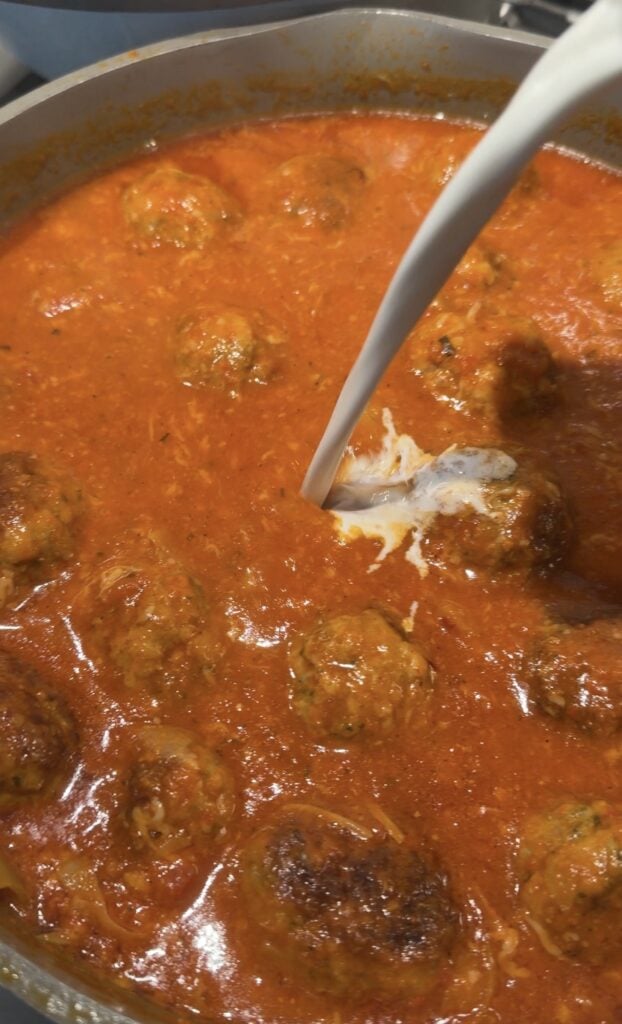
Then I slowly stir in the heavy cream.
I use approximately one cup, but this isn’t something you need to measure with laboratory precision.
Add the cream gradually until the sauce becomes the creamy pink color and consistency you want.
Why Ditalini Works So Well In This Recipe
I absolutely love ditalini for this dish.
Ditalini means “little thimbles,” and the pasta is made up of tiny little tubes. All those openings are perfect for catching this creamy tomato sauce.
Because the pasta is so small, you also get a little bit of everything in every spoonful: pasta, creamy sauce, pieces of artichoke, and Parmesan with a meatball alongside it.
Cook the ditalini separately until al dente and do not rinse it.
Before you drain it, scoop out about a cup of pasta water.
Even if you don’t think you’ll need it.
Pasta water is one of those things you don’t need until approximately 30 seconds after you dump all of it down the drain.
Don’t Panic If Your Sauce Looks A Little Loose
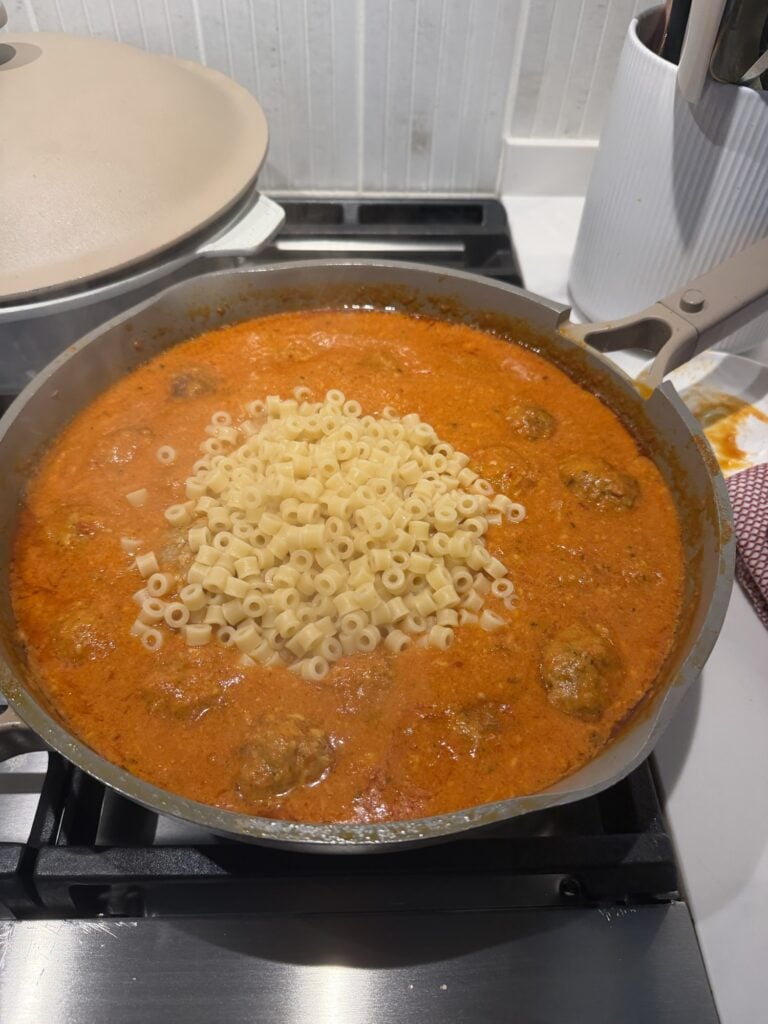
Once the cooked ditalini goes into the skillet, it starts absorbing the sauce.
This happens rather quickly with small pasta.
For that reason, I would much rather have the sauce look slightly too loose when everything is first combined than too thick.
If it is too thick, add a splash of that reserved pasta water.
If it seems a little loose, wait a few minutes before doing anything.
The ditalini will continue drinking up that sauce as it sits.
This is especially important if you’re making the dish a little before you plan to serve it.
Can I Make This Ahead Of Time?
You can absolutely do some of the work ahead.
The meatballs can be mixed, formed, and refrigerated earlier in the day. I would keep them covered in the refrigerator until you’re ready to brown them.
You can also make the meatballs and tomato sauce ahead of time and refrigerate them together. When you’re ready to serve, gently reheat the sauce and meatballs before adding the butter and cream.
I would cook the ditalini closer to serving time.
Small pasta loves to absorb liquid, so storing the pasta separately from the sauce gives you more control over the final consistency.
How To Reheat The Leftovers
The leftovers are delicious, but don’t expect the sauce to look exactly the same after a night in the refrigerator.
The ditalini will continue absorbing liquid.
When reheating, add a small splash of water, chicken broth, or heavy cream to loosen everything back up.
Heat it gently rather than blasting it over high heat. A creamy sauce will reheat much more nicely over medium-low heat.
You can also add another sprinkle of Parmesan before serving.
What To Serve With Creamy Sun-Dried Tomato Pesto Meatballs
This is a pretty complete meal on its own, so I wouldn’t go crazy with side dishes.
A simple green salad with a tart vinaigrette would be perfect because it cuts through the richness of the creamy pasta.
You could also serve it with roasted broccoli, green beans, asparagus, or another simple vegetable.
And obviously there should be bread.
Garlic bread, toasted Italian bread, or a crusty loaf would all be excellent for cleaning up whatever creamy sun-dried tomato sauce is left on the plate.
I’m not above wiping out the skillet with bread, either.
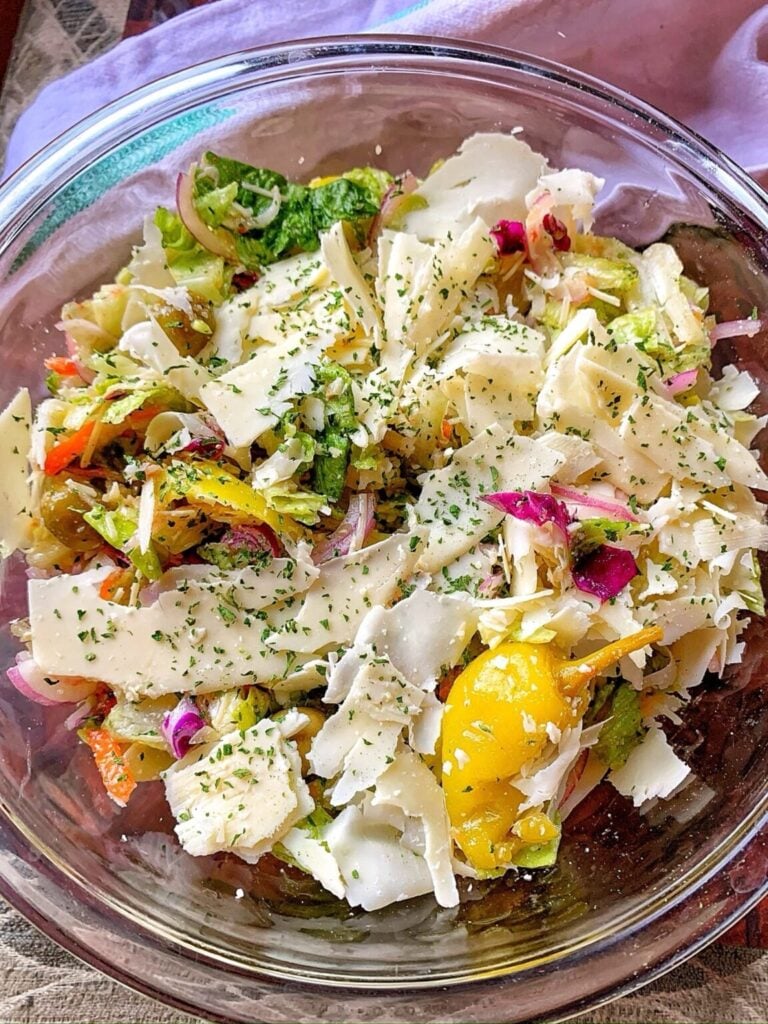
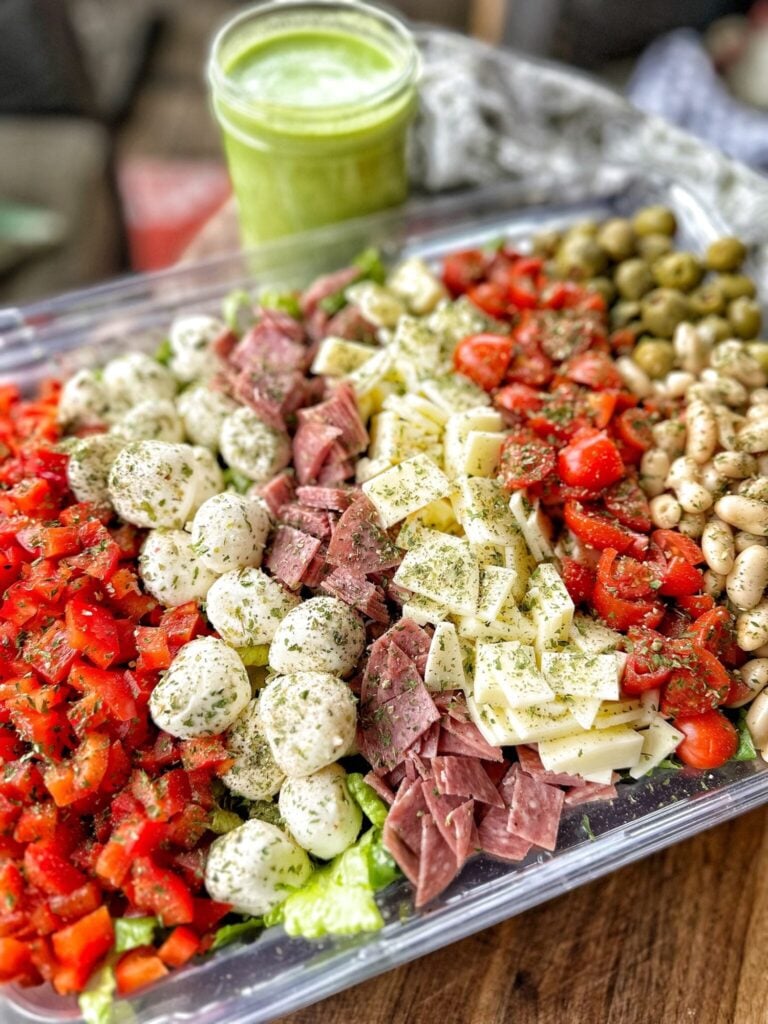
Three Salads That Would Pair Perfectly With This Recipe
Click each image to go to the recipe.
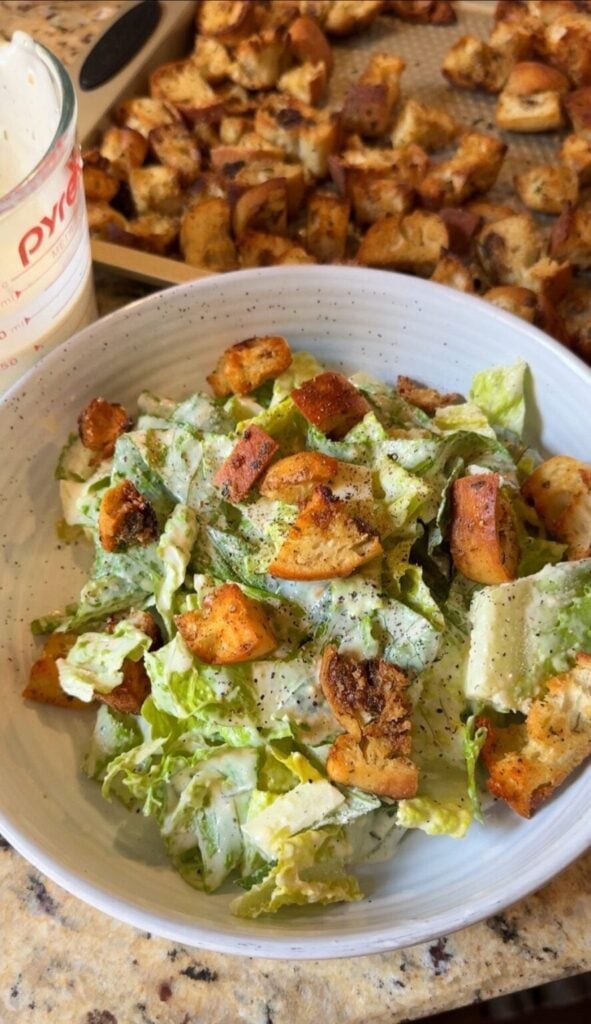
The Best Caesar Salad
Frequently Asked Questions
Can I Use All Ground Chicken?
Yes. You can make the meatballs with all ground chicken, although the flavor and texture will be slightly different because you are losing the fat and seasoning from the Italian sausage. You may want to adjust the seasoning accordingly.
Can I Use A Different Pasta?
Absolutely. Small pasta shapes work especially well because they mix easily with the meatballs and creamy sauce. Small shells, elbow macaroni, or another short pasta would all work.
Can I Leave Out The Artichokes?
Yes. The artichokes add tanginess and another layer of flavor, but the recipe will still work without them.
What Can I Substitute For The Vodka?
Use chicken broth or stock. If you’d like a little extra brightness, add a small squeeze of lemon juice or a tiny splash of white wine vinegar.
Why Do I Need To Save Pasta Water?
The starch released by the pasta while cooking makes pasta water particularly good for loosening a sauce while helping it maintain a cohesive texture. Add it a little at a time because you may not need the entire cup.
Can I Freeze The Meatballs?
Yes. If you want to make extra meatballs, freeze them separately from the ditalini. I would not freeze the completed pasta dish if you can avoid it, because cream sauces and small pasta don’t always have their best texture after freezing and thawing.
A Cozy Skillet Dinner With A Little Something Extra
This is one of those meals that hits all the comfort-food notes without tasting like every other creamy pasta you’ve had.
You have tender chicken and Italian sausage meatballs, the concentrated flavor of sun-dried tomatoes, tangy little pieces of marinated artichoke, tomato sauce, butter, cream, and Parmesan.
And then there’s all that tiny ditalini soaking up the sauce.
It’s rich, but the tomato, artichoke, and vodka keep it from tasting flat or overwhelmingly heavy.
Put the skillet in the middle of the table, add some bread and a salad, and dinner is handled.
Creamy Sun-Dried Tomato Pesto Meatballs With Ditalini Recipe
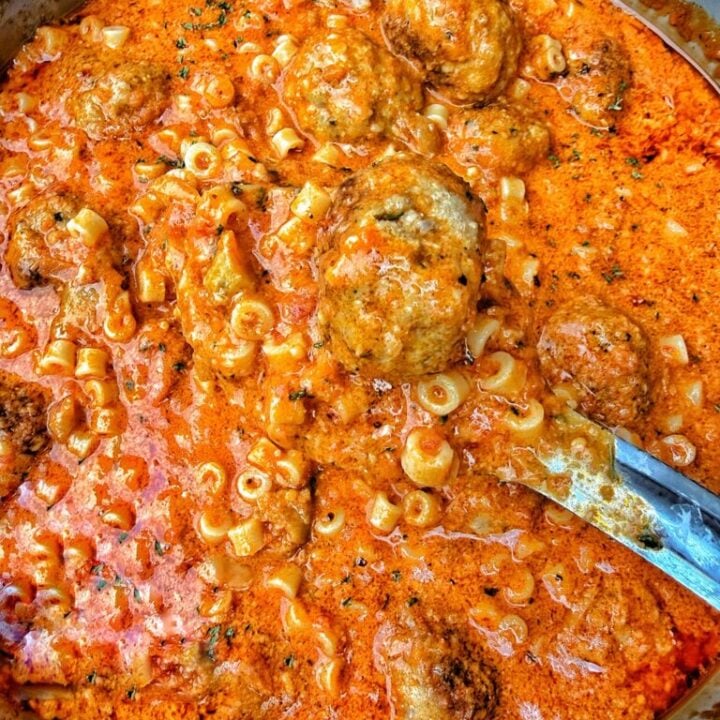
Tender ground chicken and mild Italian sausage meatballs are browned in butter, then simmered in a rich tomato sauce with vodka, sun-dried tomato pesto and marinated artichoke hearts. The sauce is finished with butter and heavy cream before being tossed with ditalini pasta for a creamy, comforting skillet dinner.
Ingredients
For The Meatballs
- 1 pound ground chicken
- 1 pound mild Italian sausage, casings removed
- 1 cup Italian seasoned breadcrumbs
- 1 cup finely grated Parmesan cheese
- 1 large egg
- 1/4 cup milk or heavy cream
- 2 tablespoons garlic powder
- 1 tablespoon onion powder
- 1/2 tablespoon dried parsley
- 2 teaspoons salt
- 2 teaspoons black pepper
For The Sauce And Pasta
- 8 tablespoons butter, divided
- 1 cup vodka
- 1 (7.5-ounce) jar marinated artichoke hearts, chopped into small pieces
- 2 (3.5-ounce) jars sun-dried tomato pesto
- 1 (24-ounce) jar marinara sauce
- About 1 cup heavy cream
- 1 (16-ounce) box ditalini pasta
- Water, for rinsing out the pesto and marinara jars
- Up to 1 cup reserved pasta water, as needed
- Dried Italian herbs, for finishing
- Additional finely grated Parmesan cheese, optional
Instructions
- Add the ground chicken, Italian sausage, breadcrumbs, Parmesan, egg, milk or cream, garlic powder, onion powder, dried parsley, salt and black pepper to a large bowl. Mix just until evenly combined.
- Form the mixture into meatballs. I make mine fairly small and get about 22 meatballs, but you can make them larger or smaller if you prefer.
- Place the formed meatballs on a tray and let them rest for about 30 minutes.
- Melt 4 tablespoons of butter in a very large, deep-sided skillet over medium-low heat.
- Add the meatballs and brown them slowly on all sides until they develop a nice crust. Do not rush this step, as the browned bits on the bottom of the skillet will add flavor to the sauce.
- Carefully pour the vodka into the skillet. Bring it to a simmer and use a wooden spoon or spatula to scrape the browned bits from the bottom of the pan.
- Add the chopped marinated artichoke hearts and both jars of sun-dried tomato pesto.
- Fill each empty pesto jar about one-quarter full with water. Replace the lids, shake well and pour the liquid into the skillet.
- Bring everything to a simmer and cook for 5 to 10 minutes.
- Add the marinara sauce.
- Fill the empty marinara jar about halfway with water. Replace the lid, shake well and pour the liquid into the skillet.
- Bring the sauce to a low simmer and cook uncovered for about 30 minutes, stirring occasionally, until the meatballs are cooked through and reach an internal temperature of 165°F.
- While the sauce simmers, cook the ditalini according to the package directions until al dente.
- Before draining the pasta, reserve about 1 cup of the pasta cooking water. Drain the ditalini, but do not rinse it.
- Add the remaining 4 tablespoons of butter to the tomato sauce and stir until completely melted.
- Gradually add the heavy cream, stirring as you go, until the sauce reaches a creamy pink color and the consistency you prefer. I use about 1 cup.
- Add the cooked ditalini to the skillet and gently toss until the pasta is evenly coated in the sauce.
- If the sauce seems too thick, add a little reserved pasta water at a time until it reaches your desired consistency. If it seems slightly loose, let it sit for a few minutes before adding anything else, as the ditalini will continue to absorb the sauce.
- Finish with dried Italian herbs and additional Parmesan cheese, if desired. Serve hot.
Notes
- Vodka Substitute: If you prefer not to cook with alcohol, substitute chicken broth or stock. You can also add a small squeeze of lemon juice or a tiny splash of white wine vinegar for a little brightness.
- Seasoning: Italian sausage is already seasoned, and different brands vary in saltiness, so keep that in mind when seasoning the meatballs.
- Pasta Water: Reserve some before draining the ditalini. The starchy water is useful for loosening the sauce without making it taste watered down.
- Sauce Consistency: Ditalini continues absorbing liquid as it sits, so it is better for the sauce to look slightly loose when everything is first combined.
- Heavy Cream: The 1 cup measurement is approximate. Add it gradually until the sauce looks and tastes right to you.
2 Comments
Claudine
August 19, 2026 at 7:34 pm
Hi there! We are only two here. I made 24 meatballs with the mix. I’m planning to cook tomorrow. I am thinking to only cook half the meatballs and freeze the other half for another meal. Should I fry then freeze or freeze raw? Also should I make a full batch of sauce? I am so excited to have this tomorrow! Thanks for all your great recipes!
thetipsyhousewife
August 19, 2026 at 7:36 pm
I prefer to freeze them raw then you could just take out a couple when you wanna make a small meal and then I always make a full batch of sauce and freeze that separate from the meatballs. I am so glad you enjoyed the site.