
Retro Whole Roasted Cauliflower with Lemon Anchovy Butter

A Throwback to Great Veggie Sides
This vintage-inspired whole roasted cauliflower is steamed until tender, roasted until golden, and finished with a rich, savory butter sauce made with anchovy paste, capers, Dijon mustard, lemon. and red pepper flakes.

I recently realized something while going through and updating some of my older recipe posts: I really need more vegetable side dishes on this website. I have plenty of potatoes, casseroles, and comfort food, but I wanted to start exploring some really good vegetable sides that are worthy of sitting next to a steak, roast, or holiday dinner.
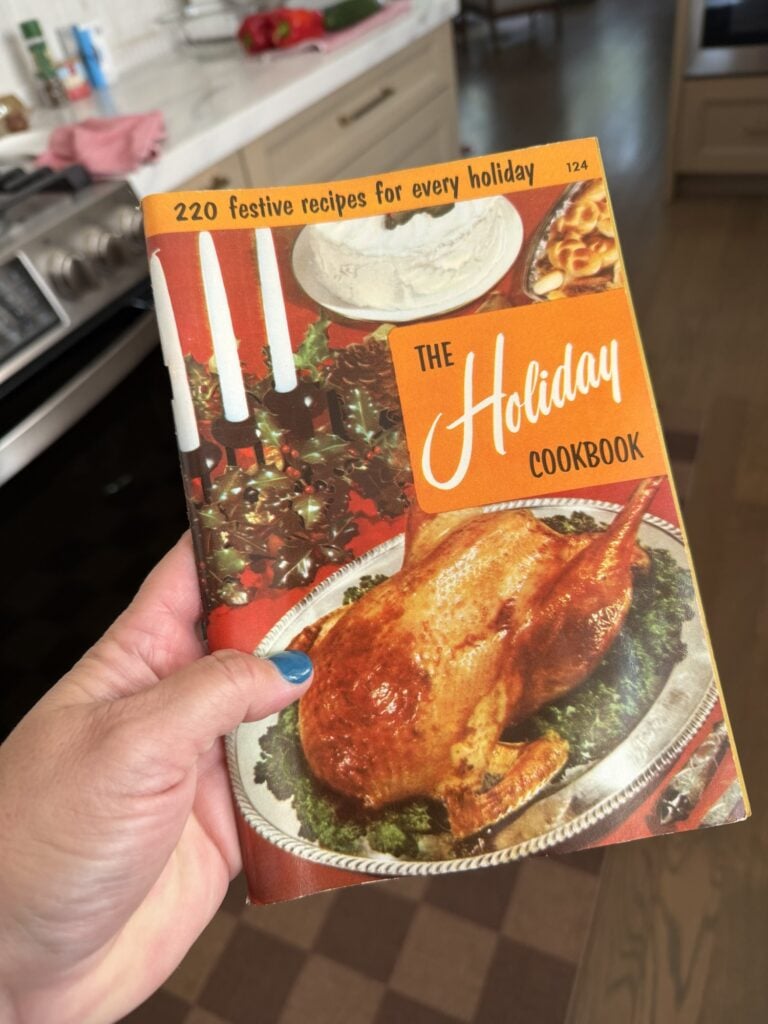
That realization sent me somewhere I love to go for inspiration: my collection of old cookbooks.
My grandmother has passed away, but before she did, she let me take all of her old cookbooks. Among them is a wonderfully retro collection of cookbooks and little recipe booklets, including one devoted to holiday dinners. There aren’t beautiful glossy photographs or lengthy explanations. They’re simply collections of recipes from another era.
That is where the inspiration for this Retro Whole Roasted Cauliflower with Lemon Anchovy Butter came from.
The original recipe needed a little updating. It called for ingredients such as margarine and MSG, and it used whole anchovy fillets. I kept the spirit of the recipe but adapted it to the way I cook today, using real butter, anchovy paste, Dijon mustard, capers, and an easier covered-roasting method.
The result was fantastic.
The cauliflower becomes incredibly tender from steaming in the covered roasting pan before it is uncovered and allowed to brown. Then that buttery, salty, slightly tangy anchovy and caper sauce works its way down between all the florets.
And before the anchovy skeptics leave the building, keep reading. This does not taste like a big fishy cauliflower. I promise.
Before You Jump to the Recipe
If you’re making this for the first time, these sections are worth a quick look before heading to the recipe card:
How to Clean and Prep a Whole Cauliflower
But Does It Taste Like Anchovies?
Don’t Like Anchovies? Use Worcestershire
Why Worcestershire Powder Is Worth Keeping in Your Pantry
What to Serve with Whole Roasted Cauliflower
Why Roast the Cauliflower Whole?
There is something very old-school dinner-party about putting an entire roasted cauliflower on the table.
Besides looking impressive, keeping the cauliflower whole helps it stay moist and tender. My method essentially steams it first and roasts it second.
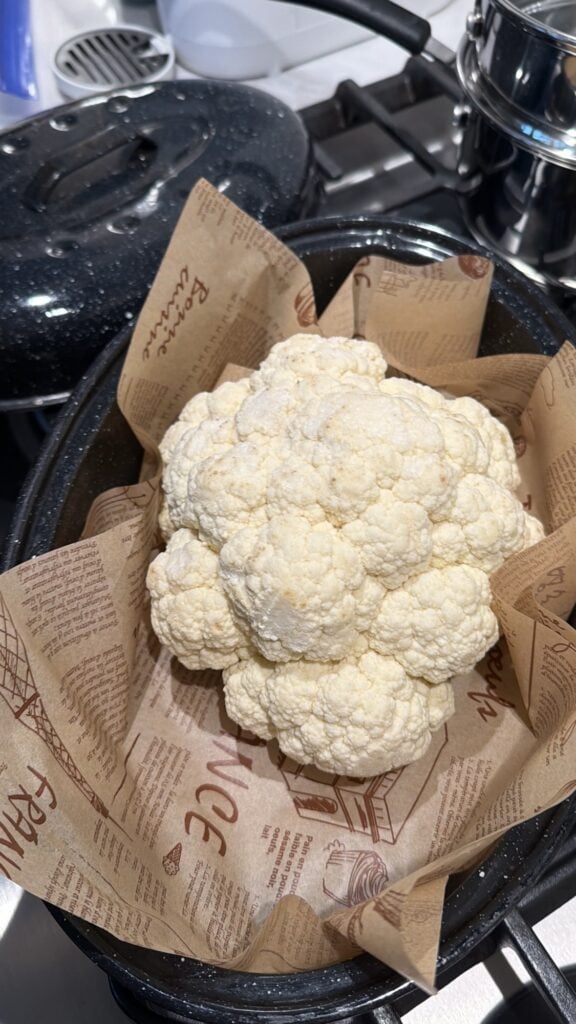
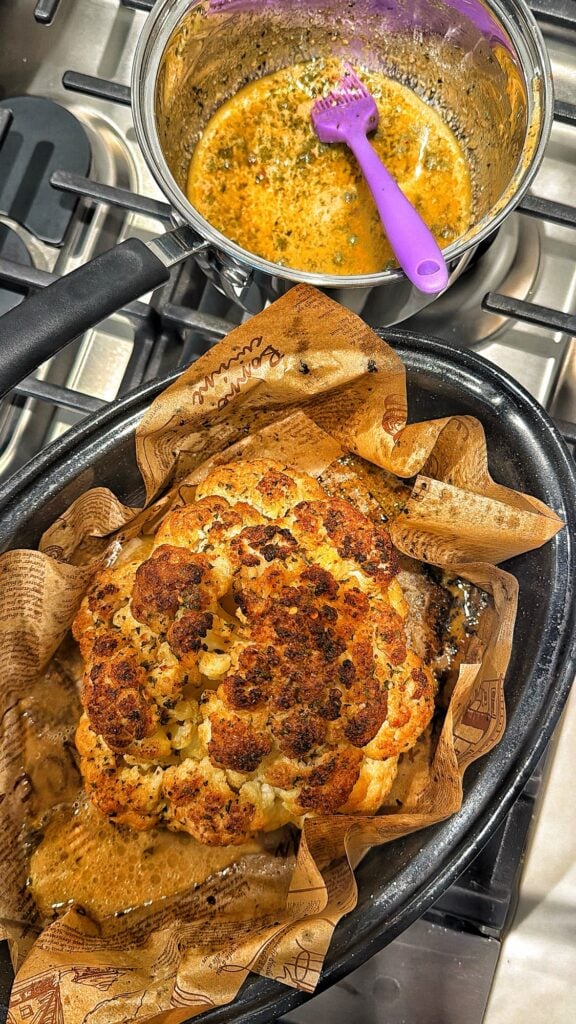
I used one of my black speckled covered roasting pans lined with parchment paper. I added about 1/2 cup of water, put the whole cauliflower inside, and covered it with the lid.
If you don’t have a covered roaster, don’t worry. A baking dish or roasting pan tightly covered with aluminum foil works just as well.
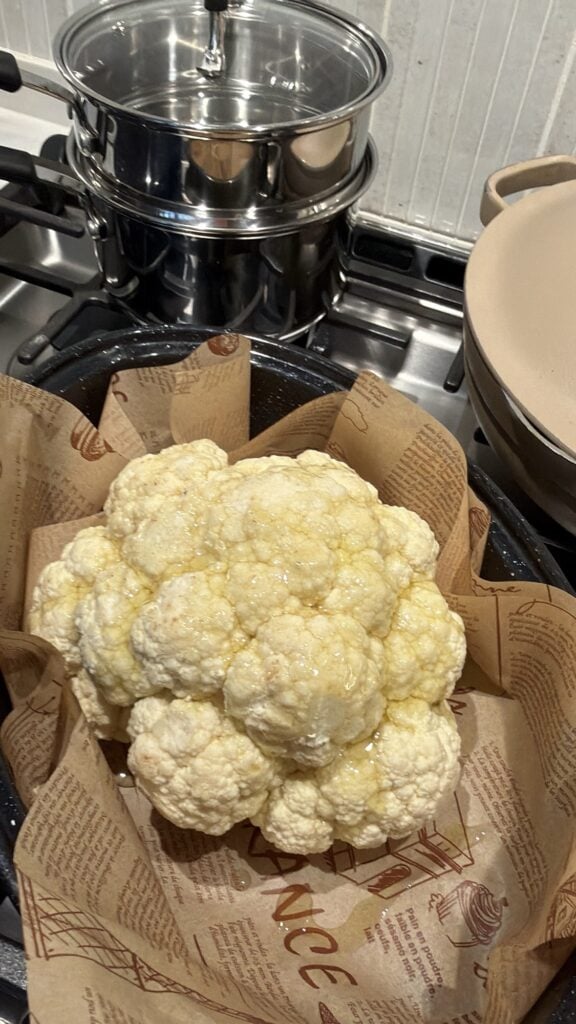
Once the cauliflower has had time to steam and become tender, the lid comes off so the exterior can roast and develop those delicious golden-brown edges.
How to Clean and Prep a Whole Cauliflower
Whole cauliflower has lots of little nooks and crannies, so I like to give it a good cleaning before I roast it.
Remove the large green outer leaves and trim the bottom of the stem just enough so the cauliflower can sit flat. Do not remove the entire core. The core is what holds all those florets together while the cauliflower roasts.
Rinse the cauliflower thoroughly under cool running water, allowing the water to get between the florets. I like to turn it upside down as well so I can rinse around the stem and underneath the florets. Let it drain well and pat the exterior dry.
You can do this ahead of time. Once the cauliflower is completely dry, wrap it loosely in paper towels and store it in a produce bag or container in the refrigerator until you’re ready to cook it. I prefer prepping it a day or two ahead rather than washing it and leaving it wet for several days.
The Retro Butter Sauce Is the Best Part
The sauce is what takes this from plain roasted cauliflower to something I would happily serve for a special dinner.
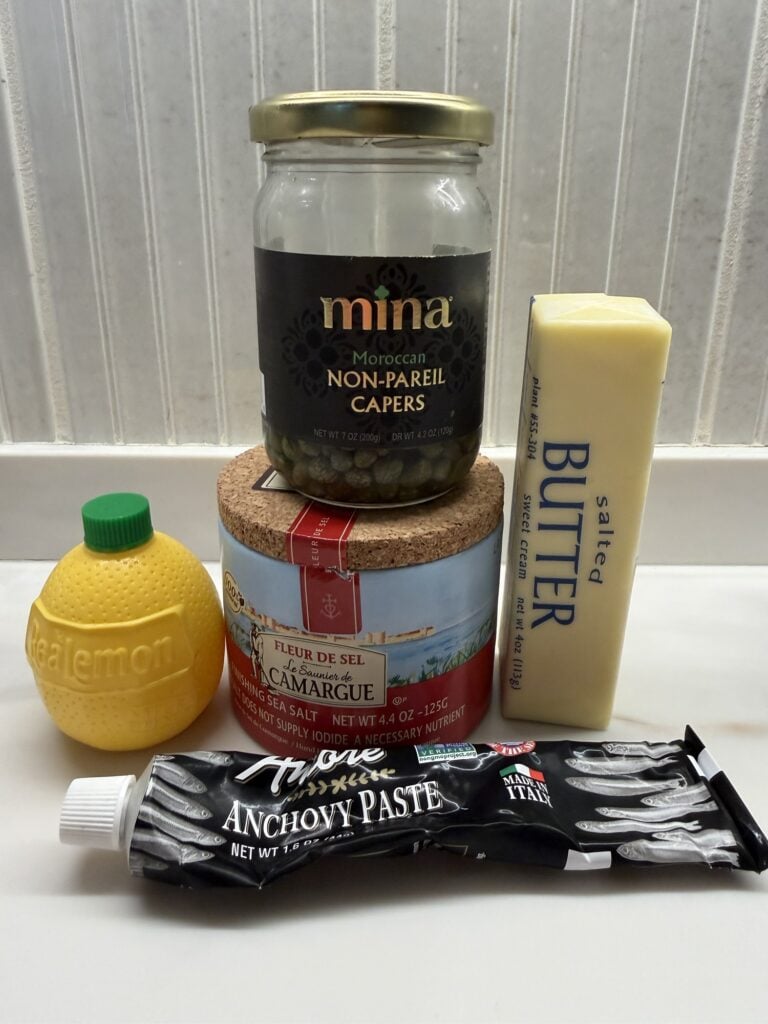
I used a full stick of butter, which is 8 tablespoons, along with about 1 tablespoon of anchovy paste, 1 tablespoon of the tiny capers with a little of their juice, garlic salt, black pepper, approximately 2 teaspoons of walnut Dijon mustard, lemon juice, and red pepper flakes.
You can absolutely use regular Dijon mustard. I would also recommend adding the anchovy paste gradually and tasting as you go. I love the savory flavor, so I used about a tablespoon, but you can start with less and adjust it to your preference.
I didn’t even bother with a fresh lemon this time. I used the lemon juice that comes in the little plastic lemon, and it worked perfectly. If you have a fresh lemon, you can certainly use fresh lemon juice and add some lemon zest as well.
This recipe doesn’t need to be fussy.
But Does It Taste Like Anchovies?
If you are someone who immediately sees the word anchovy and thinks, “No thank you,” don’t let that scare you away from this recipe.
The finished cauliflower does not have a fish-forward flavor.
The anchovy paste melts into all that butter and creates more of a deep, salty, savory flavor that reminds me of the richness you get from a really good steak sauce. Combined with the Dijon, capers, lemon, garlic, and red pepper flakes, it becomes an incredibly savory butter sauce rather than something that tastes distinctly like anchovies.
You may not even realize anchovy is in there if someone doesn’t tell you.

Don’t Like Anchovies? Use Worcestershire
If you still can’t get past the anchovy paste, you don’t have to skip this recipe.
The anchovy is there to add deep, salty, savory flavor, and Worcestershire sauce can provide some of that same complexity.
Instead of the anchovy paste, start with approximately 2 teaspoons of Worcestershire sauce in the butter mixture and add more to taste.
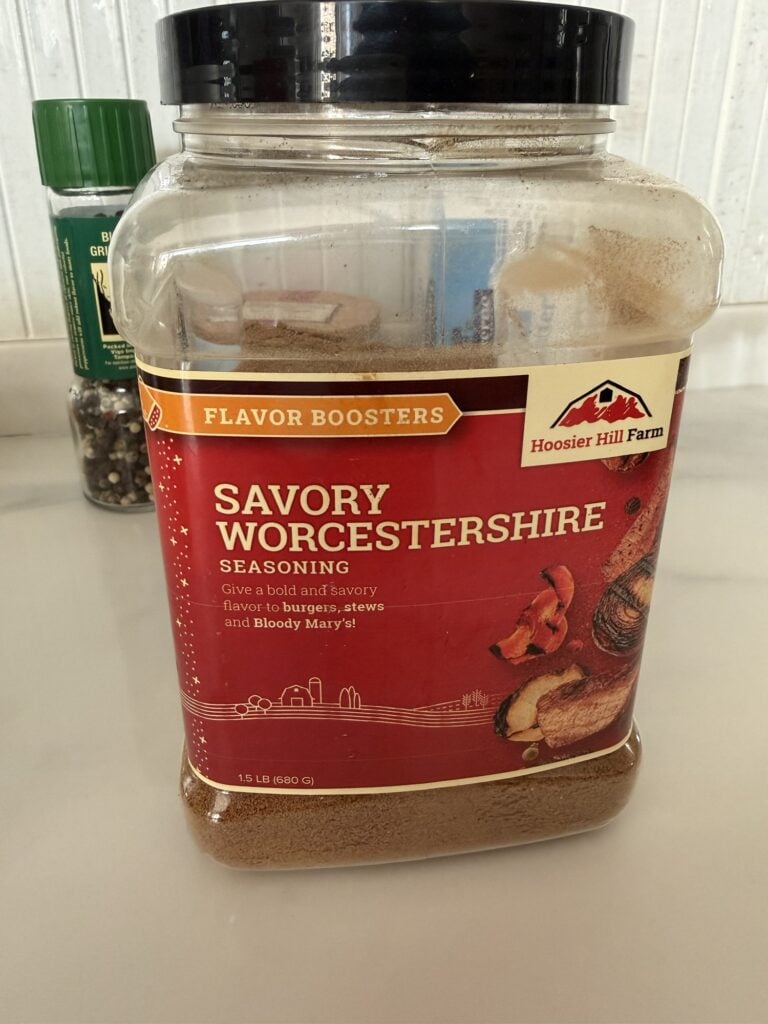
Why Worcestershire Powder Belongs in Your Pantry
Another option is one of my favorite pantry ingredients, which I have linked below for you to purchase.
*This is an Amazon Affiliate Link which means I earn a small commission from purchases but it costs you no extra.*
Try the Worcestershire powder.
Worcestershire powder gives you that savory Worcestershire flavor without adding additional liquid to a recipe. I use this ingredient in quite a few recipes, so if you buy a container, it won’t be one of those seasonings that gets used once and forgotten in the back of your cabinet.
In fact, you can click the images below to see some of those recipes.


A Note About Updating Old Recipes
One of my favorite things about old cookbooks is seeing how people cooked during different eras. That doesn’t mean every ingredient or method needs to stay exactly the same forever.
The vintage recipe that inspired this dish used margarine, MSG, and anchovy fillets. I made some changes based on how I prefer to cook today.
I prefer butter to margarine, and anchovy paste is much easier for me than opening a tin of anchovy fillets for one recipe. Worcestershire is another easy option for people who don’t want to use anchovy paste.
I also changed the cooking method. Rather than complicating things, I let the cauliflower steam right in the roasting pan before uncovering it to brown.
The idea behind the original recipe is still here. It has simply been updated for the way I cook in my kitchen today.
The Covered Roaster Makes This Easy
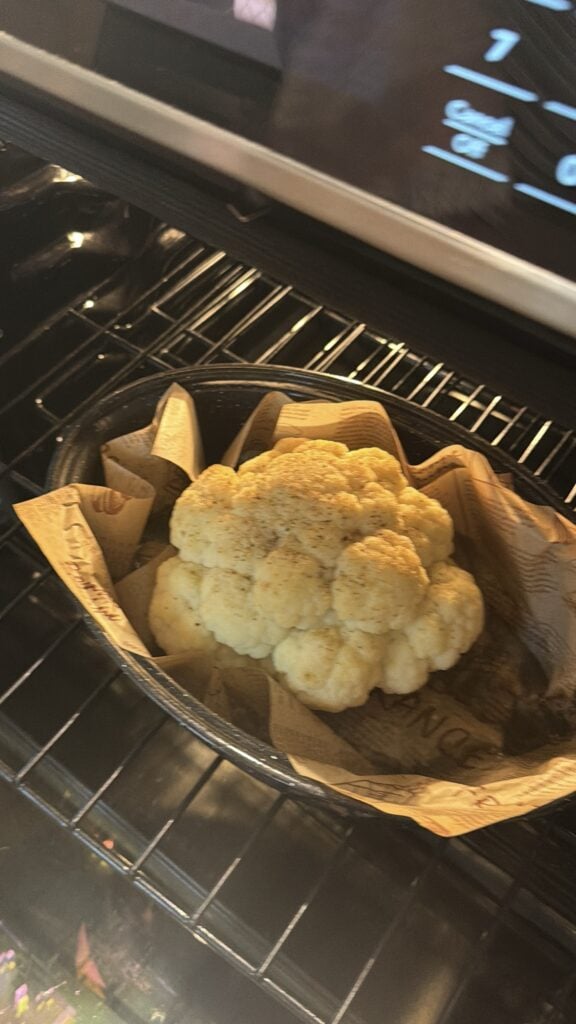
I really loved using my black speckled covered roaster for this.
I lined the bottom with parchment paper, set the cauliflower stem-side down inside, and added approximately 1/2 cup of water to the bottom of the roaster.
The lid traps the steam and helps that big cauliflower become tender all the way through without drying out.
After about 30 minutes at 425°F, I removed the lid. From there, the cauliflower continues roasting uncovered so the moisture on the outside can evaporate and the florets can begin to brown.
No covered roaster? Cover your baking dish or roasting pan tightly with foil. You are simply trying to create a little steaming chamber around the cauliflower.
This is also why I don’t bother microwaving the cauliflower first. It can steam and roast in the same pan.
When to Add the Lemon Anchovy Butter
Don’t pour all that beautiful butter over the cauliflower at the beginning.
The cauliflower needs time to steam and roast first. Otherwise, you risk overcooking the butter and seasonings before the center of the cauliflower is tender.
Once the cauliflower has steamed covered and then roasted uncovered until it begins to brown, spoon or brush some of the anchovy butter over the top, allowing it to work its way between the florets.
Continue roasting until the cauliflower is tender and beautifully browned.
At the very end, I poured the remaining butter mixture all over the cauliflower and returned it to the oven for just a couple more minutes. This lets that savory butter warm through and soak into all those little spaces between the florets.
When you cut into it, make sure you spoon some of the buttery juices and capers from the bottom of the pan over each serving.
How Do You Know When a Whole Cauliflower Is Done?
Because cauliflower heads vary quite a bit in size, use the cooking times in this recipe as a guide rather than relying on the clock alone.
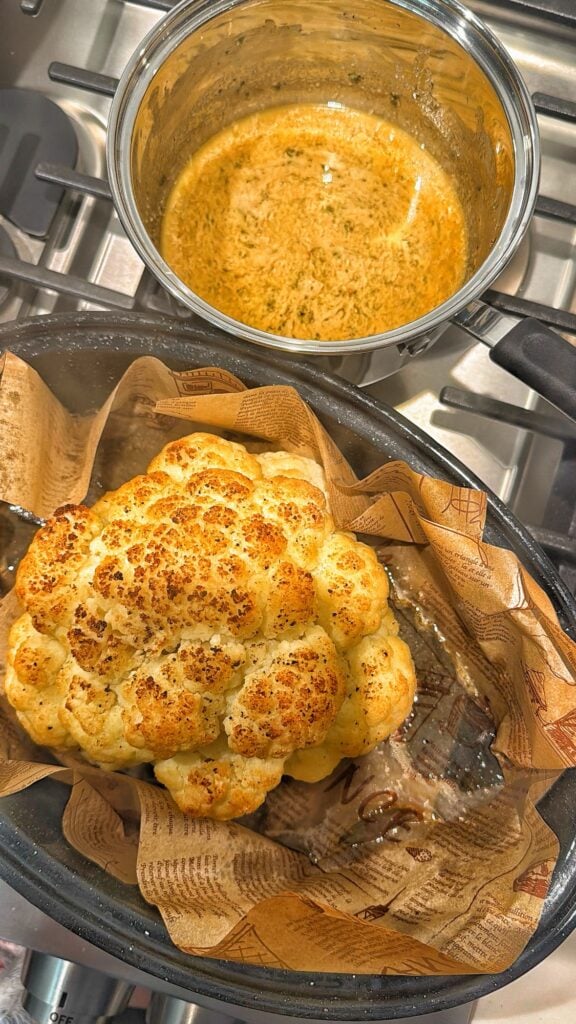
Insert a thin, sharp knife into one of the thickest areas near the center and core. It should slide in fairly easily when the cauliflower is ready.
You want the cauliflower tender enough that you can easily slice it into wedges, but not so soft that it collapses when you bring it to the table.
The outside should also have plenty of golden-brown areas. Those roasted edges are where a lot of the flavor develops.
What to Serve with Whole Roasted Cauliflower
My friend was here when I was testing this recipe, and as soon as she tasted it she said, “This needs a steak.”
I completely agree.
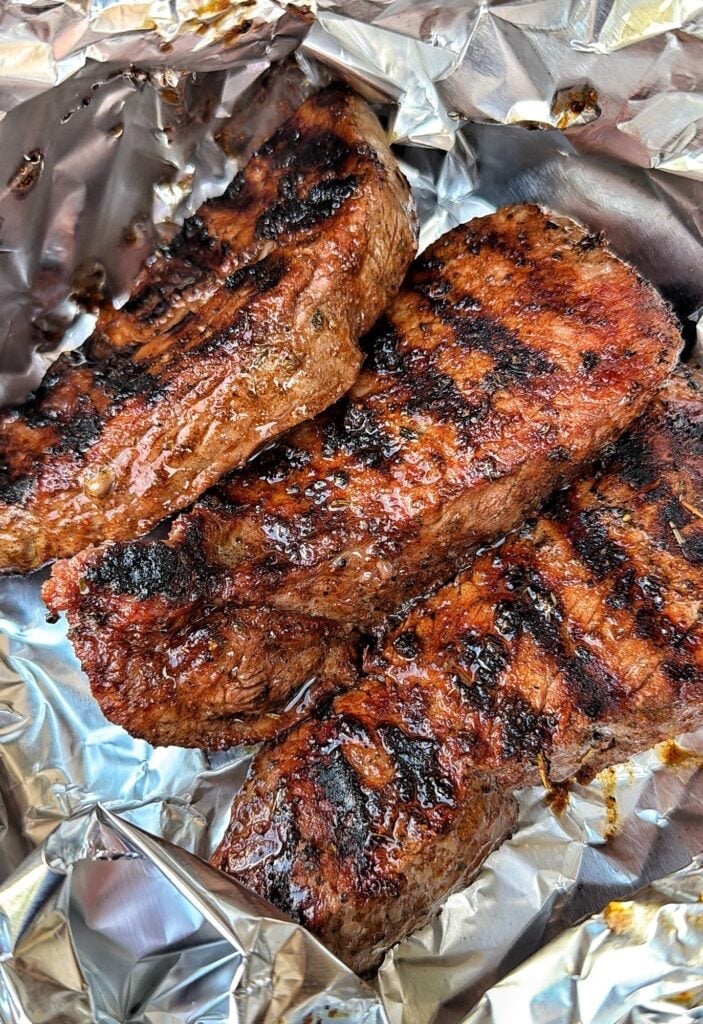
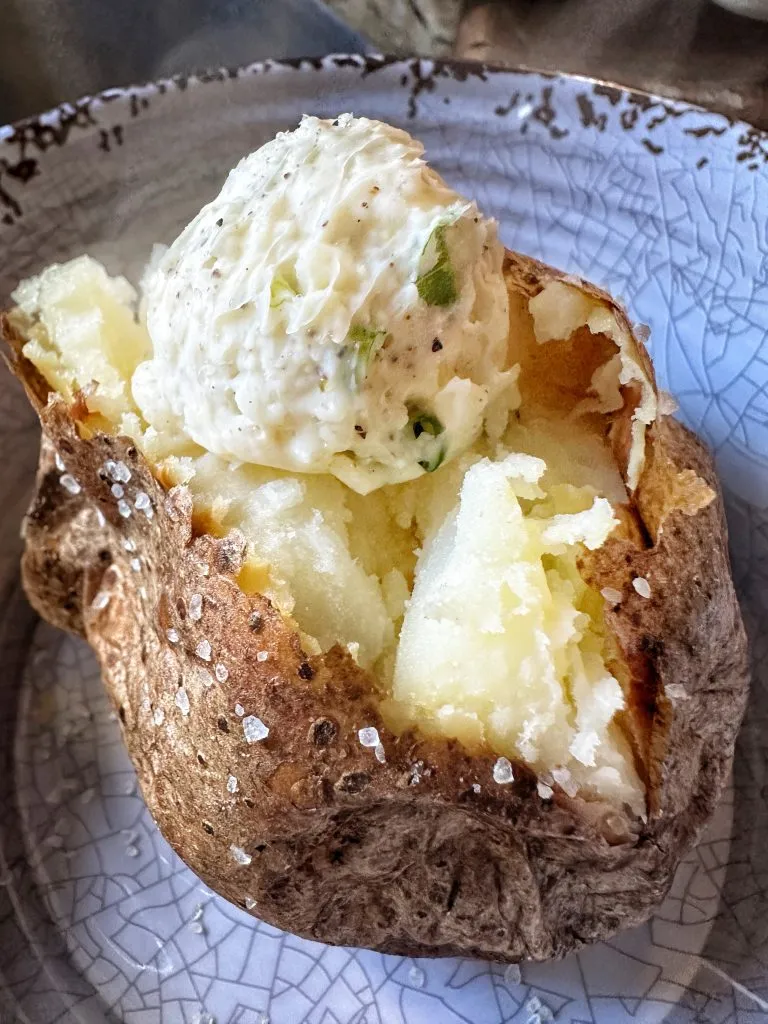
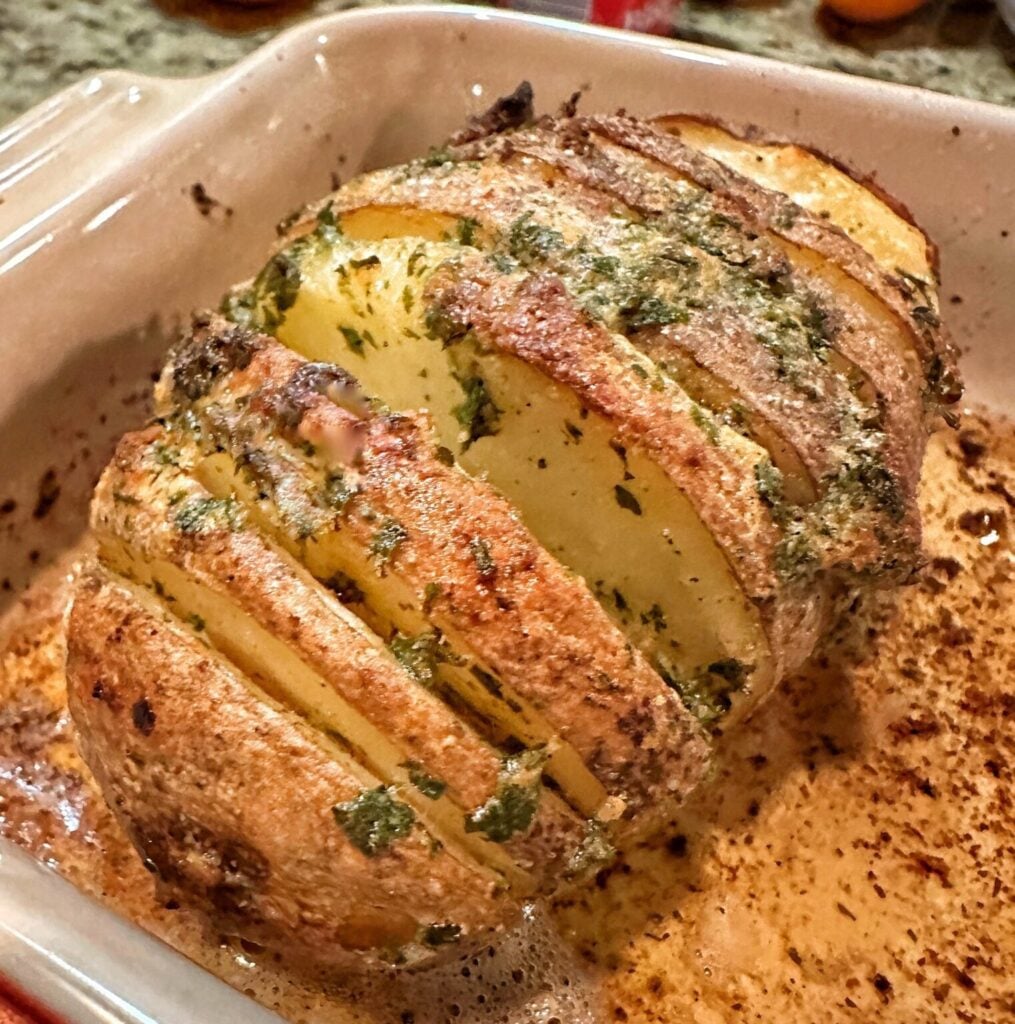
This would be fantastic alongside a good steak and a baked potato or crispy Hasselback potatoes. The salty, lemony, savory butter, on the cauliflower is especially good with beef, and the whole cauliflower makes an ordinary steak dinner feel a little more special.
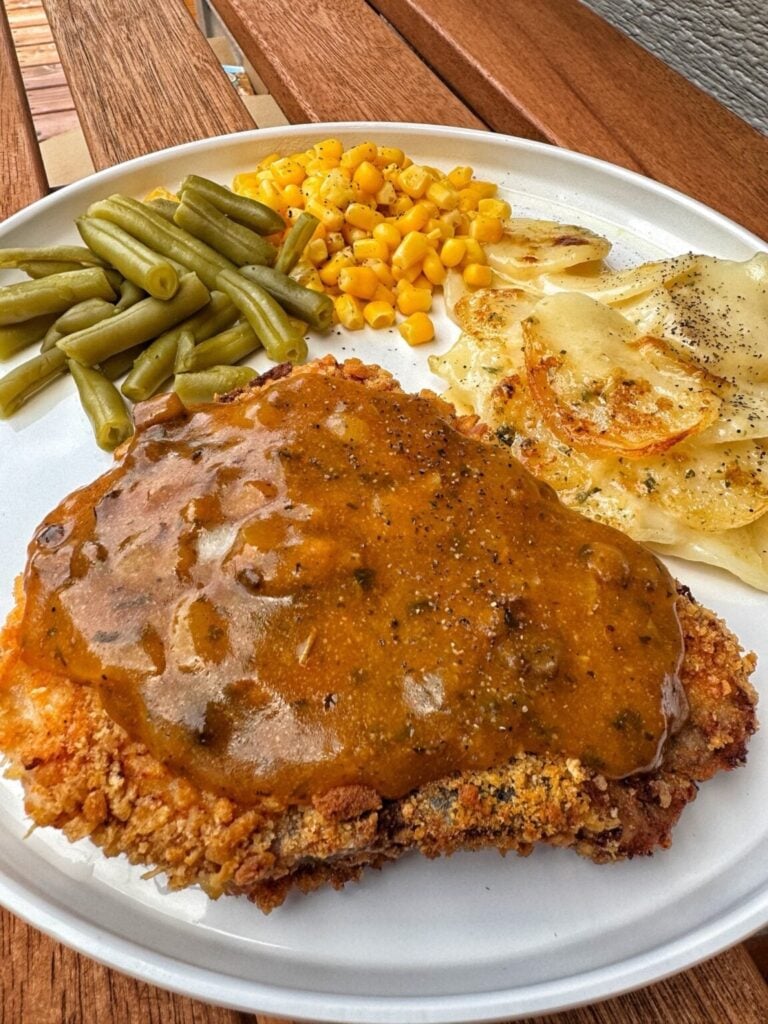
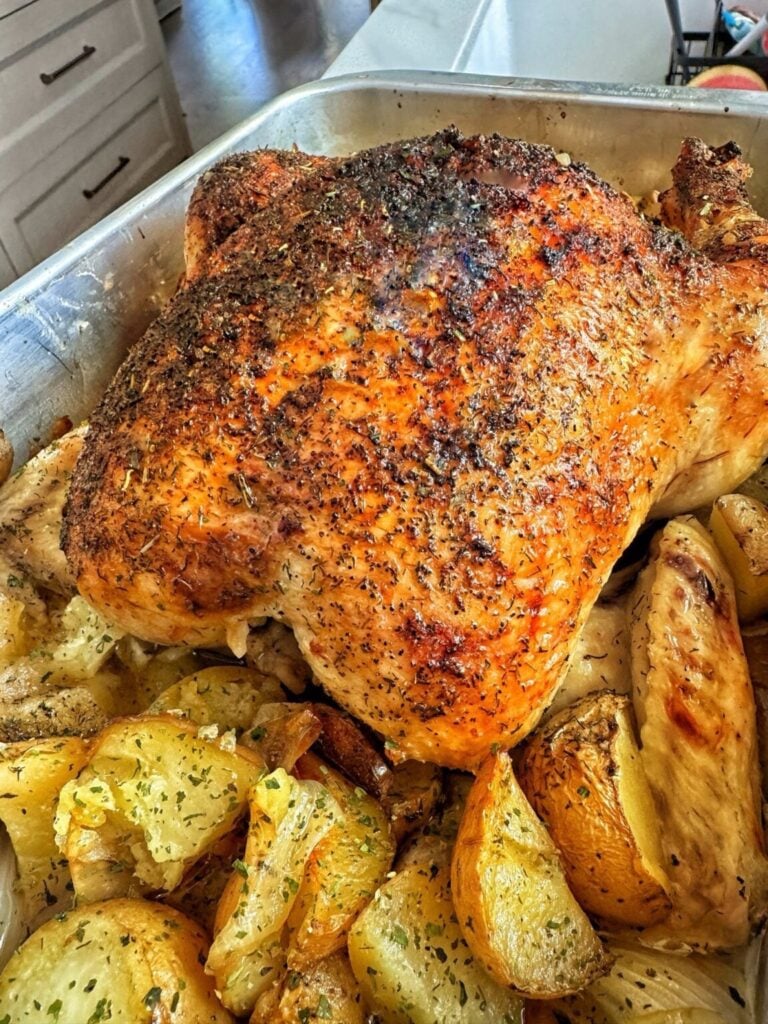
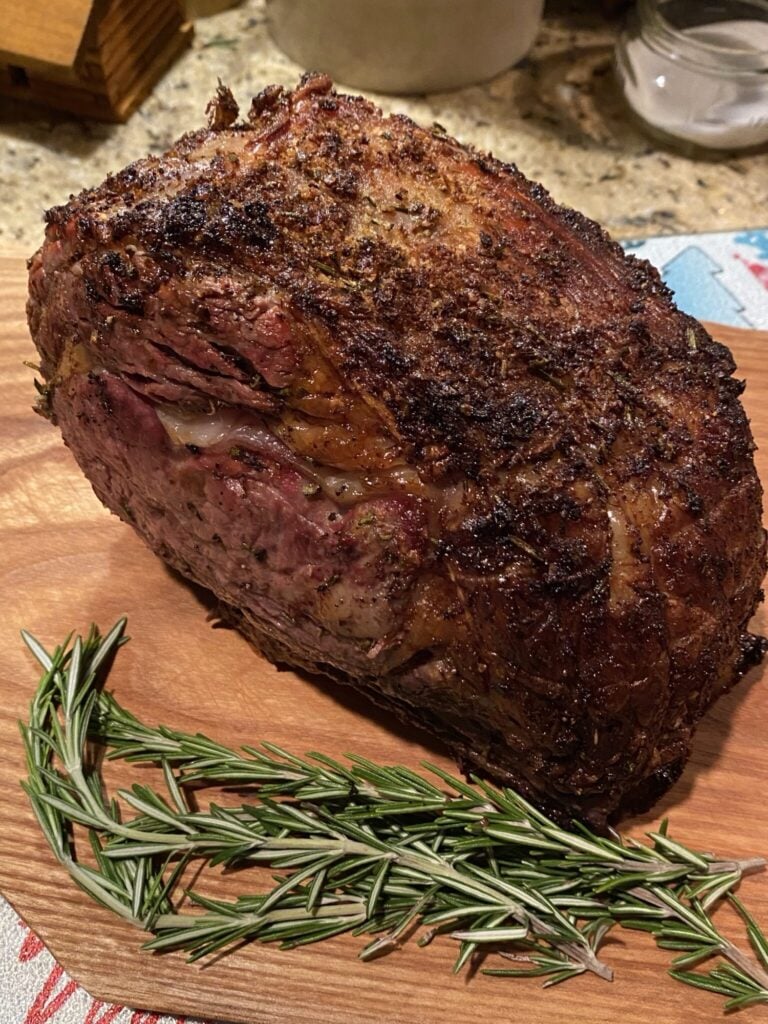
It would also be wonderful with prime rib, roast beef, pork chops, or roasted chicken.
And because the original inspiration came from a holiday cookbook, I wouldn’t hesitate to put this on a Thanksgiving or Christmas table either. Just click each image to get the recipe.
More Cauliflower Recipes
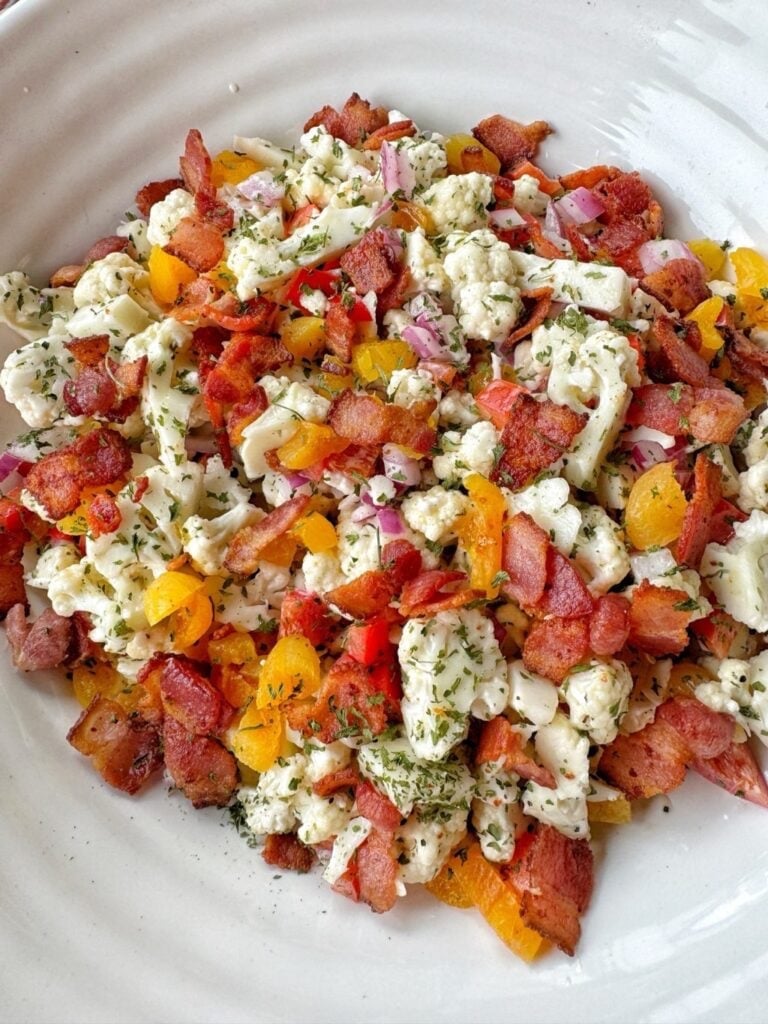
Cauliflower is one of those vegetables that can go in completely different directions depending on how you prepare it.
If you like the roasted flavor in this recipe, try my Grilled Cauliflower. Cooking cauliflower on the grill gives it those charred edges that make a simple vegetable taste completely different.
And then there is my Cauliflower Cheese, which is pure comfort food.
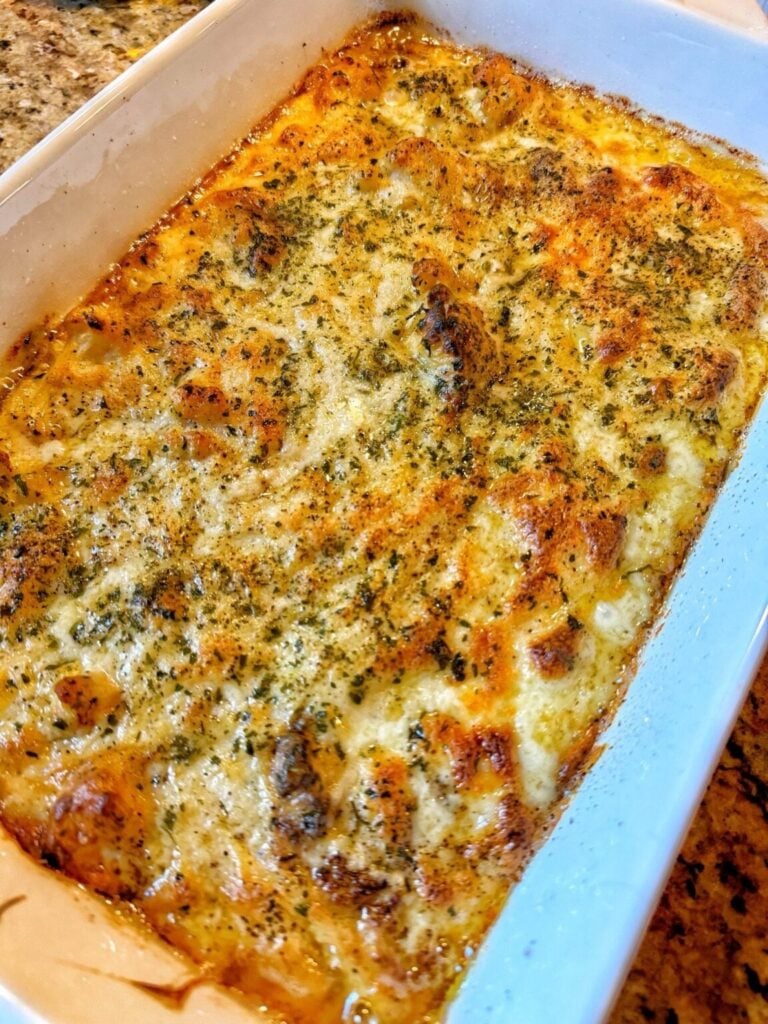
Cauliflower cheese is a classic British dish of tender cauliflower covered in a creamy cheese sauce and baked until bubbly and golden. If you are someone who claims not to be excited about cauliflower, covering it in cheese is certainly one way to change your mind. Just click each of the images to give the recipe a try.

An Old Recipe Worth Bringing Back
This is one of those recipes that reminds me why I keep those old cookbooks around.
Not every vintage recipe needs to be reproduced word for word. Sometimes the fun is finding a great idea from another era and figuring out how to make it work in the kitchen you cook in today.
A whole cauliflower, a covered roasting pan, and a stick of butter don’t sound particularly revolutionary.
Add anchovy, Dijon, capers, lemon and a little heat, however, and suddenly you have a vegetable side dish people are talking about at the table.
And apparently asking you to serve with steak.
Retro Whole Roasted Cauliflower with Lemon Anchovy Butter Recipe

A whole head of cauliflower is steamed and roasted until tender and golden, then coated in a rich, savory butter sauce made with anchovy paste, capers, Dijon mustard, lemon, and red pepper flakes. Despite the anchovy, the finished dish isn't fish-forward. The anchovy melts into the butter to create a deep, salty, steak-sauce-like savory flavor. This retro-inspired vegetable side is easy enough for Sunday dinner and impressive enough for a holiday table.
Ingredients
- 1 large head cauliflower
- 1/2 cup water
- Garlic salt, to taste
- Freshly ground black pepper, to taste
- 8 tablespoons (1 stick) butter
- Up to 1 tablespoon anchovy paste, added to taste
- 1 tablespoon small capers, plus a little of the caper juice
- 2 teaspoons Dijon mustard or walnut Dijon mustard
- 1 1/2 to 2 tablespoons lemon juice, added to taste
- Pinch of red pepper flakes, or to taste
- Chopped fresh parsley for finishing, optional
- Anchovy Alternatives
Instead of anchovy paste, you can use:
- Approximately 2 teaspoons Worcestershire sauce to start, adding more to taste OR Worcestershire powder, added gradually to taste
Instructions
- Heat the oven to 425°F.
- Remove the large outer leaves from the cauliflower. Trim the bottom of the stem just enough so the cauliflower sits flat, but leave the core intact. The core holds the whole cauliflower together while it cooks.
- Rinse the cauliflower thoroughly under cool running water, making sure to rinse between the florets and around the stem. Drain well and pat dry.
- Line the bottom of a covered roasting pan with parchment paper. Set the whole cauliflower stem-side down in the pan.
- Season the cauliflower all over with garlic salt and freshly ground black pepper.
- Pour 1/2 cup water into the bottom of the roasting pan around the cauliflower, rather than directly over it.
- Cover the roasting pan with its lid. If your pan does not have a lid, cover it tightly with aluminum foil.
- Bake covered at 425°F for approximately 30 minutes.
- While the cauliflower cooks, prepare the butter. Melt the stick of butter over low to medium-low heat.
- Whisk in the anchovy paste. You can start with a smaller amount and gradually add up to 1 tablespoon according to your taste.
- Stir in the capers along with a little of their juice, Dijon mustard, lemon juice, red pepper flakes and some freshly ground black pepper. Taste and adjust the anchovy, mustard, and lemon as needed.
- After the cauliflower has cooked covered for approximately 30 minutes, remove the lid or foil.
- Return the cauliflower to the oven uncovered for approximately 15 minutes so the exterior can begin to dry and brown.
- Spoon or brush approximately one-third to one-half of the lemon anchovy butter over the cauliflower, allowing some of it to run down between the florets.
- Return the cauliflower to the oven uncovered and roast for approximately 10 to 15 additional minutes, or until golden brown and tender. A thin knife inserted near the center should slide in easily.
- Pour the remaining lemon anchovy butter over the cauliflower, including the capers.
- Return it to the oven for 2 to 3 minutes, just long enough for the butter to get hot and work its way into the cauliflower.
- Remove from the oven and sprinkle with chopped parsley, if using.
- Bring the cauliflower to the table whole, then cut it vertically into large wedges.
- Spoon the buttery juices and capers from the bottom of the roasting pan over each serving.
Notes
- About the anchovy: This recipe does not have a strong fish flavor. Anchovy paste dissolves into the butter and adds a deep salty, savory quality similar to the complexity of a good steak sauce.
- Add anchovy paste gradually: I used approximately 1 tablespoon because I like the savory flavor. Start with less if you're unsure. You can always add more.
- No anchovy paste? Use Worcestershire sauce or Worcestershire powder instead.
- Fresh versus bottled lemon juice: I used bottled lemon juice from the little plastic lemon and it worked perfectly. Fresh lemon juice can absolutely be used. If using a fresh lemon, feel free to add some of the zest as well.
- About the mustard: I used walnut Dijon mustard because I had it on hand. Regular Dijon mustard works perfectly.
- No covered roasting pan? Use a roasting pan or baking dish and cover it tightly with aluminum foil during the initial steaming portion of the recipe.
- Cooking times can vary: Large heads of cauliflower may need additional time. Check the center with a thin knife rather than relying only on the clock.
- Make it ahead: The cauliflower can be cleaned, trimmed and thoroughly dried a day or two ahead. Refrigerate until you're ready to roast it.