
Perfect Rib Roast

Steakhouse Quality Rib Roast Without The Holiday Stress
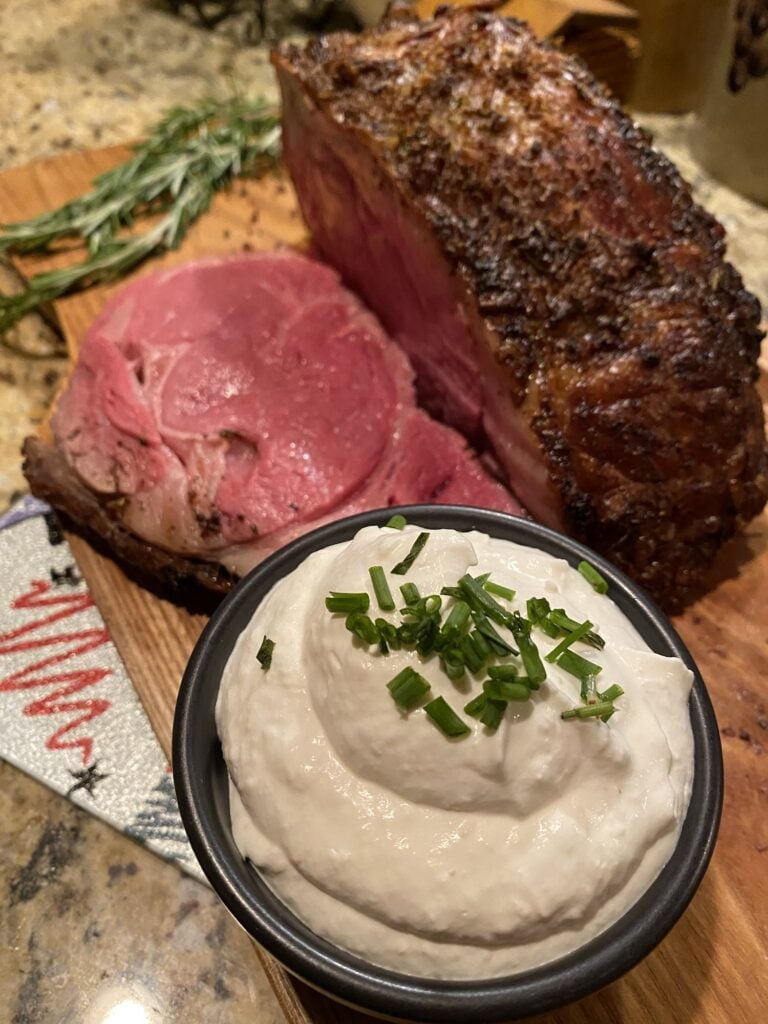
A Perfect Rib Roast may look like one of those meals that should be left to a steakhouse, but it really isn’t as intimidating as people make it out to be.
The biggest secret isn’t some fancy cooking technique.
It’s preparation.
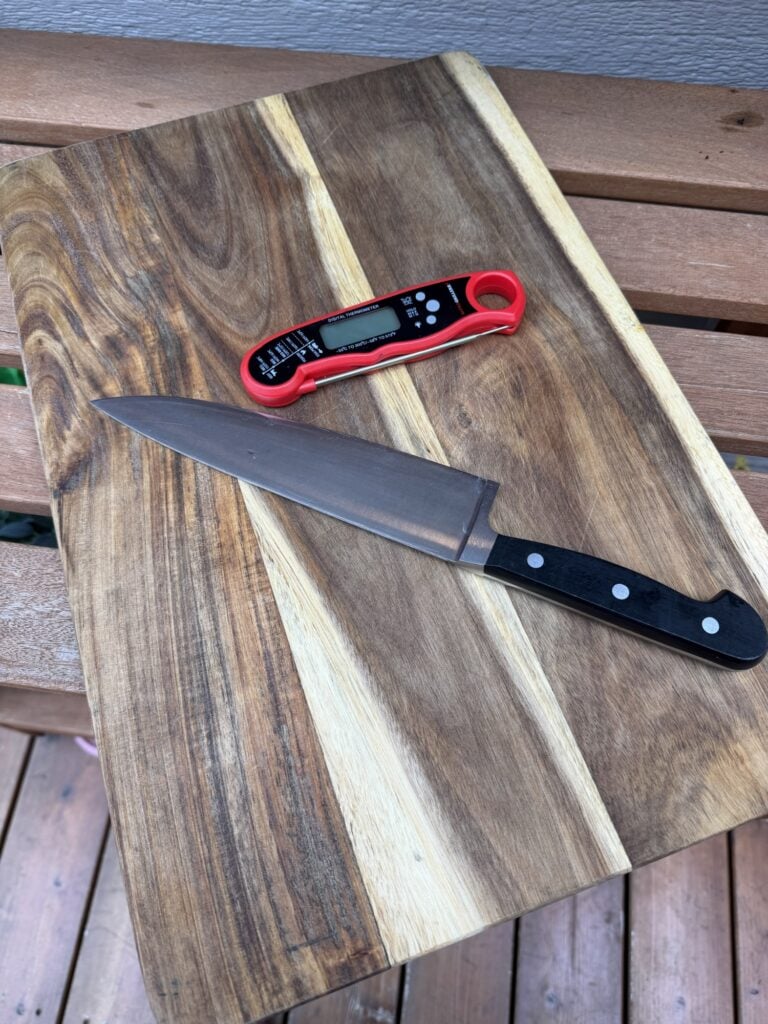
Before the holiday arrives, you want to know that your oven is actually heating to the temperature it says it is. You want a reliable meat thermometer. You want a cutting board big enough to hold this enormous piece of meat. And perhaps most importantly, you want a GOOD sharp knife waiting for you when it’s time to carve.
Do those things ahead of time and you’ve eliminated half the stress.
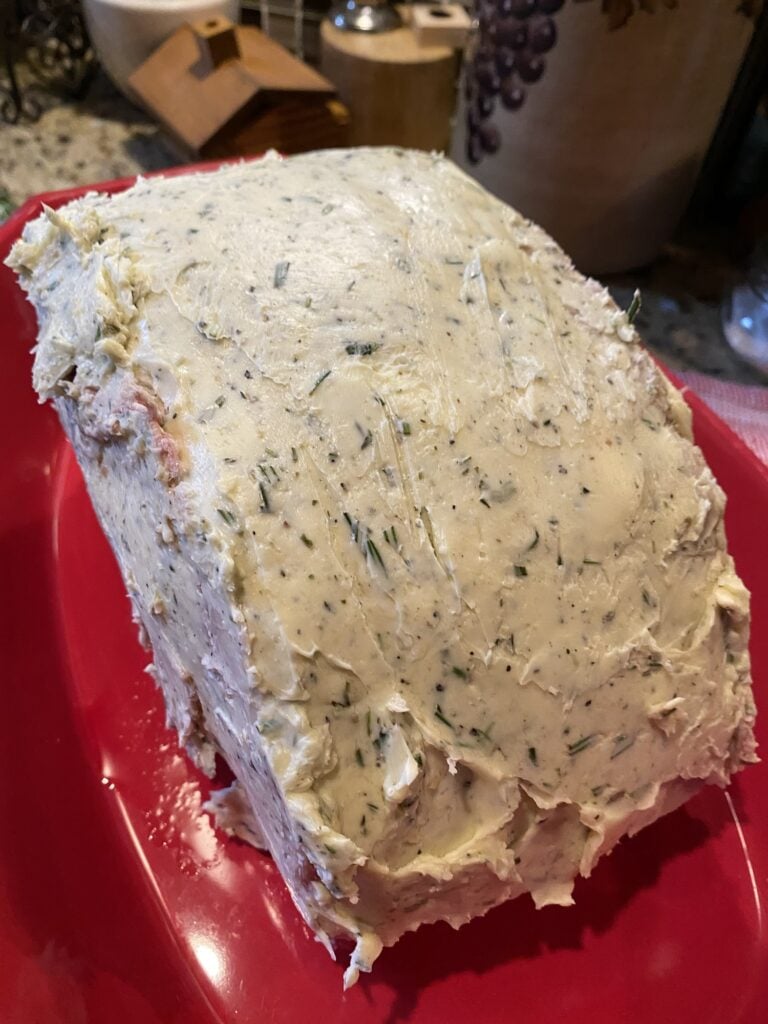
My rib roast gets coated in seasoned butter with rosemary, garlic, onion, black pepper, and plenty of salt before roasting until it develops a beautiful seasoned crust.
I also make an easy au jus from the pan drippings and serve the roast with a fluffy horseradish cream.
And here’s the other thing I want you to remember:
It is much easier to deal with an individual slice that someone wants cooked more than it is to fix an entire roast that has been overcooked.
We’ll talk about exactly how I handle that below.
Before You Skip To The Recipe
If this is your first time making a rib roast, there are a few sections I recommend reading before jumping straight to the recipe card. A little preparation can make cooking this expensive cut of beef much easier and less stressful.
Read These Sections First:
Supplies You Need Before You Start
Check Your Oven & Meat Thermometer

Prime Rib, Rib Roast, And Standing Rib Roast: What’s The Difference?
This is one of the most confusing parts of shopping for this recipe because you’ll see several different names used.
A standing rib roast is a bone-in roast cut from the rib section of the beef. It gets its name because traditionally the roast can “stand” on its rib bones while roasting.
You’ll also hear this roast called prime rib.
Here’s where people get confused: a roast being called “prime rib” does NOT automatically mean the beef has been graded USDA Prime.
Prime and Choice are USDA quality grades.
USDA Prime beef generally has more marbling than USDA Choice beef. Choice is still high-quality beef and is what I have bought from Aldi for this recipe for years.
So you can absolutely make what most of us call “prime rib” using a Choice-grade standing rib roast.
Don’t let the terminology at the store scare you.
If you’re confused, ask the butcher for a bone-in rib roast or standing rib roast and look at the USDA grade on the package.

I Buy My Rib Roast At Aldi
I have bought the Choice rib roasts from Aldi for years and have always had great results with them.
They usually appear around the holidays and can sell quickly, so I start watching the grocery ads as we get closer to Christmas.
If you find the size you need at a price you’re comfortable with, grab it.
A beautiful rib roast does NOT have to carry the USDA Prime label to make a wonderful holiday dinner.
The cooking method, seasoning, internal temperature, resting, and carving all matter enormously.
How Much Rib Roast Do I Need Per Person?
This depends on what kind of dinner you’re serving.
If you’re having a traditional steakhouse-style dinner where everyone gets a gigantic slab of prime rib and there are only a couple of side dishes, you’ll obviously need more meat.
A useful starting point for a bone-in rib roast is approximately one pound of uncooked roast per person when you’re serving those big steakhouse portions.
But that’s NOT necessarily how I serve it at a big holiday dinner.
If I’m also serving potatoes, vegetables, bread, appetizers, salad, and several other holiday dishes, people don’t necessarily need a gigantic restaurant-sized piece of beef.
You can slice the roast more moderately and serve smaller portions.
As a general planning guide:
For large steakhouse portions: Plan approximately 1 pound of bone-in roast per person.
For a traditional holiday dinner with several substantial sides: Approximately 1/2 to 3/4 pound per person can often be plenty.
For a large holiday buffet with lots of other food: You can slice the beef more thinly and stretch it even further.
Remember that a bone-in roast includes the weight of the bones.
I’d rather have a little extra than discover halfway through dinner that I don’t have enough.
And leftover rib roast is certainly not a problem we’re going to complain about.
Your Rib Roast Holiday Prep Checklist
I cannot emphasize this enough:
Do not wait until Christmas Day to discover that you’re missing something important.
A few days before you’re planning to cook your roast, make sure you have:
- A reliable instant-read or leave-in meat thermometer
- An inexpensive oven thermometer
- A roasting pan large enough for your roast
- A roasting rack, if you use one
- A LARGE cutting board
- A very sharp carving or chef’s knife
- Kitchen shears for removing netting
- Aluminum foil
- Butter
- All of your seasonings
- Ingredients for the au jus
- Ingredients for horseradish cream
And sharpen your knife BEFORE the holiday.
Trying to carve a bone-in rib roast with a dull knife while twelve hungry people watch you is not the Christmas memory we’re trying to create.
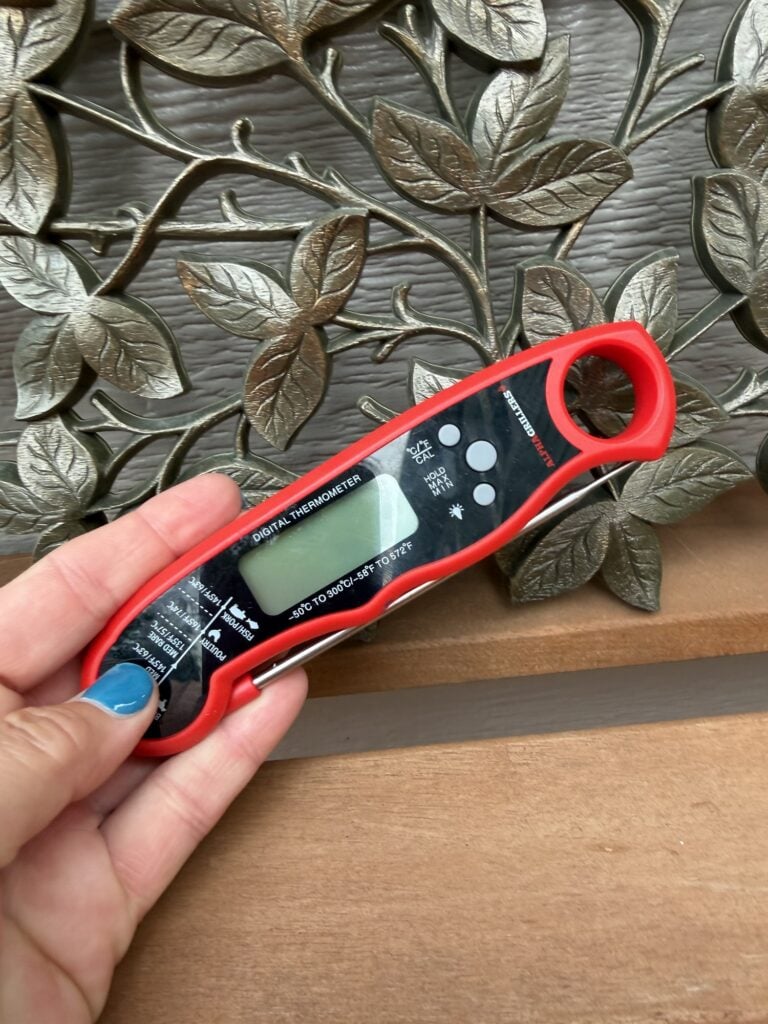
Please Buy A Meat Thermometer
If you take one piece of advice from this entire post, let it be this:
Buy a meat thermometer.
A rib roast is expensive.
You’re probably making it for an important meal.
This is not the moment to guess.
Cooking times are useful for estimating when dinner will be ready, but ovens vary, roasts vary, and even two roasts weighing exactly the same amount can have different shapes and thicknesses.
A thermometer tells you what is actually happening inside YOUR roast.
Insert the thermometer into the thickest part of the meat without touching the bone.
If you’re using an instant-read thermometer, check in more than one location.
A leave-in probe thermometer is even easier because you can monitor the temperature without repeatedly opening the oven door.
For food safety, USDA recommends cooking whole beef roasts to 145°F followed by at least a three-minute rest.
What If I Don’t Have A Meat Thermometer?
I know somebody is going to ask me this.
Can you cook a rib roast without a thermometer?
Of course people cooked roasts for generations before digital thermometers existed.
But I don’t recommend guessing with an expensive piece of beef.
Cooking time, color, and the appearance of the juices cannot reliably tell you whether the center of a roast has reached a safe internal temperature.
If you find yourself without a thermometer, use the cooking-time guidance as an estimate and check the center by slicing into the roast if necessary. If it is less done than you want, you can continue cooking it.
But understand that looking at the meat cannot confirm its internal temperature.
For this recipe especially, I would spend the few dollars on a thermometer.
You’ll use it for steaks, chicken, turkey, pork, roasts, and plenty of other recipes.
Consider it part of your basic kitchen equipment rather than some fancy gadget you are buying for one meal.
Before The Holiday, Check Your OVEN Too
People spend a lot of money on a beautiful rib roast and then trust the little number glowing on the front of an oven they’ve never actually checked.
Don’t do that.
An oven set to 350°F isn’t necessarily holding exactly 350°F.
Ovens normally cycle slightly above and below their set temperature as the heating elements turn on and off.
What we’re looking for is whether your oven is consistently running significantly hotter or colder than the temperature you’ve selected.
This matters with your Thanksgiving turkey.
It matters with Christmas cookies.
But it REALLY matters when you’re cooking an expensive rib roast and trying to control the doneness.
How To Check Your Oven Temperature
Buy an inexpensive oven thermometer.
Place it in the center of the middle oven rack where your food normally cooks.
Set your oven to 350°F and allow it to fully preheat.
I would give it additional time after the preheat signal because that little beep doesn’t always mean the entire oven cavity has completely stabilized.
Then watch the thermometer through several heating cycles.
The temperature will naturally rise and fall somewhat. You’re looking at the general average rather than panicking because it temporarily moves a few degrees in either direction.
If you set your oven to 350°F but repeatedly discover it’s averaging closer to 325°F or 375°F, now you know there’s a discrepancy.
Many ovens allow you to adjust or calibrate the temperature offset through the control panel.
Every brand and model handles calibration differently, so look up the owner’s manual for YOUR oven rather than following random instructions online.
You may be able to make a small calibration adjustment yourself.
If the discrepancy is significant or inconsistent, however, I would have the oven serviced rather than simply trying to work around it.
Do this DAYS before the holiday.
Not at 2:30 p.m. on Christmas when your rib roast is already in there.
Check The Oven Door Seal
Here’s something people don’t always think about.
Your oven door has a gasket or seal around it that helps keep hot air inside the oven.
Over time, that gasket can become brittle, cracked, torn, loose, compressed, damaged, or covered in baked-on debris.
If the door isn’t sealing properly, heat can escape.
That can contribute to inconsistent cooking, longer cooking times, and an oven that struggles to maintain its temperature.
When you’re doing your pre-holiday oven check, visually inspect the gasket.
Make sure it is intact and properly seated.
Also make sure nothing is preventing the oven door from closing completely.
If the gasket looks damaged or your oven consistently struggles to maintain its temperature, consult the manufacturer’s instructions or have the appliance serviced.
Again: discover this BEFORE you buy an expensive roast.
Why Is My House Getting So Smoky?
This is one of the questions I’ve gotten repeatedly over the years with this recipe.
There are several things that can contribute to smoke.
First, you’re cooking a fatty piece of beef. As the roast cooks, fat renders into the pan.
Second, we’re using butter on the outside.
If fat, butter, or drippings hit an extremely hot, dry surface, they can smoke.
A dirty oven can make the problem MUCH worse. Old grease and food residue on the bottom or walls of the oven can start smoking as the oven heats.
Before making your roast, clean obvious grease and burned food residue from your oven well ahead of the holiday.
I wouldn’t run an aggressive self-cleaning cycle immediately before an important holiday meal. If something goes wrong with the oven afterward, you’ve created a much bigger problem.
Make sure your roasting pan is deep enough to contain the drippings.
Do NOT let grease spill onto the oven floor.
And don’t line the bottom of your oven with foil unless your oven manufacturer specifically says that is safe for your particular model.
Turn on your kitchen exhaust fan before things get smoky rather than waiting until the smoke detector is screaming at everyone.
Most importantly, if you see heavy smoke, don’t simply ignore it because a recipe told you not to open the oven door.
Cooking safely takes priority over preserving a cooking technique.
Ventilate the kitchen and safely investigate the source.
A little aroma and an occasional wisp from roasting fat is one thing.
A kitchen filling with smoke is not something you should consider normal.
About My Original High-Heat Method
If you’ve made this recipe from my website in previous years, you probably remember that my original method started the roast in an extremely hot oven.
After making this recipe for years and hearing from readers with many different ovens, I’ve updated the primary instructions.
Not every home oven behaves the same way at extreme temperatures.
Some ovens run hot.
Some run cold.
Some have exposed heating elements.
Some don’t retain heat particularly well.
Some have old grease residue.
And butter and rendered beef fat can smoke aggressively at very high temperatures.
The updated recipe card puts more emphasis on measuring the actual internal temperature of the roast rather than relying entirely on a particular oven and an exact number of minutes.
But I also know that some of you have been using my original method successfully for years.
So I’m not taking it away from you.
My Original Rib Roast Method
If you have been making this rib roast from my website for years, you may prefer to stick with my original method, especially if you already know that it works well in your particular oven.
I’m leaving it here for those of you who have used it successfully and want to continue making it this way.
For my original method, I preheated the oven as hot as it would go. My oven reaches 550°F.
I placed the prepared rib roast in the hot oven, uncovered, and roasted it for 20 minutes without opening the oven door.
After 20 minutes, I turned the oven down to 150°F for rare or 250°F for a more medium roast.
I continued cooking the roast for approximately 30 minutes per pound, keeping the oven door closed the entire time.
When that cooking time was finished, I turned the oven completely off and left the roast inside for another 40 minutes without opening the door.
Finally, I removed the roast from the oven, loosely covered it with foil, and allowed it to rest for another 20 minutes before carving.
Why Your Oven Matters With This Method
This method depends heavily on your particular oven being able to reach, maintain, and retain heat.
That’s why I strongly recommend checking your oven with a separate oven thermometer before using this technique.
If your oven runs cool, loses significant heat through the door, or has a damaged door seal, your results can be very different from mine.
The size and shape of your roast can also affect how quickly the center cooks.
Because this method begins at such a high temperature, the butter and rendered beef fat can also create more smoke in some ovens.
Make sure your roasting pan is deep enough to contain the drippings, your oven is reasonably clean, and your exhaust fan is running.
If you’ve made my rib roast this way for years and know this method works beautifully in your oven, I’m leaving it here for you.
If this is your first time making the recipe, I recommend using the updated method in the recipe card and relying on a good meat thermometer rather than the clock.
Let’s Talk About The Netting
Oh, the netting.
If you want to start an argument on Facebook, apparently all you have to do is cook a rib roast with the netting still attached.
Here’s why I leave mine on.
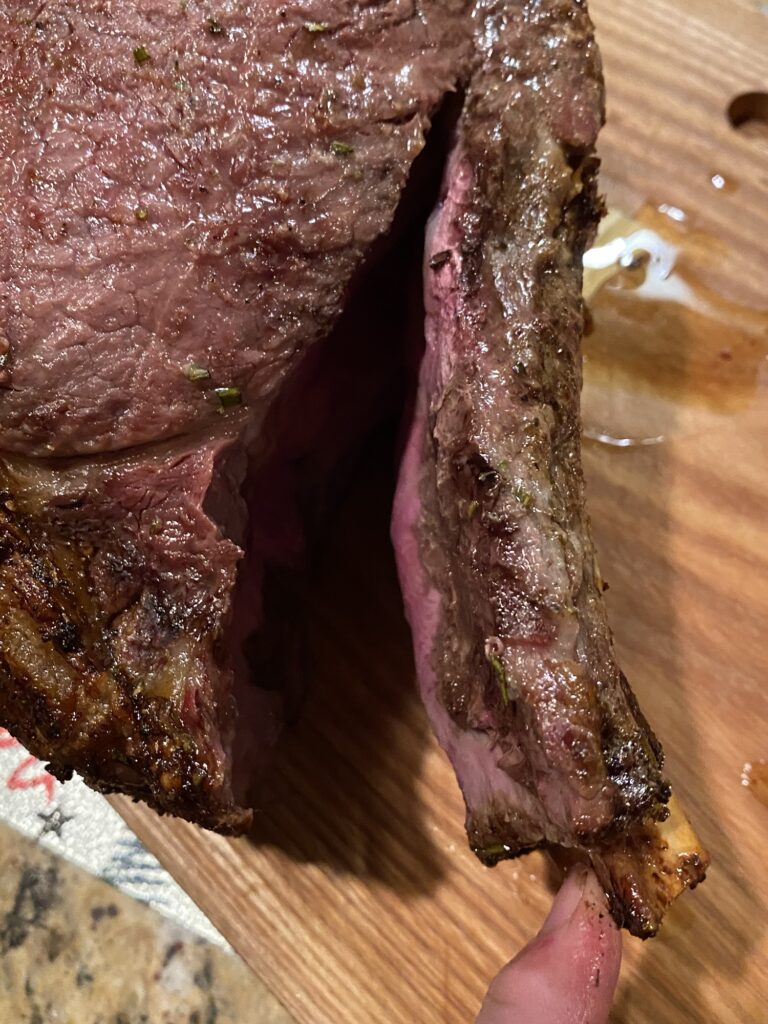
The bone-in rib roasts I buy are often already partially cut away from the rib bones by the butcher.
Think of the meat as being attached to the bones but partially opened like a flap.
That butcher work is actually helpful later because separating the cooked roast from the bones is much easier.
But while it’s roasting, I want that meat held back against the bones.
The netting helps hold everything together in its original roast shape.
So I leave the netting on while it cooks.
The argument people make is that when you remove the netting, you’re going to pull off your beautiful seasoned crust.
That CAN happen if you grab the netting and yank it off like you’re opening a Christmas present.
Don’t do that.
After the roast has rested, I use a sharp pair of kitchen shears or a knife and carefully CUT the netting away in sections.
I snip around the top and sides and gently lift it away from the crust rather than pulling it across the surface.
Will you lose one tiny piece of seasoning here or there?
Maybe.
The rib roast will survive.
For me, keeping that partially separated roast snug against the bones during cooking is worth it.
If your butcher has tied your roast with butcher’s twine rather than netting, follow the same general idea: leave it secured while roasting and carefully remove the ties before carving.
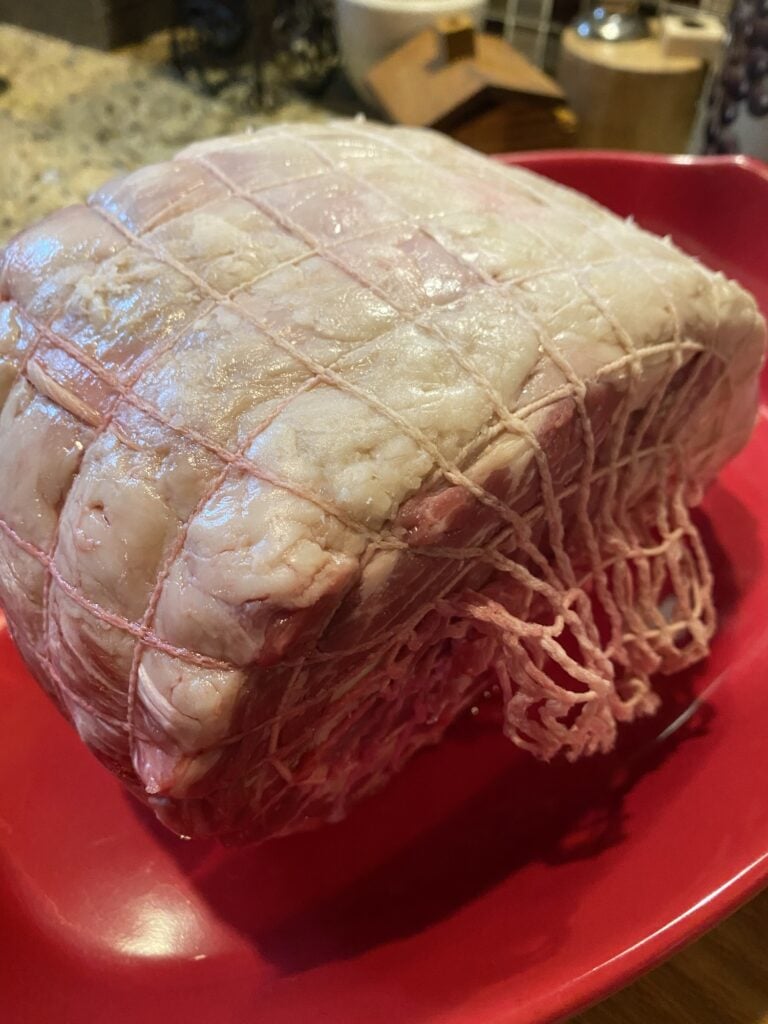
The Seasoned Butter
This butter mixture is what gives the outside of the roast so much flavor.
I combine softened butter with:
- Fresh rosemary
- Garlic powder
- Onion powder
- Black pepper
- Kosher or coarse salt
Pat the roast dry before seasoning it.
Then season the meat and spread the softened seasoned butter over the top and sides.
Don’t be shy.
We’re seasoning a very large piece of beef.
The herbs and seasonings become part of that beautiful outer crust, and the seasoned drippings in the roasting pan eventually help flavor our au jus.

Use The Right Roasting Pan
Use a roasting pan that’s only somewhat larger than your roast.
You don’t need the meat swimming in a gigantic pan.
A reasonably sized pan helps keep those flavorful drippings concentrated so we can use them for au jus later.
I like using a small roasting rack underneath the meat.
If you don’t own one, don’t panic. You can still make the roast.
I would position the pan around the middle or lower-middle portion of the oven, leaving plenty of clearance above the roast and keeping it away from a top heating element.
Cooking The Rib Roast
For my updated method, preheat your oven to 325°F.
Place the prepared roast on the rack bone-side down and fat-side up.
Insert an oven-safe probe thermometer into the thickest portion if you’re using one, making sure the probe isn’t touching the bone.
Roast uncovered.
Use the time-per-pound estimate in the recipe card to help PLAN your meal, but let the thermometer determine when your roast is ready, not the clock.
Because the size, shape, starting temperature, and individual oven can all change the cooking time, begin checking earlier than you think you need to.
For food safety, cook the roast to an internal temperature of 145°F, followed by at least a three-minute rest.
I give a roast this size a longer rest before carving because it also gives me time to finish the au jus and get the rest of the holiday meal onto the table.
What If Someone Wants Their Prime Rib More Well Done?
I don’t believe in intentionally cooking the entire roast beyond the point everyone else enjoys just because one or two people want theirs more well done.
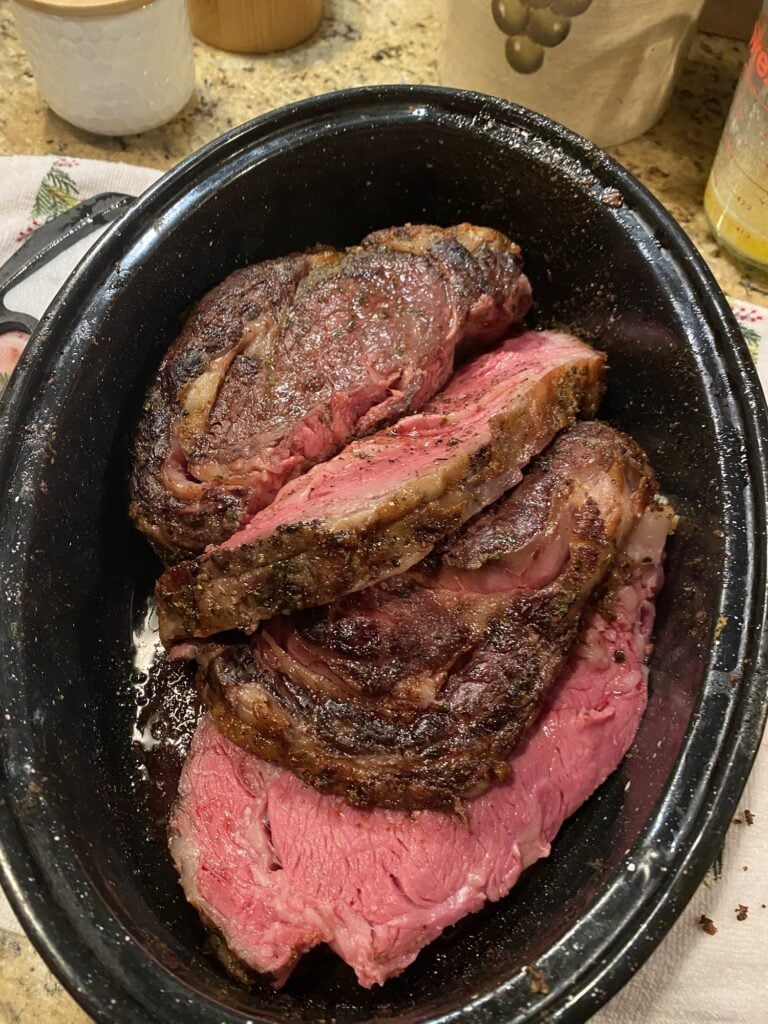
Once the roast has reached a safe internal temperature and rested, slice it.
The outside pieces will naturally be more done than the center pieces, so start there for anyone who prefers less pink.
If they want it cooked even further, you can do something similar to what restaurants do.
Heat a skillet and add their slice along with a little au jus.
Warm it gently until it reaches the doneness that person prefers.
The au jus helps keep the beef moist.
You can also put a few slices into a small baking dish with a little au jus and return them briefly to a moderate oven.
This is SO much better than overcooking an entire expensive rib roast because one person doesn’t like pink meat.
Everyone gets the slice they want.
And no judgment.
At least not where they can see you.

If The Whole Roast Needs More Time
If you check the internal temperature and discover the roast isn’t ready yet, that’s not a disaster.
Put it back in the oven.
Continue roasting and check the temperature again.
This is exactly why the thermometer matters.
You aren’t trying to hit some magical minute on a clock.
You’re cooking a large piece of beef until its center reaches the proper temperature.
Give The Roast Time To Rest
Do not take your beautiful rib roast out of the oven and immediately attack it with a knife.
Let it rest.
Loosely tent it with foil and use this time to make your au jus, finish your sides, and get everyone to the table.
Resting also gives you a much calmer window for carving and serving.
You’ve spent all this money and time making the centerpiece of your holiday meal.
Give yourself a minute.
How To Carve A Bone-In Rib Roast
This is where that large cutting board and sharp knife become important.
First, carefully cut away the netting rather than pulling it across the crust.
Next, look for where the butcher partially separated the roast from the rib bones.
Follow that cut with your sharp knife and finish separating the roast from the bones.
DO NOT THROW THOSE BONES AWAY.
Set them aside.
Once the bones have been removed, you have a much easier piece of beef to carve.
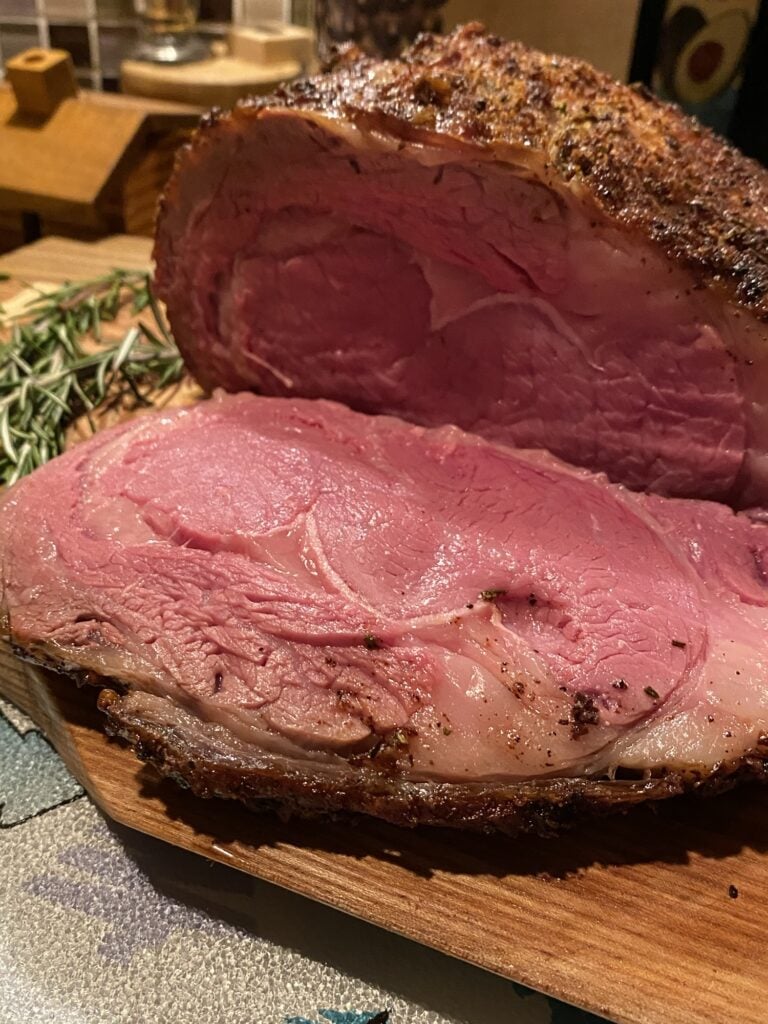
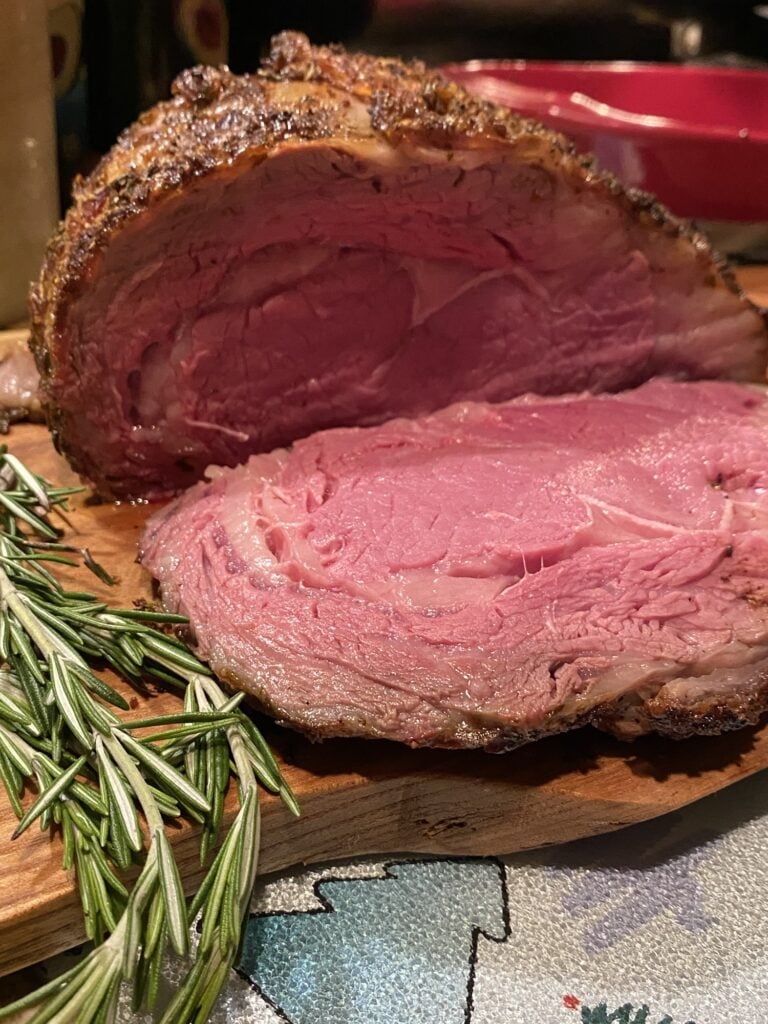
Slice across the roast into portions appropriate for your dinner.
For a steakhouse dinner, make those slices thick and impressive.
For a holiday dinner with ten side dishes, slice more moderately.
There’s no law saying every person needs a two-inch-thick slab of prime rib.
Easy Au Jus From The Pan Drippings
Do not waste those pan drippings.
They contain beef fat, butter, rosemary, seasoning, and all that concentrated roasted flavor.
I use them as the starting point for a very easy au jus.
And I am perfectly happy using a McCormick au jus packet here.
Add the drippings to a saucepan along with the prepared au jus mixture and additional broth or water as needed.
If you prefer it slightly thicker, you can use a small amount of cornstarch slurry.
I don’t want this to become thick beef gravy.
It should still be pourable enough to spoon over the meat or use for gently warming individual slices.
Whipped Horseradish Cream
Rib roast and horseradish belong together.
I make a simple whipped horseradish cream using heavy cream and prepared horseradish.
Whip the heavy cream until it’s light and fluffy, then add horseradish to taste.
Finish with fresh chives if you like.
Some people want a tiny hint of horseradish.
Some of us want enough that our sinuses remember the experience.
You do you.


Build A Complete Holiday Dinner
Rib roast is obviously the star, but the side dishes are half the fun of a holiday meal.
I like serving it with rich, traditional sides that feel special enough for Christmas or New Year’s dinner.
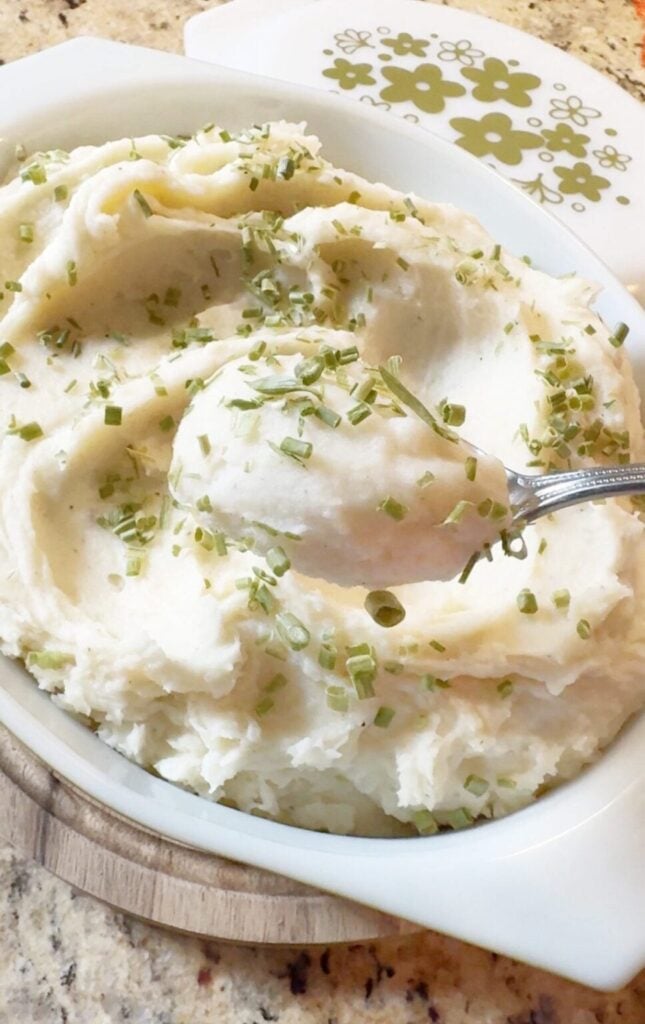
Creamy mashed potatoes are an obvious choice because they’re perfect for catching some of that au jus. Au gratin potatoes or scalloped potatoes are wonderful if you want something richer.
Then I like to add at least one green vegetable, something fresh or crunchy, and good bread or rolls.
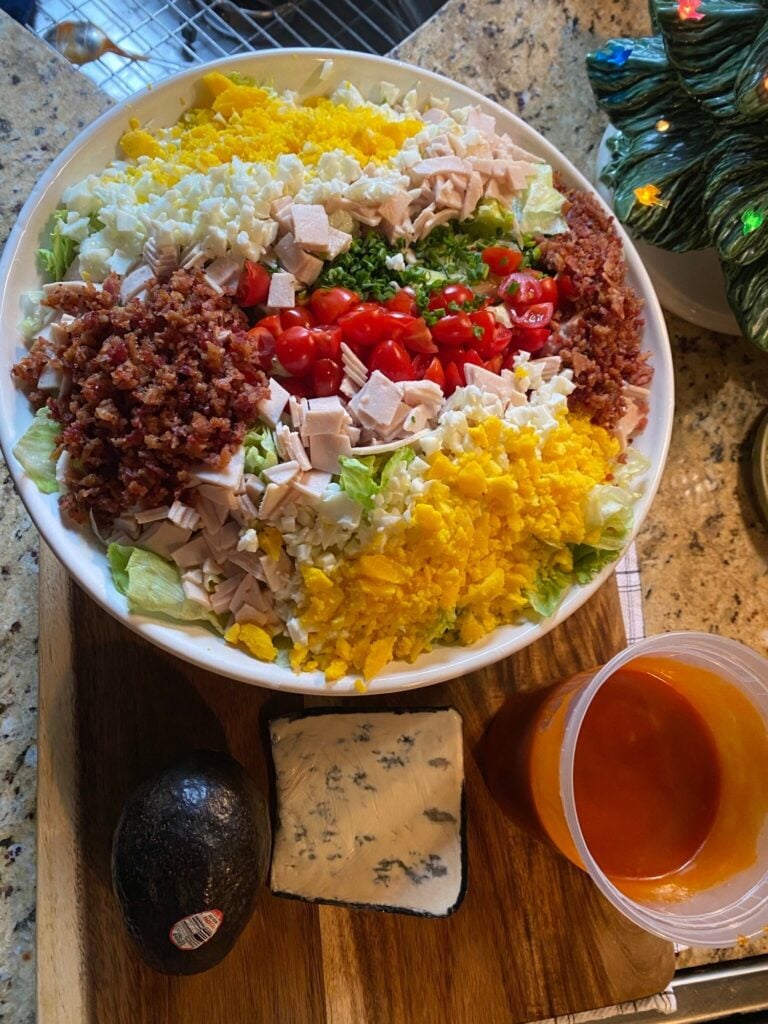
Below I’ve gathered some of my favorite holiday side dishes that pair beautifully with rib roast so you can build the entire meal without having to hunt around the website.
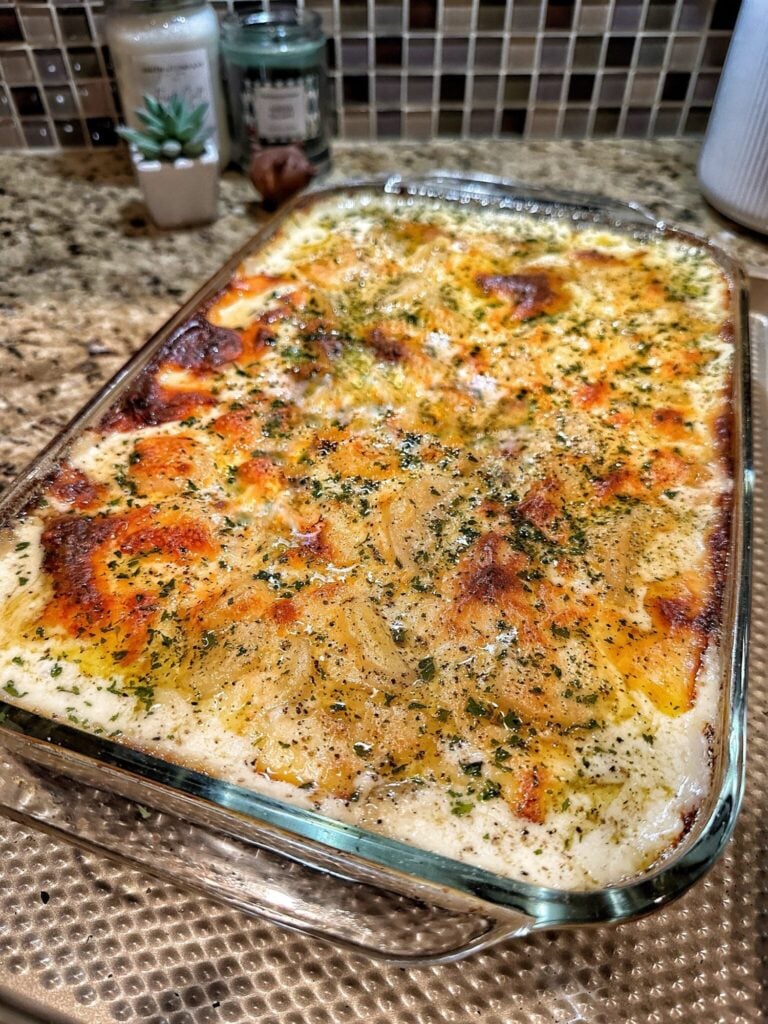
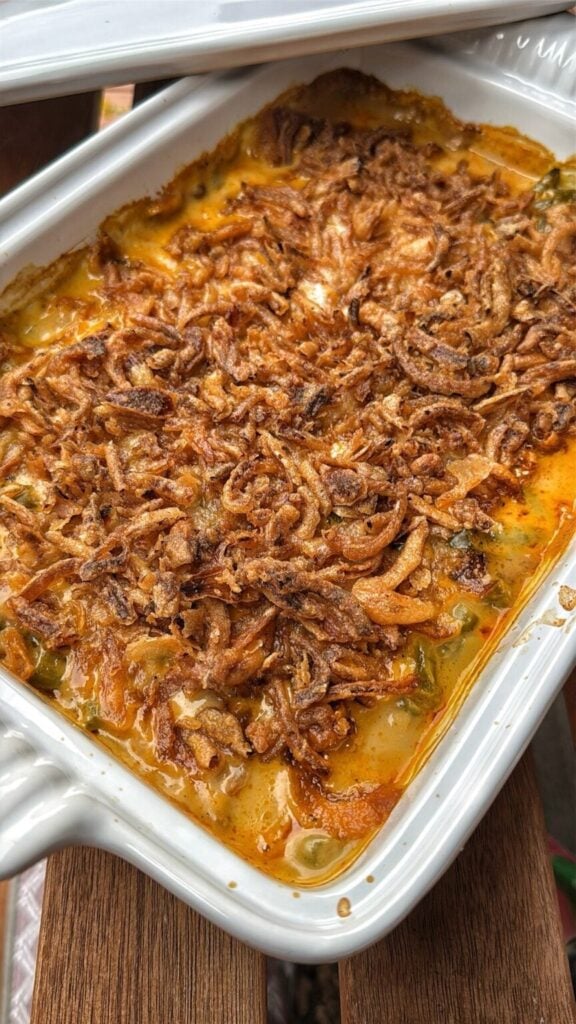
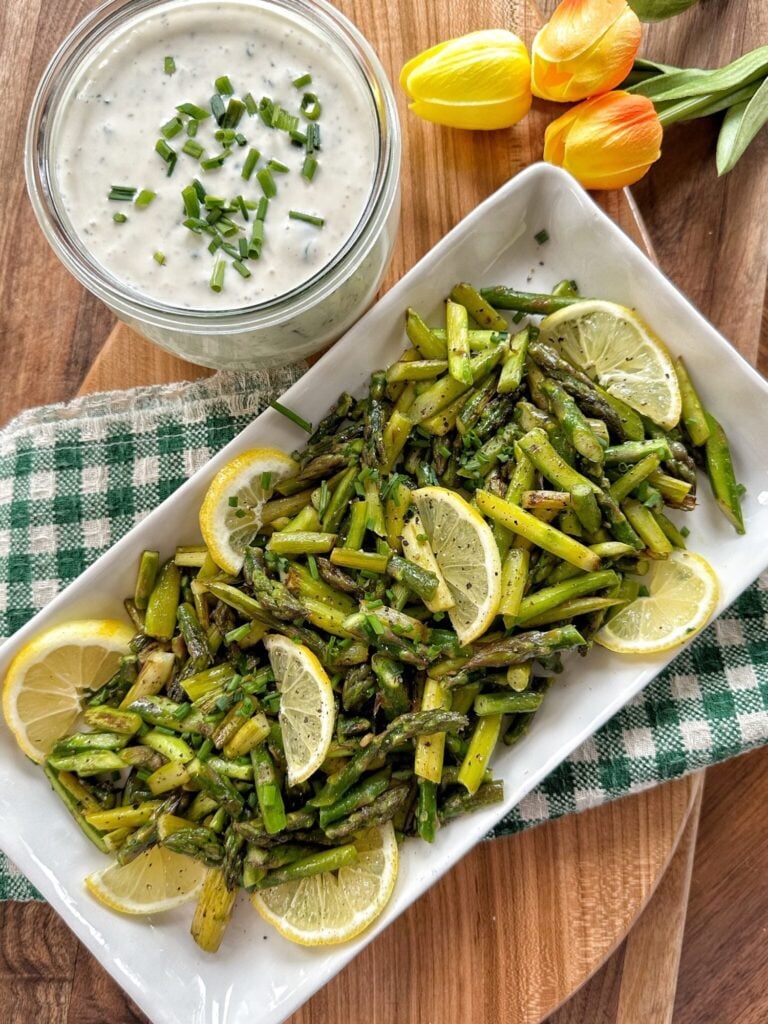
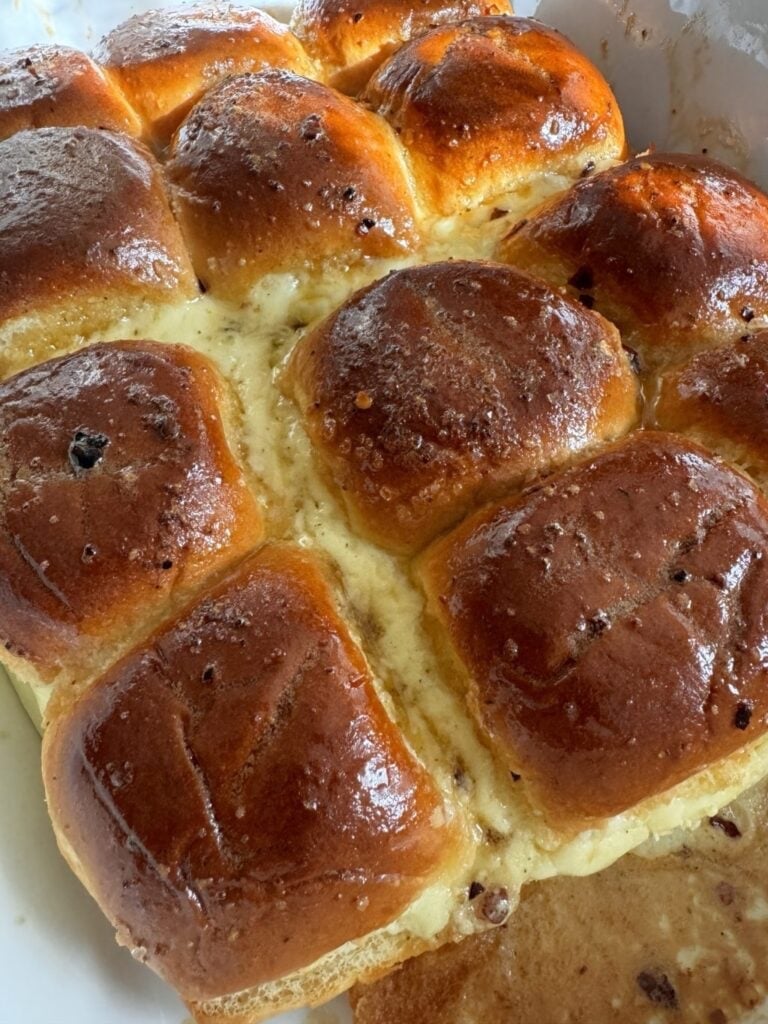
Save Those Rib Bones
Remember those rib bones I told you not to throw away?
They still have a tremendous amount of flavor.
After dinner, refrigerate them promptly.
I like using leftover rib roast bones to make a rich beef soup or broth.
Put the bones into a stockpot with water or beef broth along with onion, carrots, celery, garlic, herbs, and whatever other soup vegetables you enjoy.
Let everything gently simmer until you’ve pulled as much flavor as possible from those bones.
Strain the broth and use it as the base for beef and vegetable soup, beef barley soup, or another hearty winter soup.
If there is meat still attached to the bones, pull it off, and add it back to the finished soup.
One expensive holiday roast can turn into an entirely different meal a day or two later.
What To Do With Leftover Rib Roast
Leftover rib roast is precious cargo.
Refrigerate the cooked beef promptly and store it in shallow airtight containers.
Save some au jus separately if you have it.
That gives you a wonderful way to gently reheat the beef without drying it out.
Leftover rib roast is excellent for:
- French dip sandwiches
- Steak sandwiches
- Beef and noodle soup
- Beef barley soup
- Steak and eggs
- Breakfast hash
- Cheesesteak-style sandwiches
- Steak salads
- Beef stroganoff
The trick with leftover prime rib is remembering that it’s already cooked.
Don’t aggressively cook it all over again.
Warm it gently.
Frequently Asked Questions
Why Did My Rib Roast Make My House Smoky?
Rendered beef fat, butter, an overly hot oven, grease already inside the oven, or drippings hitting a hot surface can all contribute to smoke. Use a deep roasting pan, make sure your oven is reasonably clean before the holiday, and turn on your exhaust fan. If you’re experiencing heavy smoke, investigate rather than ignoring it.
Should I Take The Netting Off Before Cooking?
I leave mine on because the roast I buy is partially separated from its rib bones and the netting helps hold everything together. After resting, I carefully CUT the netting away rather than pulling it across the seasoned crust.
Do I Really Need A Meat Thermometer?
I strongly recommend one. Time and appearance cannot reliably tell you the internal temperature of a large roast, and this is too expensive a piece of beef to guess.
Where Should I Put The Thermometer?
Insert it into the thickest portion of the roast without touching the bone.
How Do I Know If My Oven Temperature Is Accurate?
Put an oven thermometer in the center of the oven and monitor it through several heating cycles. If your oven consistently runs significantly hot or cold, consult your owner’s manual about calibration or have the oven serviced.
Why Is My Oven Taking Forever To Cook The Roast?
First verify the oven temperature with a separate thermometer. Also inspect the oven-door gasket for damage and make sure the door is closing completely. The size, shape, and starting temperature of the roast can also affect cooking time.
What If Someone Wants Their Rib Roast More Well Done?
After the roast has reached a safe internal temperature and rested, individual slices can be cooked further. Warm them gently in a skillet with au jus or briefly return them to the oven with a little jus until they reach that person’s preferred doneness.
What If The Whole Roast Isn’t Done?
Put it back in the oven and continue cooking while monitoring the internal temperature. That’s the beauty of using a thermometer instead of relying entirely on time.
Prime Rib Or Choice Rib Roast?
“Prime rib” is commonly used as the name of the dish or cut, while USDA Prime and USDA Choice describe quality grades. USDA Prime generally has more marbling, but Choice can still make an excellent rib roast.
How Much Rib Roast Should I Buy?
For large steakhouse portions, approximately one pound of uncooked bone-in roast per person is a useful starting point. If you’re serving a large holiday dinner with many substantial sides, approximately one-half to three-quarters of a pound per person may be sufficient.
Can I Prepare Anything Ahead?
Yes. Check your oven temperature and door seal several days ahead, sharpen your knife, locate your large cutting board and roasting pan, make sure your thermometers work, and gather your seasonings and foil. You can also make the horseradish cream ahead and keep it refrigerated.
Can I Save The Rib Bones?
Please do. They’re wonderful for making beef broth and soup.
The Biggest Secret Is Being Prepared
The Perfect Rib Roast isn’t about having professional steakhouse skills.
It’s about removing as many surprises as possible BEFORE you put an expensive piece of beef into your oven.
Check the oven.
Check the door seal.
Buy the thermometer.
Find the roasting pan.
Sharpen the knife.
Get out the enormous cutting board you forgot you owned.
Figure out how many people you’re feeding.
Have your sides planned.
Then when the holiday arrives, all you’re really doing is seasoning a beautiful piece of beef, putting it in an oven you already know is working properly, and watching its temperature.
And if Aunt Linda wants hers more well done?
We have a skillet and some au jus for that.
Everybody wins.
Perfect Rib Roast Recipe
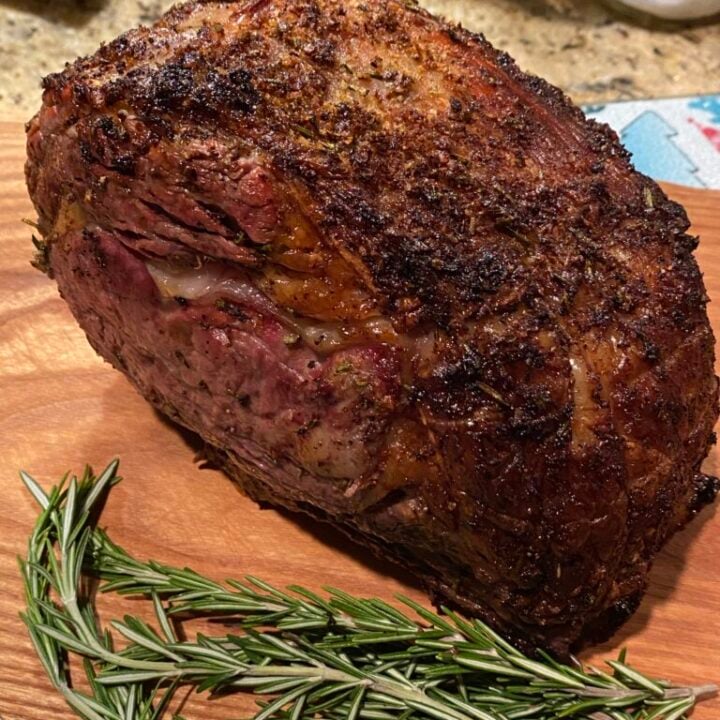
This Perfect Rib Roast is coated in seasoned rosemary butter and roasted until juicy and tender with a flavorful outer crust. Serve it with easy au jus made from the pan drippings and homemade whipped horseradish cream for a steakhouse-style Christmas, New Year's, or special holiday dinner.
Ingredients
For The Rib Roast
- 1 bone-in rib roast, approximately 4 pounds
- 1 to 2 sticks (1/2 to 1 cup) unsalted butter, softened
- 1 tablespoon minced fresh rosemary
- 1 tablespoon garlic powder
- 1 tablespoon onion powder
- 1 tablespoon freshly ground black pepper
- 2 teaspoons kosher or coarse salt for the butter mixture
- Additional kosher or coarse salt for seasoning the outside of the roast
For The Au Jus
- Pan drippings from the rib roast
- 1 to 2 packets prepared au jus mix
- Water or beef broth, as needed
- Cornstarch slurry, optional, if you prefer a slightly thicker jus
For The Horseradish Cream
- 1 cup heavy whipping cream
- Prepared horseradish, to taste
- Fresh chives, finely sliced, optional
Instructions
- Prepare the oven. Position an oven rack around the middle or lower-middle portion of the oven so the roast has plenty of clearance. Preheat the oven to 325°F.
- Prepare the roasting pan. Place a roasting rack inside a pan that is only slightly larger than the roast.
- Prepare the roast. Pat the rib roast thoroughly dry with paper towels. If your roast has been partially separated from its rib bones and secured with butcher netting, I leave the netting in place while roasting.
- Make the seasoned butter. Combine the softened butter, rosemary, garlic powder, onion powder, black pepper, and 2 teaspoons kosher salt. Mix until thoroughly combined.
- Season the beef. Season the outside of the roast with additional kosher salt. Spread the seasoned butter generously over the top and sides.
- Position the roast. Place the roast bone-side down and fat-side up on the roasting rack.
- Insert the thermometer. If using an oven-safe probe thermometer, insert it into the thickest portion of the roast without touching the bone.
- Roast. Roast uncovered at 325°F. A 4-pound bone-in rib roast may take approximately 23 to 30 minutes per pound, but cooking times are estimates only. Begin checking early and rely on the thermometer rather than the clock.
- Check the temperature. For food safety, cook the roast to an internal temperature of 145°F, followed by at least a 3-minute rest.
- Rest the roast. Transfer the roast to a large cutting board and loosely tent it with foil. I prefer giving a large roast approximately 20 minutes before carving.
- Make the au jus. While the roast rests, transfer the pan drippings to a saucepan. Prepare the au jus mix according to the package directions, incorporating the flavorful drippings. Add water or beef broth as needed. If you prefer it slightly thicker, add a small amount of cornstarch slurry.
- Remove the netting. Carefully CUT the netting away with kitchen shears or a sharp knife. Don't pull it across your seasoned crust.
- Remove the bones. Follow the butcher's existing cut and finish separating the roast from the rib bones. Save those bones for soup or broth.
- Carve. Slice the roast into thick steakhouse-style portions or more moderate slices if you're serving it as part of a large holiday meal with several side dishes.
- Adjust individual portions if necessary. If someone prefers their beef cooked further, place their slice in a skillet with a little au jus and gently heat it. Individual slices can also be placed in a baking dish with a little au jus and briefly returned to the oven.
Horseradish Cream
- Add the heavy cream to a mixing bowl.
- Whip with an electric mixer until light and fluffy.
- Fold in prepared horseradish to taste.
- Fold in finely sliced fresh chives, if using.
- Cover and refrigerate until serving.
Notes
- Please use a meat thermometer. A rib roast is an expensive piece of meat, and cooking time should always be treated as an estimate. The size and shape of the roast, its starting temperature, and your individual oven can all change how quickly it cooks. Insert your thermometer into the thickest part of the meat without touching the bone.
- Check your oven temperature ahead of the holiday. I strongly recommend putting an inexpensive oven thermometer in your oven a few days before making this recipe. Your oven can run hotter or cooler than the temperature displayed on the control panel. If it's significantly off, check your manufacturer's instructions to see whether your particular model can be calibrated.
- Check the oven-door seal, too.Take a look at the gasket around your oven door. If it is cracked, brittle, loose, or damaged, your oven may be losing heat. That can affect cooking times and make a large roast behave very differently than expected.
- If your kitchen gets smoky: Rib roast contains quite a bit of fat, and this recipe also uses butter. As the fat renders, it can smoke, especially at higher temperatures. Make sure your oven is free of old grease and burned-on food before the holiday, use a roasting pan deep enough to contain the drippings, and turn on your exhaust fan. If you're experiencing heavy smoke, don't ignore it. Safely investigate the source.
- About the netting: I leave the butcher's netting on my roast while it cooks. The bone-in roasts I buy are often partially cut away from the rib bones, almost like a flap, and the netting helps hold the meat snugly against the bones while roasting. After the roast rests, I CUT the netting away carefully with kitchen shears instead of pulling it across the crust.
- Get your carving supplies ready BEFORE you cook. Make sure you have a cutting board large enough to hold the entire roast and a good, freshly sharpened knife. This sounds like a small thing until you're standing in your kitchen with a huge hot roast and nowhere to put it. Having the proper carving setup makes serving dramatically easier.
- How much rib roast should I buy? For generous steakhouse-style portions, approximately one pound of uncooked bone-in roast per person is a useful starting point. If you're serving a big holiday dinner with appetizers, potatoes, vegetables, bread, and several other sides, approximately 1/2 to 3/4 pound per person may be plenty.
- If someone wants their beef more well done: Don't cook the entire roast longer simply to accommodate one or two people. Once the roast has reached a safe internal temperature and rested, individual slices can be gently heated further in a skillet with a little au jus or briefly returned to the oven with some jus.
- Save your pan drippings. Those drippings contain butter, beef fat, herbs, and tons of flavor. Use them when preparing the au jus rather than throwing them away. The jus is also helpful for gently warming individual slices without drying them out.
- Don't throw away the rib bones. After carving, save those bones. Refrigerate them promptly and use them to make a rich beef broth or soup with onion, celery, carrots, herbs, and broth or water.
- Make-ahead holiday tip: Several days before your dinner, check your oven temperature and door seal, make sure your meat thermometer works, sharpen your knife, find your large cutting board, locate your roasting pan, and make sure you have foil and all of your seasonings. Doing these little things ahead of time makes cooking an expensive roast on a holiday much less stressful.
- About cooking times: Use the estimated cooking time to help determine approximately when you should start dinner, but let the internal temperature of the roast determine when it's actually done. Two four-pound rib roasts can cook differently because of their shape, thickness, starting temperature, and the ovens they're cooked in.
- Let the roast rest before carving. Don't rush to slice the roast the moment it comes out of the oven. Give it time to rest while you finish the au jus and get your side dishes onto the table.
- Storing leftovers: Store leftover sliced rib roast in an airtight container in the refrigerator and save some au jus separately if you have it. When reheating, warm the beef gently with a little jus rather than aggressively cooking it a second time.
- Leftover ideas: Leftover rib roast is wonderful for French dip sandwiches, steak sandwiches, steak and eggs, hash, beef barley soup, beef and noodles, or a quick stroganoff. And if you bought a larger roast specifically so you'd have leftovers, I fully support that decision.
1 Comments
Pam Fisher
December 25, 2024 at 10:08 am
I’ve got a 6+ pound roast in the oven now. I wish you’d indicate the rack postion for the pan. I guessed and put mine on the bottom rack, hoping to keep the butter from burning. It smells heavenly!